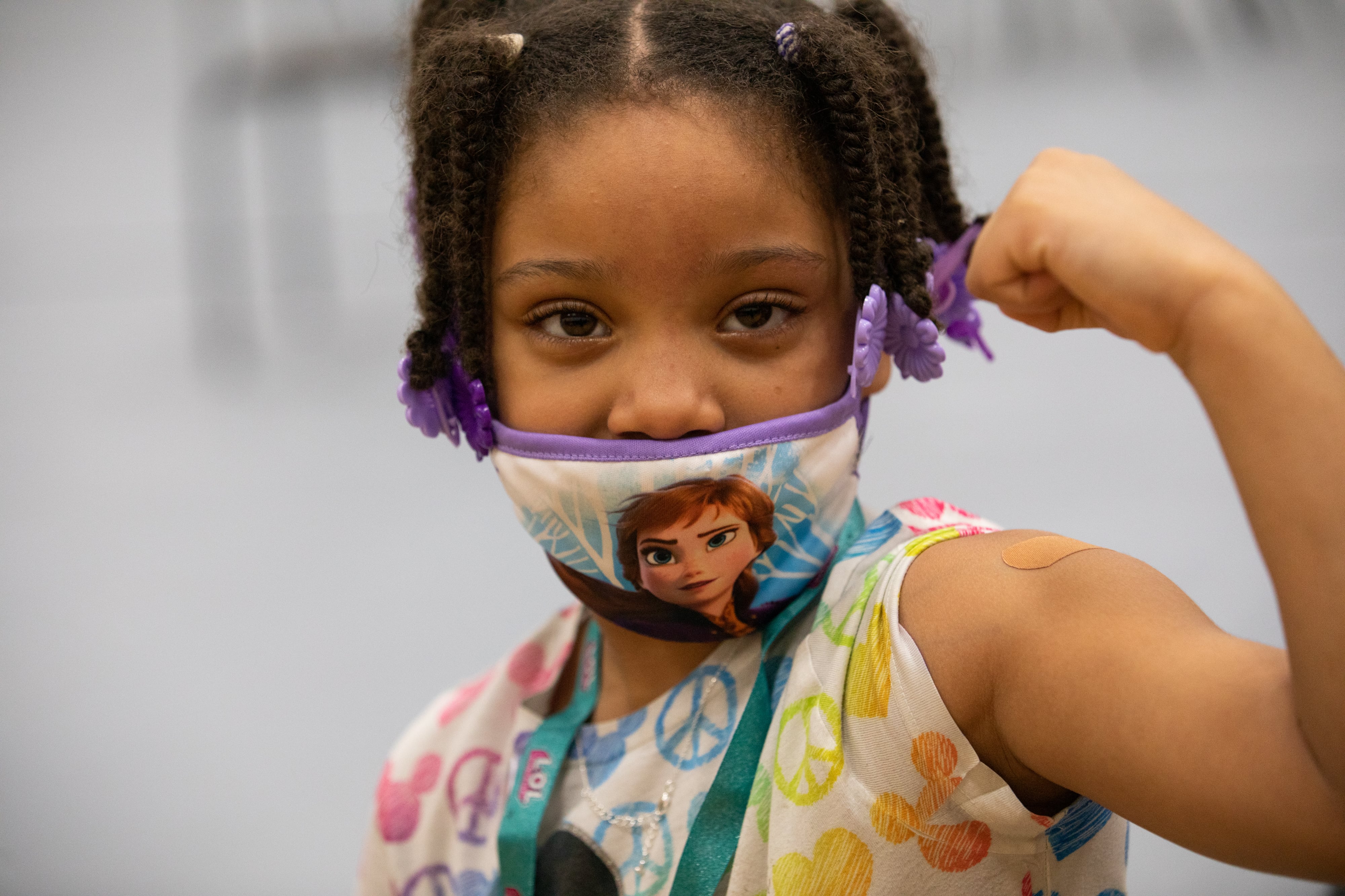
Children between 5 and 11 years old could be eligible for the latest COVID-19 bivalent booster ahead of a potential winter surge. But in Chicago, half of 5- to 11-year-olds have yet to complete the primary COVID vaccine series.
The rollout of the bivalent booster for children between 5 and 11 could come in the next two weeks, said Dr. Allison Arwady during an online segment on Tuesday. The federal Food and Drug Administration and the Centers for Disease Control and Prevention need to approve and sign off on the updated vaccine for that age group. The updated COVID booster was made widely available for people 12 and up last month.
But Arwady expressed disappointment with how many Chicagoans of any age have gotten the updated booster.
“The uptake of the updated vaccine is not where we need it to be,” Arwady noted.
If authorized, Pfizer’s bivalent vaccine will be administered to children between 5 and 11 years old, and a Moderna vaccine will be available for children ages 6 and up, Arwady noted.
The rollout would come ahead of winter when COVID-19 cases have spiked since the outset of the pandemic. A spike in omicron cases led to school closures nationwide last winter, including a weeklong standoff in January between the teachers union and Chicago Public Schools over COVID safety measures.
Chicago’s seven-day average is under 300 COVID reported cases and its COVID transmission rate remains low, according to a CDC rating system.
Still, Arwady urged Chicagoans to get the updated booster to avoid severe illness and prevent hospitals from being overwhelmed. She expressed concern the virus could hurt communities that have already borne the brunt of the pandemic.
“I’m concerned that especially in Latinx and Black communities, we’re seeing lagging vaccine uptake,” she said, “which means if we get a noticeable surge this winter, it’s more likely to hit harder in those communities.”
Those disparities still play out inside Chicago Public Schools. COVID vaccination rates remain the lowest at predominantly Black schools on the South and West Sides, according to a data analysis by Chalkbeat.
Overall, less than 50% of CPS students have completed the vaccine series across district-run schools. The number of CPS students who have received the booster has not been reported by the district.
Citywide, about 3.1%, or 3,850, of 12- to 17-year-olds have received the new updated booster.
About 4,258 students and 2,055 staff have tested positive for COVID-19 since the start of the new school year, according to the district.
Mauricio Peña is a reporter for Chalkbeat Chicago, covering K-12 schools. Contact Mauricio at mpena@chalkbeat.org.