
Sign up for Chalkbeat Chicago’s free daily newsletter to keep up with the latest news on Chicago Public Schools.
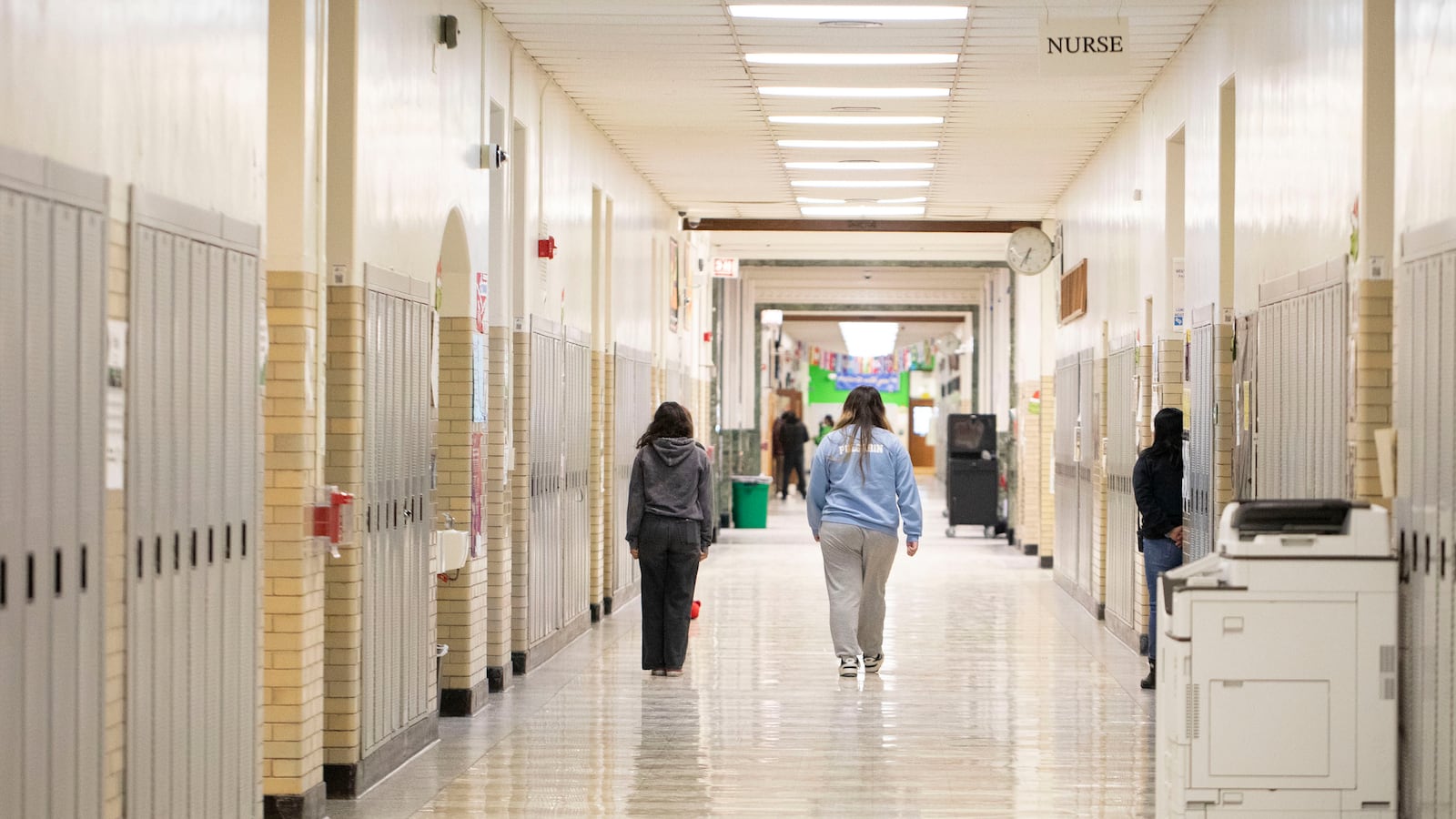
Principal Anna Vilchez takes pride in how much Steinmetz College Prep has to offer:
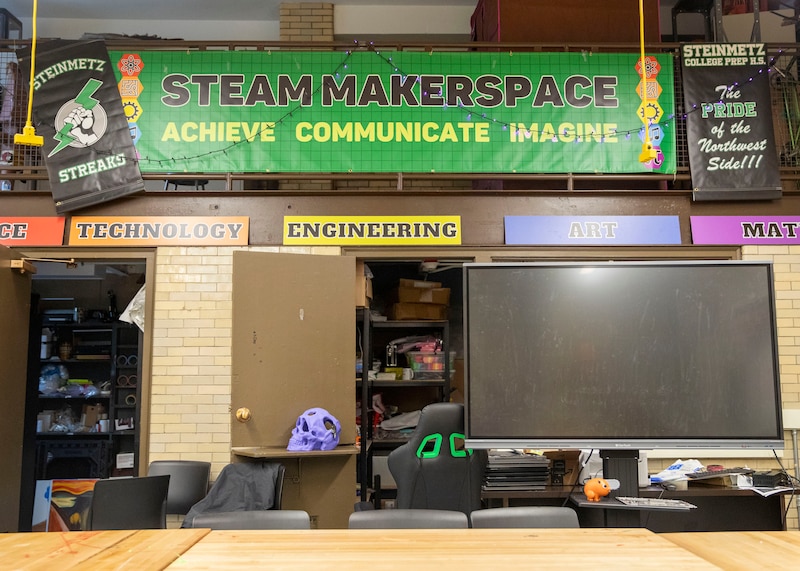
More than a dozen student-led after-school programs, from photography to DJing. A 3D printer-equipped engineering lab. Some 30 classes each month through its Parent University.
These offerings are paid for through Chicago Public Schools’ Sustainable Community Schools initiative, a joint effort by the district and its teachers union that has given high-poverty schools about $500,000 annually to team up with community nonprofits to provide wraparound support.
Vilchez is grateful for the boost. But she also wants to see more gains in the school’s attendance, graduation rate, and test scores — growth similar community school programs have powered in other cities.
A Chalkbeat analysis of student outcomes at the 20 schools in the program since 2018 suggests the investments have not yet led to widespread improvement in how likely students are to attend school regularly, graduate from high school, or pass key reading and math tests. This is partly due to the pandemic’s disruption to the rollout, but also a lack of clear goals and guidelines, tensions between schools and their nonprofit partners, and money left unspent, Chalkbeat found.
Nevertheless, Chicago Public Schools is more than tripling the number of Sustainable Community Schools to 70 by 2027. The expansion will cost $35 million annually — a major investment at a time when the district is wrestling with budget deficits.
Supporters, including Chicago Mayor Brandon Johnson, say the initiative transforms some of the city’s most disinvested campuses into service-rich neighborhood hubs, bringing needed programs and support staff often seen as givens at higher-income schools.
“Schools are successful when every single child has everything that they need,” Johnson said last summer when he announced 16 additional campuses joining the program. “The success of a school is not just based on student outcomes.”
But critics say the district should have ensured the model is delivering measurable results before enshrining the expansion into its latest teachers contract.
District officials say they are spelling out clearer expectations and giving more guidance to schools, especially the 16 schools joining the initiative this school year.
“We’ve learned that giving schools money and partnering them [with nonprofits] does not give them the foundation of how to actually transform their school,” said Autumn Berg, the district’s community schools initiative director. “It took us a long time to get there.”
On traditional metrics, Sustainable Community Schools do not outperform
Before Steinmetz became a Sustainable Community School in 2018, the campus — which serves predominantly low-income Latino students — had few enrichment programs. And it never consistently gave students and parents a say in what it offered.
That changed with the program, which now funds a range of after-school activities, including an after-school K-pop dance club founded by junior Miguel Hernandez.
Hernandez, who came to the school as a freshman English learner, is now taking college-level arts classes at Columbia College.
He credits much of his growth to the club.
“I created a great bond with a lot of people,” he said.
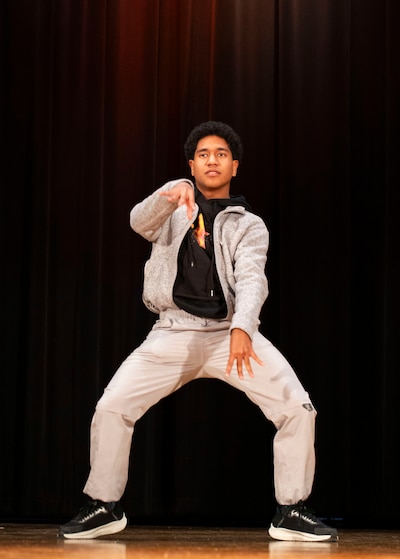
Hernandez’ experience reflects a community school promise: Engaging programs created with input from families give students a reason to go to school and do better in their classes. But the model hasn’t yet given most Sustainable Community Schools an edge in attendance and achievement.
Chalkbeat compared student metrics over time at the 20 pilot schools to those at 29 campuses that applied to the program but didn’t get in, which have an almost identical average poverty rate to the pilot group and also serve almost exclusively Black and Latino students. The analysis also looked at about 300 campuses with poverty rates of at least 80%, the minimum required to apply to the program.
Student outcomes shifted similarly in all three groups since 2018, with the SCS schools seemingly getting little academic boost from the program’s investments. Absenteeism shot up comparably during the pandemic and has remained well above pre-COVID levels, with Sustainable Community Schools struggling slightly more than other high-needs schools.
A district analysis last school year obtained by Chalkbeat did find that among students who regularly attend after-school programs at the 20 Sustainable Community Schools, chronic absenteeism was 13 percentage points lower than for their peers in the same school.
The pilot schools have also had consistently higher graduation rates than the campuses that didn’t get into the program. But over time, those campuses improved slightly more and narrowed the gap.
When it comes to test scores, all three groups saw the same trends on the SAT and the Illinois elementary proficiency test.
The Sustainable Community Schools have seen marked reduction in suspensions and, after a COVID-era uptick, in behavioral incidents. But so did other high-poverty schools.
On a University of Chicago-designed student and staff survey called 5Essentials, measures of school connectedness and climate have declined districtwide post-COVID. But the 20 pilot schools experienced a steeper drop than other high-needs schools, with almost half getting a rating of weak or very weak in the most recent year for which data was available.
And even as program supporters have held it up as a possible antidote to declining enrollment, the 20 Sustainable Community Schools have lost more than a fifth of their enrollment since 2018, while districtwide enrollment dipped about 11%.
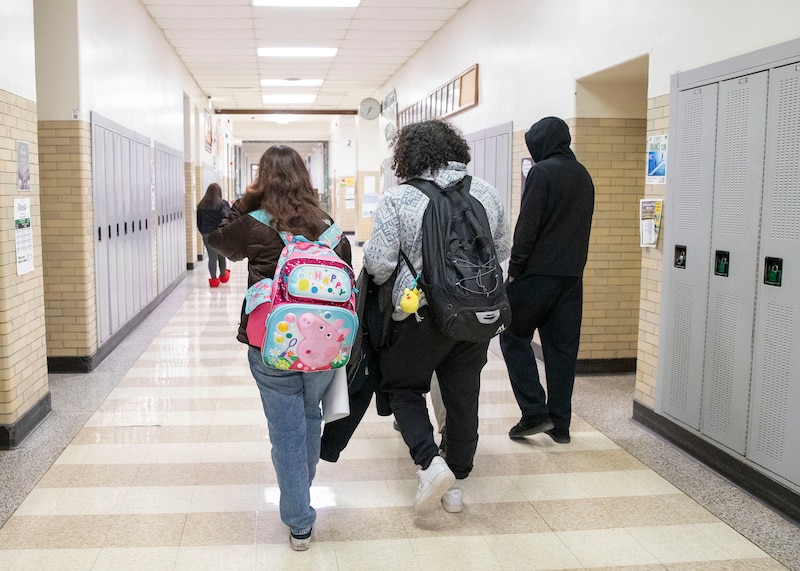
At Steinmetz, absenteeism, academic outcomes, and enrollment largely followed these pilot groups trends, with a sharper drop in suspensions than other high-poverty campuses.
In recent years, the community schools model has gained traction nationally, though the Trump administration recently cut some community schools grants.
Research has shown well-implemented programs can yield measurable student gains. Isaac Opper, a University of California, Los Angeles and RAND School of Public Policy expert who helped evaluate New York City’s community schools program implemented before the pandemic, said that several years in, that initiative had produced attendance gains, graduation rate increases, and modest but notable test score improvements.
“If you are seeing no difference, one story is that Sustainable Community Schools isn’t working,” Opper said. “Another is that it is working, but so are other things the district is doing.”
But there are outliers. Several schools in Chicago’s initiative have seen student outcomes markedly improve and enrollment stabilize. What they appear to have in common: consistent leadership through the seven years of the program, teacher and staff buy-in, and a clear vision for how to make the most of the added dollars.
At Richards High School on the Southwest Side, enrollment is up, graduation rate increases are outpacing the district’s, and absenteeism, though still high, has dipped below pre-pandemic levels. Metcalfe Elementary on the Far South Side saw improvements in test scores and attendance. Its 5Essentials rating rose to the highest possible.
Metcalfe Principal Stephen Fabiyi says the program has helped support smaller class sizes in the early grades and a robust, well-attended after-school program that blends enrichment and academic help from the school’s teachers. Getting family input on programs and curricula boosted engagement.
“My kids would have a snowball’s chance in hell of being successful in school without Sustainable Community Schools,” Fabiyi said.
With Sustainable Community Schools expansion, a promise of more accountability
Monique Redeaux-Smith, a former CPS teacher who now works at the Illinois Federation of Teachers and co-chairs the district’s Sustainable Community Schools task force, says that at these high-needs schools with histories of disinvestment, the program is “trying to rebuild after a series of hurricanes.”
“I’m not worried about not seeing outcomes,” she said. “I know from having conversations and from seeing and talking to these schools and school stakeholders often that it is making a difference in the experience that young people are having every day.”
The model just needs more time, Redeaux-Smith said.
Mayor Johnson echoes that sentiment. When pressed about the program’s outcomes, he has brushed aside critics, arguing metrics like test scores have been historically abused to justify disinvestment in neighborhood schools and even their closures.
Dwayne Truss, a former school board member who says he’s a fan of community schools generally, says the Sustainable Community Schools program shouldn’t be growing so much given the lack of measurable results and budget crisis, he said.
“It would seem that you would wait until you have the data before you that says this is the greatest thing since sliced bread and go forward with this massive expansion,” Truss said.
District leaders say they are working to harness the lessons of the program’s rollout as Chicago grows it in the coming years. CPS and the union have agreed to bring in outside experts to evaluate the program and its outcomes this school year.
Officials say there are clearer expectations for the schools and partners, and a longer, more supportive transition into the program.
And the district is pushing for a new process whereby schools that don’t meet a set of performance goals — still under discussion — could lose half and eventually all of their SCS funding.
Vilchez and other principals say they hope the new push to better track results won’t take away flexibility and the ability to let families and local communities shape the model’s priorities. At the same time, they want the program to power student gains.
“I am committed to owning our data,” Vilchez said, ”and working to improve it.”
Mila Koumpilova is Chalkbeat Chicago’s senior reporter covering Chicago Public Schools. Contact Mila at mkoumpilova@chalkbeat.org.