

Sign up for Chalkbeat Detroit’s free newsletter to keep up with the city’s public school system and Michigan education policy.
This year, Michigan lawmakers increased state funding for English language learners by $12.5 million — but not all such students will benefit.
Michigan does not provide school districts with additional funding for students who are nearly proficient in English, even though state and federal law require that districts provide services to those students. Of 49 states that fund ELL services, researchers say only Michigan excludes some students from its funding formula.
Students who are approaching proficiency in English are often conversational, but may still struggle academically without additional support. Michigan’s funding gap can make it difficult to provide instruction that would allow such students to transition out of English learner programs, according to advocates, teachers, and school leaders.
“It has to do with language complexity, but it also has to do with the level of service that we’re providing our kids,” said Madeline Mavrogordato, director of the Education Policy Innovation Collaborative, or EPIC, at Michigan State University.
Michigan’s current funding system grants additional dollars to districts that enroll students with high needs, such as English language learners or students from low-income households.
But for English learners, the amount of extra funding sent to districts is based on students’ scores on an annual assessment of English proficiency called WIDA ACCESS, with scores from 1.0 to 6.0. Students scoring between 1.0 and 4.7 are required by state and federal law to receive English language development instruction in order to have equitable access to their education.
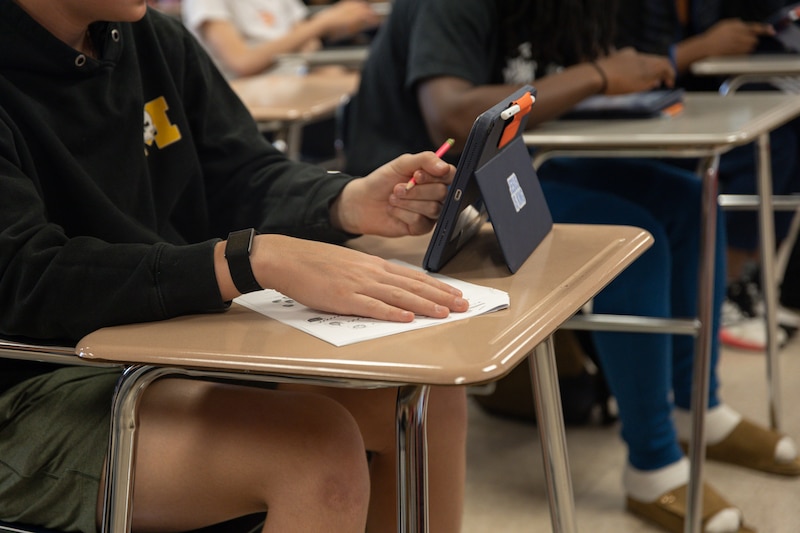
This year, districts will receive $1,998 in additional funding for each student who scores between 1.0 and 1.9, $1,379 per student for those scoring between 2.0 and 2.9, and just $225 per student for those scoring between 3.0 and 3.9. The state provides no extra funding for students who score 4.0 and above.
School leaders say the funding is inadequate even for students in the middle range, forcing some districts to find other revenue to pay for and provide services. Advocates say some districts only have enough resources to meet the most urgent needs of English learners with little comprehension of the language.
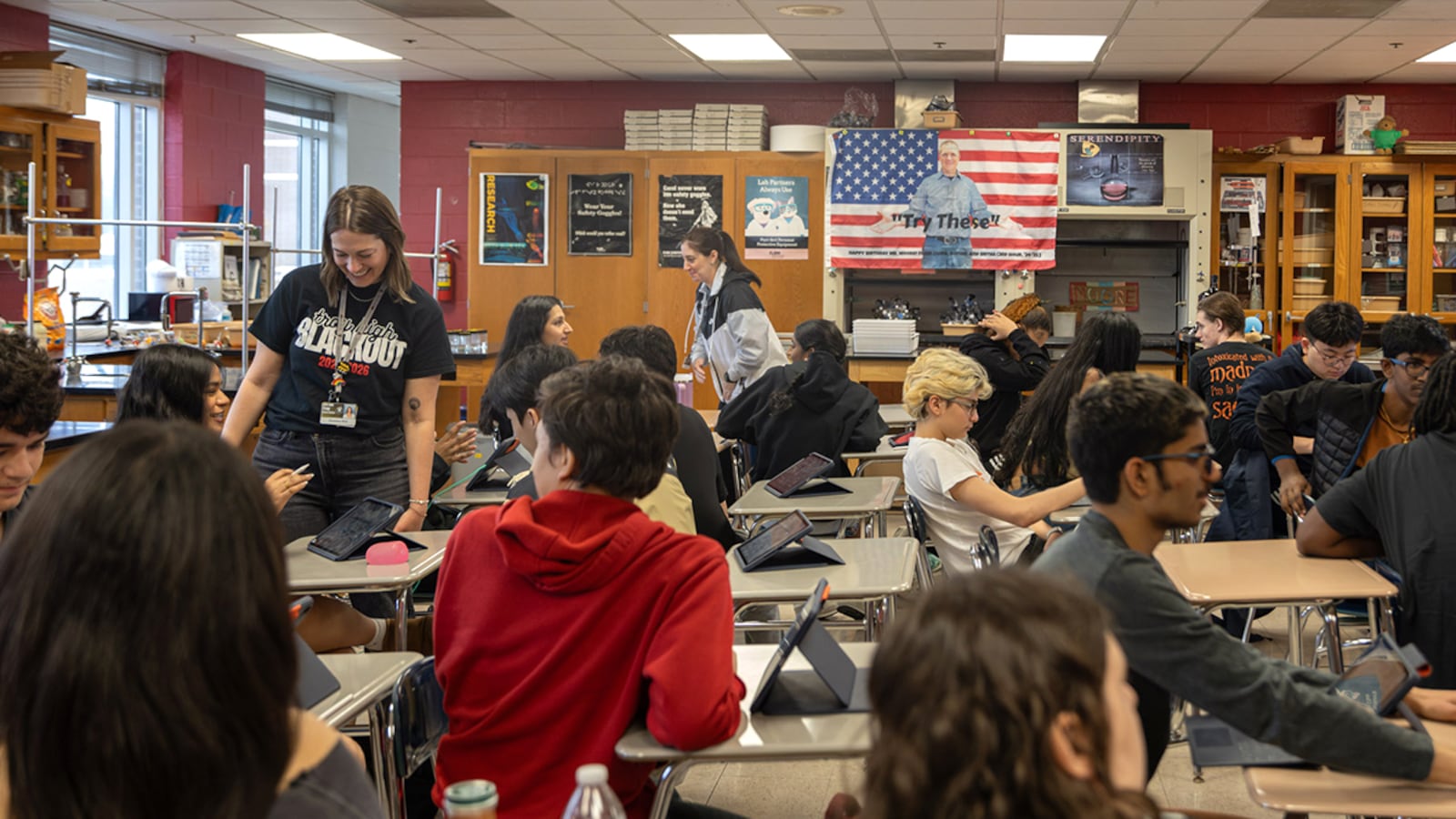
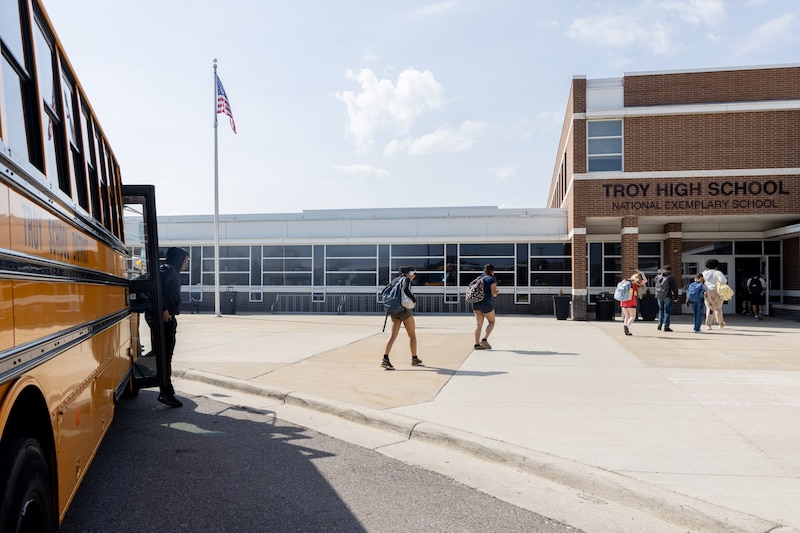
In the Troy School District, Superintendent Richard Machesky said about 90% of the district’s budget for English learners came from general fund dollars in the 2025-26 school year because state funding wasn’t enough to meet the group’s needs. That year, the district got around $607,000 in state funds to educate about 1,900 English learners.
The district was only able to hire five English language development specialists with the state dollars, Machesky said.
Afrin Alavi, director of Hamtramck Public Schools’ Multilingual Learner Department, said about 17% of the district’s ELL students score at the highest levels on the WIDA.
Without dedicated funding for the student group, Alavi said the district is facing “structural deficits” in its multilingual learner budget.
Michigan’s public schools enrolled more than 104,200 English learners in the 2024-25 school year — 7.3% of all the students in the state. Around 24,000 of the students did not qualify for additional state funding, but still were required to get at least 150 minutes of English language development instruction a week.
Advocates believe that more funding could result in English learners transitioning out of specialized programs sooner and having more opportunities to succeed in their core classes.
According to a 2025 report by EPIC, nearly half of Michigan’s English learners remained in specialized programs after six years — a signal that students may not be matched to instruction that meets their needs, research suggests.
The Michigan School Finance Research Collaborative, an independent K-12 education research center at Michigan State University, hired a third party in 2021 to estimate the funding needed to improve academic achievement in the state. They recommended substantial increases in ELL funding, ranging from $3,500 to $7,500 per student based on WIDA scores.
The report also recommended additional funding for some students who scored on the higher end of the WIDA.
Lawmakers said in this year’s state budget they want to increase ELL funding every year until it meets the amounts recommended in the third party report, but they didn’t set a timeline to reach the goal.
DPSCD: Funding gaps create challenges in meeting students’ needs
The state provided the Detroit Public Schools Community District about $6.7 million in additional funding in the 2025-26 school year to serve more than 7,400 English learners.
But the district did not receive any extra money for 1,041 students who scored 4.0 and above on the test.
“Concentrating the dollars at the lowest proficiency levels … does not reflect the reality that students approaching proficiency still need services,” said Superintendent Nikolai Vitti.
Vitti said the district has used money from its literacy lawsuit settlement to hire 58 multilingual academic interventionists to support English learners at 15 schools.
The interventionists’ qualifications are different from those of certified teachers endorsed to teach English learners, however. Critics say their work isn’t a substitute for the English language development minutes schools are required to provide English learners.
Despite those efforts, achievement gaps for the district’s English learners persist in multiple areas. About 10.4% of English learners met or exceeded proficiency in English on the Michigan Student Test of Educational Progress in 2025, a drop of 2 percentage points from the previous year and lower than their peers. English learners’ four-year graduation rate of 79.2% was 3.8 percentage points lower than the district’s average, according to state data.
Some teachers and students in the district say English learners, particularly those approaching proficiency, aren’t receiving all of the services they need.
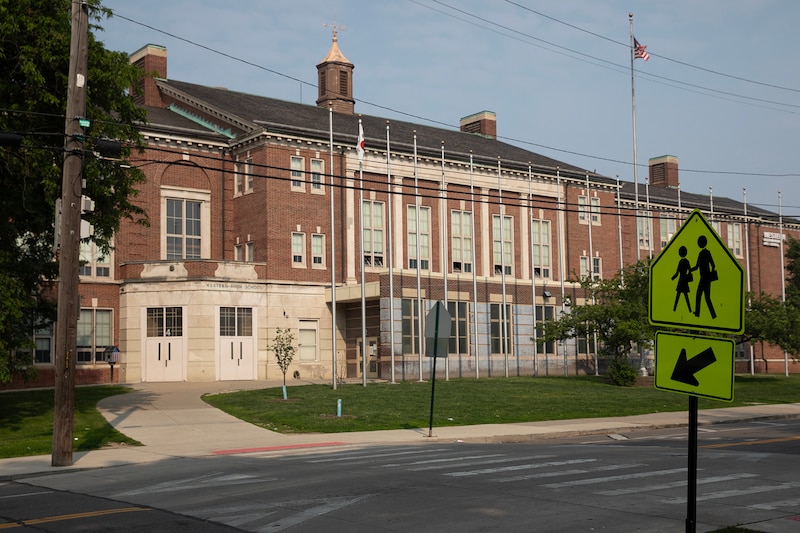
A senior in the Detroit district, who emigrated from Cuba, said his understanding of English in 10th grade put him ahead of his peers in his English as a second language class at Western International High School. As a result, he was placed in general education classes.
Based on his WIDA score, he should have continued to receive at least 150 minutes a week of English language development instruction. But the student said he got none during his sophomore year.
The student, who spoke on condition of anonymity for fear of retaliation from school officials, struggled in the general education classes. He eventually asked a counselor to allow him to return to the English as a second language class where he learned core subjects tailored for non-native English speakers.
Kristen Schoettle, who taught the student, said he was bored much of the time because other students in the class were still learning to communicate in English with single words and memorized phrases.
“It’s hard with a class of 35 to think of things to do and to challenge him everyday like I would have liked to,” she said.
Three other DPSCD teachers from schools with English learners, who requested to speak to Chalkbeat anonymously due to concerns about retaliation from their employer, said the student’s experience is not uncommon. Because of limited resources, they said students in the middle ranges of proficiency don’t get the kind of support they should.
Bianca Hardy, a spokesperson for DPSCD, said in an email the district works with school leaders to strategically schedule staff with ELL endorsements to serve “students with the highest need” while also supporting those with higher proficiency in core content areas.
“We agree that Michigan’s current approach to funding English Learners leaves the state near the bottom nationally in how it supports multilingual students, especially those approaching proficiency,” said Hardy.
The limited funding prevents districts with large populations of English learners, like DPSCD, from providing students the instruction they need to exit the program, Hardy added.
Hardy added that the district will continue to advocate for equitable funding for ELL students.
During the student’s sophomore year, his WIDA score would have generated roughly $210 in additional funding for the district. With this year’s increase in funding, that amount will go up by $15.
At that level of proficiency, students struggle with vocabulary, grammar, and spelling. They may understand teachers’ basic spoken instructions, but can’t readily participate in abstract discussions.
Mavrogordato, the director of EPIC, called the extra funds for a student in that range “negligible.”
“I don’t know what you can do with $225 per kid over the course of literally a whole year in terms of providing service,” she said.
Educators say more funding and stability are steps in the right direction
Advocates and educators applauded the legislature for the increase in ELL funding, even as they say that more is needed.
With the $12.5 million increase, the 2026-27 state budget for English learners is about $75.3 million. Michigan has historically ranked among the worst in the nation for ELL funding.
“I think that this signals that this continues to be an important priority, and I think it also recognizes the fact that this is a population of students that has grown in our state,” said Mavrogordato of the increase.
In the last decade, the number of English learners in Michigan public schools has increased by more than 12,300. In the same time, the number of non-English learners has decreased by 132,496.
The researcher said another improvement is that the weighted funding formula is now state law.
Previously, districts applied for grants with a similar weighted system. Now, they will automatically receive the money and have more flexibility in spending it.
“This new framework guarantees districts receive the full funding they are relying on,” said Sen. Darrin Camilleri, a Democrat from Trenton who introduced the bill.
Additionally, the law requires districts to report how they are using the funding to support English learners.
The Michigan Department of Education is reviewing its monitoring and reporting process to ensure schools’ compliance, said Bob Wheaton, the department’s director of public and governmental affairs.
The new law also solidifies the MDE’s program models for English learners and its guidance on minimum instructional minutes. The guidance was previously tied to state education budgets.
Mavrogordato said the requirements in the law could mean fewer stories like that of the student at Western in the years to come.
“I would say districts have sort of treated serving kids at higher levels of English proficiency as a little bit more optional, a little bit more flexible,” she said. “But this state has put into place a set of requirements … really designed to be a minimum standard of care for kids.”
Hannah Dellinger covers Detroit schools for Chalkbeat Detroit. You can reach her at hdellinger@chalkbeat.org.
Koby Levin is a senior reporter at Outlier Media. You can reach him at koby@outliermedia.org.