

Sign up for Chalkbeat New York’s free daily newsletter to get essential news about NYC’s public schools delivered to your inbox.
Zohran Mamdani will take the reins of the nation’s largest school system on Jan. 1, inheriting some big challenges facing the $43 billion agency with roughly 150,000 staff and nearly 900,000 students.
Chronic absenteeism remains high, major gaps persist in reading and math proficiency, and enrollment continues to shrink.
On the campaign trail, Mamdani did not focus intently on schools, but he made one big education promise: to govern the city’s public schools with more input from New Yorkers and reduce his own power over the system.
Chalkbeat asked dozens of experts, students, parents, educators, and nonprofit leaders to share bold ideas for the incoming mayor to consider as he crafts an agenda for New York City’s public schools. This is the first installment of a two-part series. Check out Part 2.
Here are some of the most thought-provoking responses we received. They have been edited for length and clarity.
Shael Polakow-Suransky
President, Bank Street College of Education
Reimagine high school with yearlong capstone project
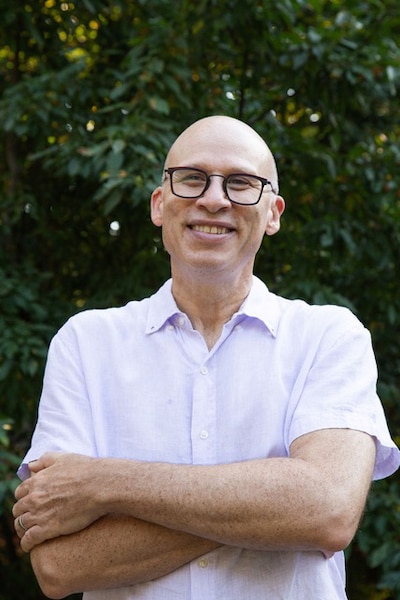
The sunsetting of Regents exams is a once-in-a-generation chance to reimagine high school. Instead of wasting months on test prep, let’s replace 12th-grade seat time with a yearlong “city capstone.” All seniors would pursue either deep civic action projects or apprenticeships in high-growth sectors like green energy and health care. This is a long-term affordability strategy: By connecting students to professional networks and skilled careers, we arm them with the future earning power to pay rent and remain in the boroughs they call home. Let’s stop asking our youth to bubble in answers, and empower them to build the city they deserve.
Rashid Ferrod Davis
Founding principal, Pathways in Technology Early College High School
Pair every school with an industry partner

My bold proposal for improving public education in New York City is for all schools to have at least one industry partner. Not all employers can offer extensive internships immediately. Examples of initial, smaller commitments include hosting guest speaking events, conducting resume workshops, or offering workplace tours.
Kevin Dahill-Fuchel
Executive director, Counseling In Schools
Include social and emotional well-being on student report cards
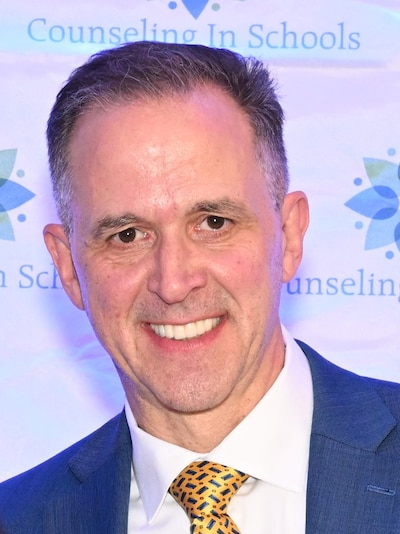
My proposal is simple yet profound: Expand the current “report cards” of each student’s social and emotional well-being beyond pre-K and kindergarten, all the way through high school. Currently, once students move to first grade, they join an academic race that ignores character and individual talents. Imagine if every student was systematically recognized for non-academic qualities such as being friendly, helpful, fun, hardworking, respected, lively, and reflective. Not only would they be valued and nurtured as a complete person, but they would also have a better chance at academic success because their social and emotional foundation would be stronger.
Lisa Margosian
Chief executive officer, Achievement First Public Charter Schools
Increase affordable housing for teachers
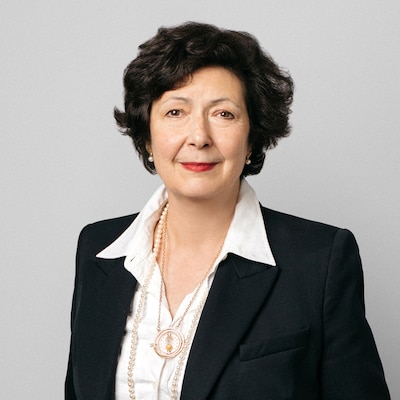
In New York City, only about 20% of rentals are affordable to teachers — a crisis for a city that relies on strong pre-K through 12 public schools. If we want excellent teachers in every classroom, and a workforce that reflects the backgrounds of our students, we must make it possible for teachers to live here. New York needs a citywide effort to build dedicated, mixed-income housing for teachers and cap rent at 30% of income. This practical step would make teaching sustainable, improve recruitment and retention, and give students the stability and high-quality instruction they deserve.
Rodney Lee
Parent of two children from District 1, an elected Community Education Council representative, and a nonprofit administrator
Support schools to address bullying

We need a curriculum to create a culture of accountability and kindness. I remember how much my daughter wanted to meet new friends in middle school. This quickly diminished as she became a victim of ridicule for trying to participate in class. She was kicked, threatened, and ultimately there were over 20 documented incidents or bullying during sixth and seventh grade that resulted in my demoralized, self-esteem-shattered baby girl to transfer to a new school for eighth grade. It was frustrating to learn that victims of bullying were encouraged to transfer as the aggressors were harder to transfer or deal with. We need to change this practice.
Sharon Collins
Presidential Award for Excellence in Mathematics and Science Teaching recipient and STEAM coordinator at New Heights Academy Charter School
Put teachers on school boards
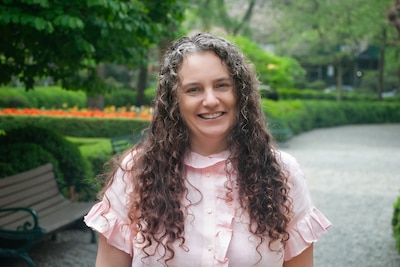
Our best education advocates are our classroom teachers, and yet they are not at the decision-making table. Put teacher representatives on the Panel for Educational Policy, Citywide Council on High Schools, and Community Education Councils as advisors. There, teachers can share their perspective and insights into curriculum, AI and technological tools, class size, standardized testing, how the budget truly should be spent to really impact student trajectories, and educational innovations that would revolutionize education for our NYC students.
Katie Pace Miles
Brooklyn College professor and founder of The Reading Institute
Intensive tutoring for all who need it
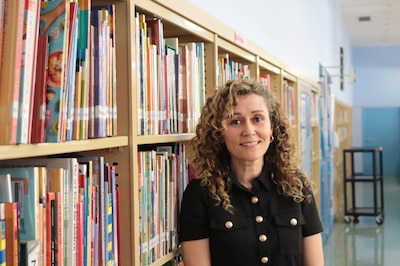
Equitable high-impact tutoring can radically change outcomes for students who are behind grade level. Privileged families hire tutors when their child needs academic support. An equitable public school system should ensure that all students who need additional one-on-one support to develop their literacy and math skills are afforded one. Research has shown that when high-impact tutoring is provided, meaning that it occurs 3-5 times a week using evidence-based programs, students behind benchmarks are able to catch up to grade-level expectations. Ensuring all students in our public schools have access to this type of support benefits schools, students, and families.
Arlen Benjamin-Gomez
Executive director at EdTrust-New York
Require every district to create a local integration plan
Diversifying schools is one of the few proven strategies to improve outcomes for all students, and solutions already exist. District 15’s equitable middle-school lottery reduced economic segregation by 55% and racial segregation by 38% in just one year. We should expand these admissions models, publicly report segregation data, and require every district to develop an integration plan.
Crystal Rodriguez
Bronx District 8 Community Education Council president
Mediation hubs for parents and educators to collaboratively solve problems
New York City needs a Family Accountability & Restorative Engagement Hub in every district. It would be a city-funded space where parents, students, and educators collaborate on problem-solving before issues escalate — such issues as bullying, chronic absenteeism, special education concerns, parent-leader mediations, parent-teacher mediations. These hubs would standardize restorative practices, ensure compliance with Chancellor’s regulations, provide trauma-informed support, and give families real decision-making power rather than symbolic roles.
Ray Domanico
Senior fellow, Manhattan Institute
Tackle underenrolled schools with mergers

Declining birth rates in the city have resulted in far fewer students enrolled in the city’s traditional public schools, a trend that will continue for the foreseeable future. The new team in city hall should act boldly to adjust the system’s resources to its lower enrollments. This must be done strategically by consolidating underenrolled schools into larger schools with stronger leadership and programmatic offerings. Vacated school buildings should be used either to support communities with other needed services or sold to be converted into affordable housing for their communities. This is an opportunity to address both school quality and affordability issues.
Leonie Haimson
Executive director, Class Size Matters
Create moratorium on AI in classrooms
Mamdani should enact a two-year moratorium on the use of AI in the classroom, and hold town hall meetings to hear from parents, teachers, and students as to how its rushed adoption risks undermining privacy, the environment, student cognitive growth and creativity, and the human connection central to a quality education.
David Adams
Chief executive officer, The Urban Assembly
Hold schools accountable for growth, not just test scores

NYC schools need an accountability system that rewards progress and makes innovation easier, not riskier. The Mamdani administration can improve public schools by elevating school impact scores that communicate student growth, not just performance. This will incentivize schools to solve problems, give parents the school quality information they deserve, and spur competition on the metrics that matter. When schools demonstrate outsized gains, the system should rapidly scale their practice, while increasing flexibility, freeing leaders to focus on innovating and problem-solving.
Accountability should be a runway for excellence, not a cage for compliance. Make things work, and scale those solutions.
Mathew Moura
Senior Vice President of Strategy, Teaching Matters
Give every teacher a coach of their choice

Let’s give every teacher coaches they can select in partnership with principals and districts to create coherent professional development, tailored to their needs, with the resources required to be able to help all kids. Every kid has the right to a good teacher. Every teacher has the right to be supported to become one.
Rachel Sabella
Director, No Kid Hungry New York
Treat schools as nutrition hubs

NYC schools are well-situated to address the growing hunger crisis. They’re already connected to nearly a million students and their families, and they have infrastructure in place to help them tackle the issue. The incoming administration should increase the number of school pantries, provide in-school resources to help families apply for SNAP and other benefits, and maximize the reach of existing school meal programs. By strengthening our school meal programs and thinking creatively about summer meals, our next mayor can get the whole school community involved in keeping kids and families fed all year long.
Diane Ravitch
Education leader and author

Expand ‘community schools’ that provide wraparound support
Mamdani can’t do everything to fix education but he can pursue one powerful idea: community schools.
Instead of promoting school choice, which destabilizes neighborhoods and does not improve education, the mayor should commit to expand community schools.
These are schools with wraparound services where children can get medical screening, vision testing, and dental care. Where students can count on getting breakfast, lunch, even dinner. Where parents can meet school personnel who can help them connect to city services, access health care, and find employment resources.
Public schools can be great again if they meet the needs of their communities.
Jeremiah Dickerson
Student at Williamsburg Charter High School
Improve school food
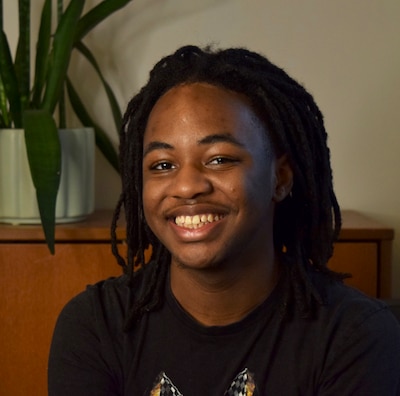
As a student in NYC, I constantly hear classmates complaining about the meals we’re expected to just pick up and eat, and I’m no stranger to that experience myself. Too often, I walk into school, see breakfast laid out, and turn right back around after being greeted with a dry, rubbery egg sandwich. Students deserve better. Why not offer simple, healthier options like yogurt with fresh fruit, whole-grain bagels with cream cheese, oatmeal, breakfast burritos with eggs and veggies, or even warm pancakes and turkey sausage? Our city claims to champion nutritional value, but that support should start with serving real, nutritious food.
Lori Podvesker
Director of disability and education policy, INCLUDEnyc
Better integrate students with disabilities
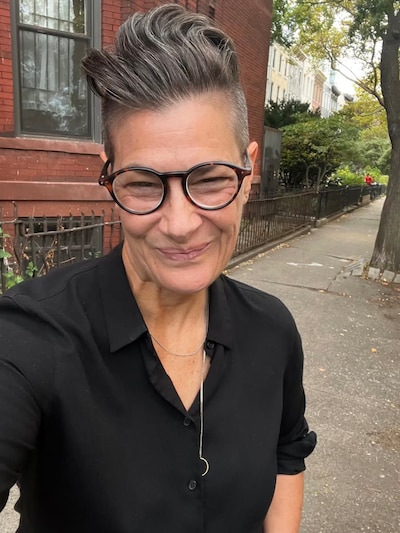
NYC can reduce disability segregation by training general education teachers and administrators on inclusive practices/supports, behavior management, and federal and state laws, fully utilizing the special education continuum so more students receive special education services in general education classrooms, restructuring District 75 for collaboration, ensuring equal access to opportunities, citywide initiatives, schedules, and same after-school and summer programming as their general education peers, addressing systemic issues like busing and the need to support paraprofessionals better, develop mechanisms and tools to access schools on the extent their students with IEPs are with general education students, and focusing on integrated learning in the least restrictive environment as required by law.
Liz Pitofsky
Founder, Service Learning Project
Make sure all schools have active student councils

Public schools were founded to create engaged citizens: let’s get back to that original goal by engaging all K-12 youth in problem-solving about their schools and neighborhoods. When children and teens are given opportunities to make their voices heard, they see themselves as leaders with the critical responsibilities of citizenship. This not only benefits them- it strengthens our schools, our city, and our democracy. Mamdani should make it a priority for all NYC schools to have student councils that meet regularly with administrators, as well as social studies classes that integrate youth-led community problem-solving.
Alex Zimmerman is a reporter for Chalkbeat New York, covering NYC public schools. Contact Alex at azimmerman@chalkbeat.org.