
Sign up for Chalkbeat Indiana’s free daily newsletter to keep up with Indianapolis Public Schools, Marion County’s township districts, and statewide education news.
In December 2011, a well-funded nonprofit group founded by two powerful Democrats — a former Indianapolis mayor and his one-time charter school chief — floated a bold idea.
It was a plan to radically remake Indianapolis Public Schools, which was struggling academically and losing students to the city’s growing charter school sector.
One of the policy prescriptions in The Mind Trust’s 2011 Opportunity Schools report was a somewhat wild notion: that the mayor could take charge of the school system through a new local board that was appointed. The elected IPS school board would be effectively sidelined.
Fourteen years later, it could be on the verge of happening.
A state-mandated task force called the Indianapolis Local Education Alliance, composed mostly of members connected to the charter sector, voted this week to recommend that a mayoral-appointed board oversee a new agency in charge of both city school district and charter schools.
The action now shifts to the Republican-controlled statehouse, where lawmakers are expected to craft legislation drawing from the recommendations but may not follow them faithfully.
That the city’s schools sit on the cusp of such radical change is the culmination of over half a century’s worth of educational, political, and social disruption for Indianapolis schools that opened the door for education reformers and their allies to advance their vision.
“You get what you can when you can,” Paul Hill, founder of the Center on Reinventing Public Education, said of the steps it took Indianapolis to get here. “I do think that there were people — and probably in Indianapolis more than some other places — where people really were just kind of taking one step at a time.”
Understanding the factors that led Indianapolis schools to this moment requires going back to 1954 and a landmark U.S. Supreme Court decision that reshaped the country’s schools.
Desegregation sparks decades of declining IPS enrollment
As schools nationwide desegregated following the Brown v. Board of Education ruling of 1954, Indiana lawmakers were pondering what might have seemed like a very different issue: how to make Indianapolis both bigger and more unified.
The solution they adopted in 1969 was to merge local government services into a city-county system known as Unigov.
But leaders did not merge IPS with the surrounding township schools in Marion County. That was because combining the mostly Black IPS district with the mostly white township districts would have sparked a political firestorm and threatened the bill’s passage.
“Unigov was not a perfect consolidation,” then-Mayor Richard Lugar previously told Chalkbeat. “A good number of people really wanted to keep at least their particular school segregated.”
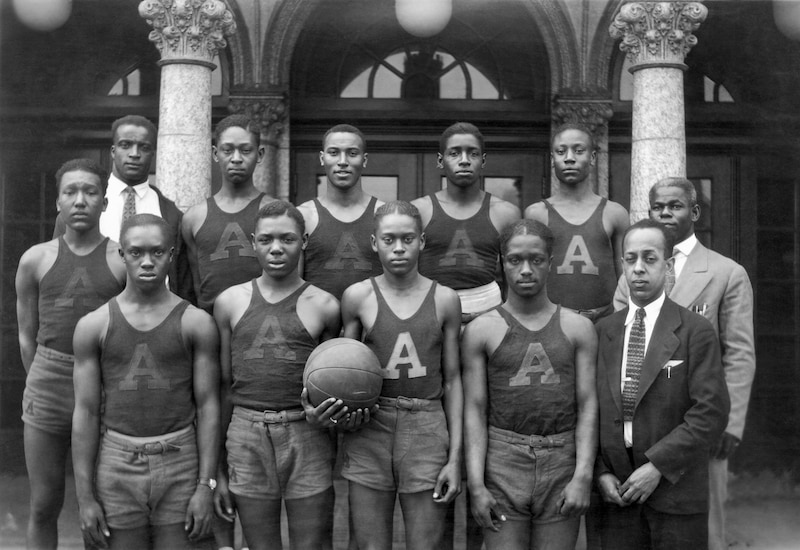
Isolating IPS schools and putting off desegregation would have long-term ramifications.
In 1971, a federal judge found IPS guilty of maintaining racially segregated schools. Judge S. Hugh Dillin’s 1971 order to integrate schools — later tied up in a yearslong legal battle — arrived at the start of an IPS enrollment decline that continues today, eroding district finances.
Many white families left the district. In 1981, IPS lost more students when it bused thousands of Black students to six surrounding township districts under a court order.
That year, desegregation and declining enrollment forced the district to close 10 schools. Enrollment ultimately plunged from 108,000 in 1971 — the same year as Dillin’s ruling — to just 47,000 by the early 1990s.
Mandated busing to townships ended in 2016, when the busing order ended. By then, the district had already closed at least 23 additional schools, according to board documents, news articles, and archives from the Indianapolis Public Library.
This year, there are only about 21,000 students in schools IPS runs directly, or about 80% below district enrollment just over half a century ago. IPS enrollment consists overwhelmingly of students of color. And in 2022, the IPS school board voted to close six schools as part of a sweeping overhaul of facilities and curriculum.
The mayor who made charter schools his focus
In the late 1990s and early 2000s, IPS was plagued with headlines about students’ poor academic performance.
That negative attention helped open the door for a new type of public school: the charter school. And a former Indianapolis mayor was at the heart of charter schools’ ascent in the city.
When Indiana passed a law permitting charter schools in 2001, it was part of a national wave of education reform enabled by the federal No Child Left Behind Act of 2002 and the systematic expansion of standardized testing, said Sarah Reckhow, a political science professor at Michigan State University and co-author of “Outside Money in School Board Elections,” which profiles Indianapolis.
But how the city decided to end up authorizing charters ultimately set Indianapolis apart from others during this era, she noted.
The law passed with the backing of Democratic Indianapolis Mayor Bart Peterson. It gave the mayor the power to authorize charter schools. Some hailed charters — which are publicly funded but privately run — as a potential solution to traditional public schools’ struggles.
“I believe the charter schools were really the right kind of middle ground approach, and could eventually potentially be a consensus — could build an alternative to the kind of polarized hostility that existed back then,” Peterson previously told Chalkbeat.
Peterson’s connection to charters continued when he left office. In 2006, he co-founded The Mind Trust with David Harris, who was director of charter schools in his administration. Its goal: to “transform the public education system” in the city, in part by developing new schools and recruiting talented leaders to guide them, according to tax filings at the time.
Although not all the city’s charters have had the group’s support, ultimately the group contributed significantly to the charter sector’s rapid growth. In 2006, there were about 15 charter schools within IPS borders. Today, there are over 50. (The Mind Trust’s funding through contributions and grants has also grown from under $1 million in 2006 to over $28 million in fiscal 2024, according to tax information.)
Mind Trust CEO Brandon Brown credits Peterson with building the foundation for the city’s charter schools.
“To have a mayor that happened to be a Democrat run for office in support of charter schools and support and utilize the ability to serve as a charter school authorizer was nationally unique,” Brown said. He added that the mayor’s role provided a way “to pursue school reform without necessarily needing to take over an entire school district.”
This year, Peterson served as a member of the Indianapolis Local Education Alliance. He was one of eight task force members who voted to adopt its recommendations.
Education reform takes root in Indianapolis
Other advocacy groups supporting education reform emerged in The Mind Trust’s wake. Stand for Children launched its Indiana affiliate in 2011, organizing parents to speak at board meetings on topics such as closing the opportunity gap for students of color. RISE Indy formed in 2019, focused on promoting policies and programs to advance educational equity. Both groups advocate for charters too.
Beginning in 2012, money from out-of-state school choice advocates also flowed into IPS school board races, including from PACs associated with those groups.
“What made the school board elections really important in the eyes of especially school choice advocates nationally — and what made them rise to the level of attracting this outside money — is that there was this sort of local discretion about how charter schools would grow or not grow,” Reckhow said.
In 2014, charters’ influence increased when they gained access to district resources through a law brokered by statehouse Republicans and then-IPS Superintendent Lewis Ferebee.
That arrangement led to the district’s Innovation Network, which 25 charter schools now participate in.
Today, charters serve around 40% of the roughly 49,000 K-12 public school or voucher students living within IPS borders, according to the most recent state data.
How IPS lost its grip on property taxes
Charters gained significant support in Indianapolis over time. But even as they grew, they lacked access to a critical source of revenue: local property taxes that help traditional districts pay for transportation and facilities.
Instead, for many years, they relied on philanthropic funding from organizations like The Mind Trust to cover those costs.
The public funding inequity created a political problem for IPS. In 2022, IPS planned a referendum for $413.6 million in property taxes for the following year. Though the district planned to give some of the funding to its Innovation Network charters, it resisted giving any to independent charters, citing concerns about transparency and accountability.
Charter school leaders and advocates publicly pressured the district to share more of those dollars. They cited a gap in per-pupil spending between district and charters that would reach over $10,000 for independent charters if IPS didn’t share money from the referendum.
Early in 2023, IPS decided not to put the referendum on the ballot. That was a major blow to the district’s finances: IPS projects it will run into the red shortly after the 2018 referendum expires in 2026.
All the while, lawmakers at the statehouse were watching.
After seeing these fights over financial and other issues play out, Republican lawmakers drafted a bill in 2025 that would dissolve IPS and replace it with charter schools. They cited the high number of students opting out of IPS and the district’s poor finances.
“The goal is to get them into a financial spot so that they can continue to exist,” Rep. Jake Teshka, a Republican who co-authored the bill, previously told Chalkbeat. “Nobody woke up one day and said, ‘We really want to dissolve IPS. We want to attack IPS.’”
The bill failed. But it foreshadowed GOP lawmakers’ priorities in 2025: They created the ILEA to address how the district could share its transportation and building resources with charters.
On top of that, charters secured significant funding wins. Perhaps most significantly, lawmakers passed legislation that required IPS to share its property tax revenues with all charter schools that enroll students living within its boundaries.
Lawmakers also adopted property tax relief during the 2025 session that will hurt district coffers statewide. Both measures combined are expected to cost the district millions annually.
The recommendations the ILEA adopted on Wednesday include giving the new Indianapolis Public Education Corporation the power to impose property taxes for district and charter schools.
That could lead IPS to lose still more control over its finances — and by extension, its future.
Amelia Pak-Harvey covers Indianapolis and Lawrence Township schools for Chalkbeat Indiana. Contact Amelia atapak-harvey@chalkbeat.org.