

This is the third story in a three-part series. Read parts one and two here. And keep Chalkbeat’s valuable education coverage at the top of your feeds by clicking here and checking the box next to our name.
Nearly a year into his administration, Mayor Zohran Mamdani has not shared a vision for addressing many of the pressing challenges facing the New York City school system.
One of the most urgent is the small schools crisis, driven by years of declining enrollment.
It’s a crisis that past administrations have allowed to fester — and one that some district leaders and principals say Mamdani and his schools chancellor, Kamar Samuels, could make a defining feature of their education agenda. By closing and merging schools, Samuels and Mamdani could cut costs, expand academic opportunities for vulnerable students, and help integrate students from different backgrounds, proponents argue.
But it remains to be seen whether the Mamdani administration is willing to spend the time and political capital necessary to close and merge schools at scale — and in the face of likely pushback from families and educators.
“The city must choose between managing quiet decline — or leading a bold, community-driven project of renewal,” wrote Marielys Divanne, a longtime education leader and former adviser under Mayor Eric Adams, in a report released last year.
The number of schools with fewer than 250 students — the size under which Education Department leaders say it’s difficult to offer a robust education — has multiplied eightfold over the past 25 years, from 42 to 335, a Chalkbeat analysis found.
Meanwhile, enrollment in public schools is in free fall. The K-12 student population in public schools is down 187,000 over the past 12 years to 790,000 due to birth rates falling and families leaving the city. It’s projected to fall almost as much in the decade to come.
“The challenge now is that there is such a backlog of tough decisions,” said Karin Goldmark, a former deputy chancellor who oversaw school closures and mergers under de Blasio. “The sheer volume of action required means superintendents and principals will have to do heavy lifting.”
Samuels indicated earlier this month that he doesn’t want to create a systemwide plan to reduce the number of schools. He said he prefers that future plans to consolidate schools come from communities rather than top-down. He launched working groups in five districts to develop community-driven plans and promised to expand those groups citywide. Officials haven’t yet offered a timeline for that work.
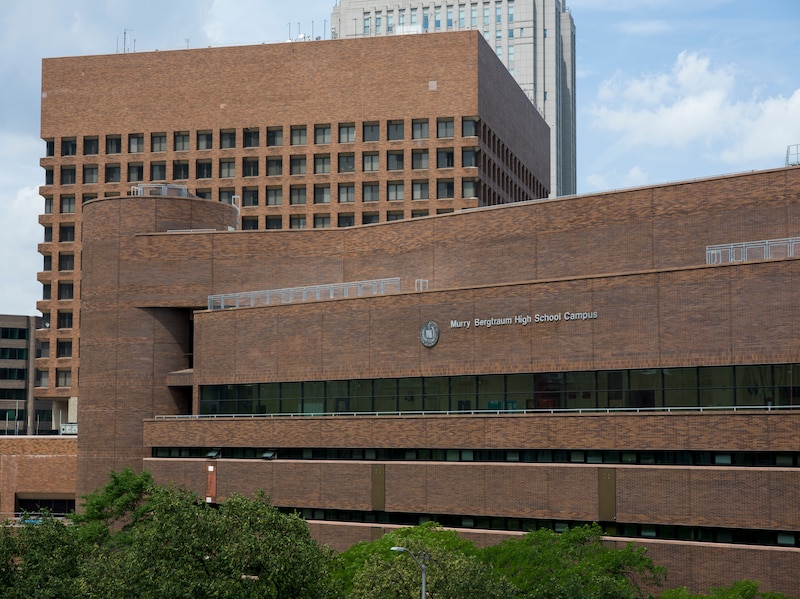
In recent weeks, superintendents have floated proposals to close at least two underenrolled schools, a high school in Harlem and a middle school in the South Bronx, Chalkbeat has learned.
“The data shows that schools with larger enrollment can offer more advanced coursework, more enrichment like arts and sports, and more opportunities our students deserve,” Education Department spokesperson Nicole Brownstein said. “At the same time, every school community is unique, and this work must be led locally.”
Easy to open, hard to close: the origins of the small schools crisis
The problem the city faces now is, in some ways, one of its own making.
When Mayor Michael Bloomberg opened hundreds of new schools in the early 2000s, he promised a marketplace that would increase choice for families while weeding out the weakest schools.
Bloomberg’s market-based reforms, however, didn’t work as envisioned because in practice it has been easier for the city to open schools than to close them.
“What’s happened is an embrace of the marketplace on the front end of the process but an unwillingness to pull the thread through on the back end,” said Jennifer Jennings, a sociology professor at Princeton University who recently published a book on the history of New York City’s high school admissions system.
Multiple mayors have failed to meaningfully address the small schools problem.
De Blasio, who believed in shuttering low-performing schools only as a last resort, closed and merged some schools, but those efforts slowed when the COVID pandemic hit in 2020. The Adams administration largely delegated decision-making about consolidating schools to local superintendents and opened new schools to try to recover from the enrollment nosedive that began in the pandemic.
The resulting system has been costly.
Since 2010, the number of principals has grown 11% to 1,610, while the number of assistant principals jumped 31% to 3,518, according to data provided to Chalkbeat by the Independent Budget Office.
In 2020, de Blasio introduced an emergency policy called “hold harmless” to keep school budgets steady even as they lost enrollment. Every mayor since, including Mamdani, has continued that policy, spending a total of almost $2 billion.
From crisis to opportunity: Why some educators say mergers offer a path forward
Some community members say mergers can be less disruptive than closures because students and staff stick together instead of dispersing across many schools.
They can also, in some cases, foster integration if officials deliberately merge schools with different student populations — an approach Samuels embraced as a superintendent of diverse districts in Brooklyn and Manhattan.
He often points to Arts & Letters 305 United, the Brooklyn school where he oversaw a merger of a largely Black, high poverty, and underenrolled elementary school with a more affluent, white, and oversubscribed school, as an example of what’s possible.
Samuels described the school today as “truly integrated.” Arts & Letters 305 United — which is now a little more than one-third Black and one-third white — is outperforming citywide averages in math and reading and is attracting families at a time when the district’s enrollment has declined, he said at a recent town hall.
Some parts of the school system cannot be easily integrated when it comes to race or family income. But there is potential for integrating students with different academic needs.
That was the case when Health, Education, Research Occupations High School, or HERO, in the Bronx merged in 2021 with the School of Hospitality and Tourism, a tiny and struggling school on an adjacent campus, said HERO Principal Kristin Cahill.
Hospitality and Tourism had 173 students, fewer than half of whom graduated on time and only 15% of whom enrolled in college. At HERO, 90% of students graduated on time and often left high school with an associate degree and training for careers in healthcare and education.
HERO benefited too, Cahill said. The merger allowed the school to grow from about 500 students to more than 700.
And while joining the two schools didn’t significantly change their racial and socioeconomic makeup, it ensured a “critical mass” of advanced students in every class. That allowed teachers to make their courses more challenging, which ultimately benefited all students, Cahill said.
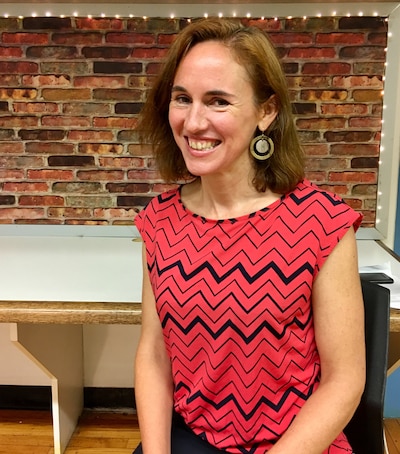
Cahill believes mid-sized high schools like hers can be a template for the city by preserving the benefits of small schools while bringing some of the variety that larger high schools offer.
“This is a model that students and families can get excited about, while providing a pathway out of segregation and dwindling school size,” Cahill recently wrote in policy recommendations she hopes will inform Mamdani’s education agenda.
School mergers and closures could face uphill battle
To make a dent in the small schools crisis, Samuels would have to potentially consider dozens of closures or mergers at once. But to win the approval of the Panel for Educational Policy, or PEP, the body that votes on school consolidation plans, the city must approach each proposal with enough care to make community members feel heard, current and former officials said.
It’s a challenge that has vexed past administrations.
“The amount of time and attention required at the leadership and staff levels to do even one school closure or merger makes it unfeasible to do at scale,” said Dan Weisberg, the former first deputy chancellor under Adams who oversaw closures and mergers for four years.
Adriana Alicea, a Queens parent and the chair of the PEP’s committee on school utilization, said the panel wants to see evidence that officials have gotten to know a school community beyond its enrollment numbers, have considered alternatives to closure, and have ensured students who are displaced get access to more opportunities.
“The more you’re in the community, the more you understand the little nuances, and that goes a long way,” she said.
When school communities feel unheard and mobilize fierce opposition, Alicea said, there is an “expectation” that the Education Department will withdraw the proposals before they reach a PEP vote. That happened last spring with plans that Samuels helped draw up as a superintendent to close three small middle schools on the Upper West Side.
Goldmark, the former deputy chancellor under de Blasio, said it’s valuable to seek community buy-in, but the city can’t expect full support for every proposal.
Samuels, she said, is “highly skilled at cultivating consensus whenever possible, and in the past he’s also shown a willingness to press forward without it if needed to serve students better.”
Alicea, for her part, believes it’s possible to address the small schools crisis at scale without sacrificing community collaboration.
“It is possible for us to do both,” she said. “It is possible to make grand sweeping changes and to let the community be the ones holding the broom.”
Michael Elsen-Rooney is a reporter for Chalkbeat New York, covering NYC public schools. Contact Michael at melsen-rooney@chalkbeat.org