

Did you know search engines like Google are changing the way you see news? Keep Chalkbeat’s valuable education coverage at the top of your feeds by clicking here and checking the box next to our name.
A Colorado lawyer named Brad Miller sat in the formal courtroom of the U.S. Supreme Court with its marble columns, red velvet curtains, and mahogany furnishings. It was April 30, 2025, and he was a guest of lawyers who worked for a powerful conservative legal group, Alliance Defending Freedom.
That day, he watched oral arguments in a case out of Oklahoma that had the potential to deliver a landmark decision clearing the way for religious charter schools in America. Three weeks later, the high court deadlocked 4-4. The status quo — a ban on religious charter schools — would stand.
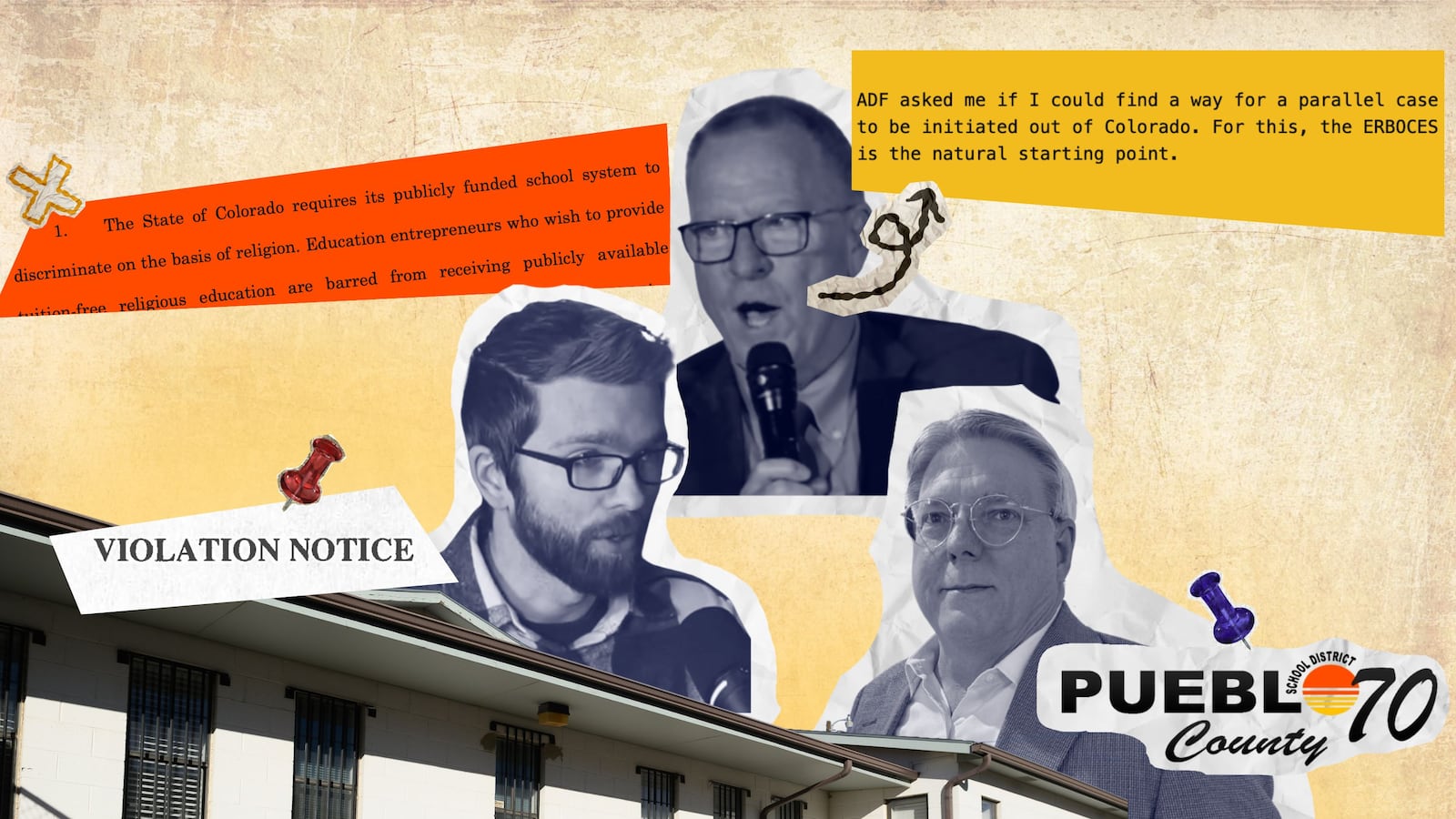
But at the behest of Alliance Defending Freedom, Miller soon found a way to relitigate the same core question about public funding for religious schools, emails show. He worked with an education group he represented to quietly launch a public Christian school for 30 kindergarten through fifth grade students in a working-class southern Colorado community that has become more Republican in recent years. It was the foundation for a new test case.
Riverstone Academy opened less than three months after the Supreme Court ruling inside a low-slung white cinderblock building in an industrial area in Pueblo County. It was led by a young pastor named Quin Friberg who once said on a Christian talk show that “we’d be far better off without public education.”
The school received hundreds of thousands in state funding to teach students using religious curriculum and offer them what its website called “a Christian foundation.”
The tiny school generated outsized controversy: three lawsuits, a $20,000 settlement with the family of a student, and the resignation of a local school board member involved in the approval. It also generated heated debate about separation of church and state, school choice, and public transparency.
Riverstone closed after one school year, following the passage of a state law cracking down on its authorizer. The religious liberty lawsuit that Miller helped spark — one Alliance Defending Freedom never joined — fizzled at the same time.
But in an interview, Miller said that in places like Pueblo, Riverstone may have advanced the idea that education aligned with a family’s values “shouldn’t just be left to those who have the money to pay for it.”
Riverstone’s hasty creation reflects the urgency backers felt in their bid to return the question of public funding for religious schools to a sympathetic high court. It also highlighted how a solidly blue state was caught flat-footed by a challenge to church-state separation, stymied by vague laws and fear of being sued.
A school choice experiment meant to trigger a precedent-setting legal decision never reached that goal. Instead, Riverstone galvanized state lawmakers to restrict the unusual start-up route the school’s backers used and led a judge to rule that hiding the school’s religious nature from the public during that process broke the law.
A year later, people in Pueblo County and beyond are still grappling with the school’s rapid rise and fall and what it means for the changing landscape of public funding for religious schools.
Bryan Kelsen, a Pueblo County pastor whose church housed Riverstone for several months, said there’s no simple answer to the questions Riverstone raised.
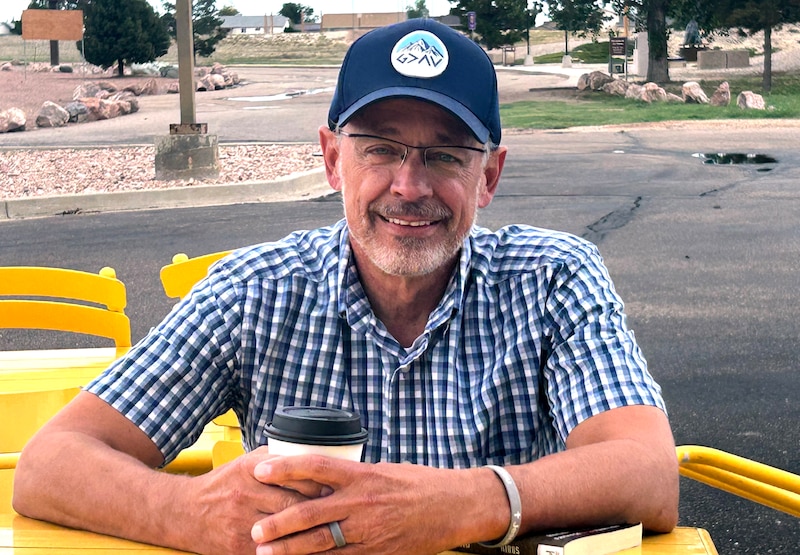
Parents seeking a Christian education for their children pay taxes too and should have the option of a tuition-free Christian school — as long as parents who don’t want that have a comparable secular choice, he said.
He also understands the tradeoffs when government funding is involved.
“When you take the money, you give up the ability to make the decisions because he who holds the purse strings is also the one who is deciding how that money gets spent,” Kelsen said.
Ronda Rein, the former superintendent in Pueblo County, believes public schools should be secular and that if families want religious education for their kids, they should pay for it.
“I am a conservative. I am a Christian, but there is a reason for the separation of church and state,” she said. “I feel like if we open up this Pandora’s box, then we are opening it up to fund all religions, and I think that that really gets sticky.”
Low start-up hurdles and shifting politics set the stage for Riverstone
Lax state laws, compliant school boards, and an ascendent local movement to center Christianity in the public square all helped Riverstone find a home in Pueblo County.
The school was authorized by Education reEnvisioned Board of Cooperative Educational Services, or ERBOCES, one of Colorado’s 21 public education co-ops. Such groups typically provide services like special education to several school districts but in this case offered an uncommon route to public school start-up.
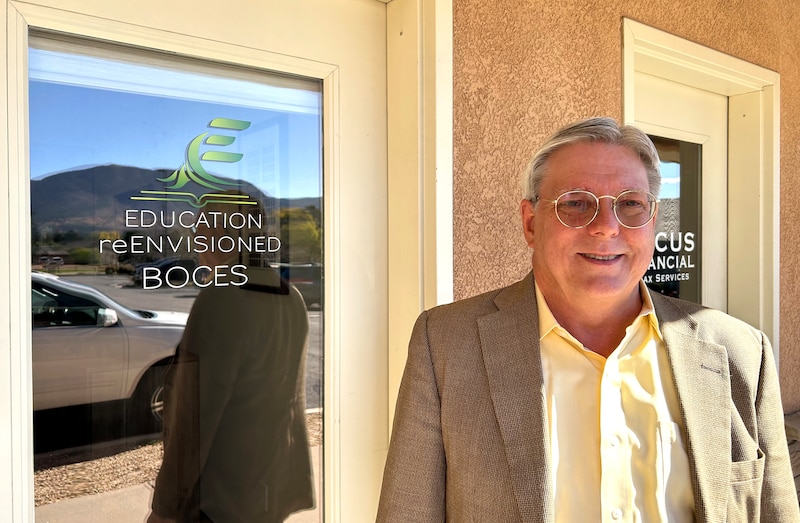
Known for pushing into the gray areas of state law, ERBOCES was led by a conservative education player named Ken Witt. Miller was its lawyer. The unelected board overseeing the co-op agreed to authorize Riverstone during a five-minute meeting.
Witt didn’t respond to requests for comment for this story.
The school board of Pueblo County School District 70, where Riverstone would be located, also signed off on the school with no dissent, never revealing publicly that it would be a Christian academy.
Miller, who represented the school district, too, had broached the idea with the board a few weeks before the June 2025 vote in an email labeled “PRIVILEGED AND CONFIDENTIAL.”
In an interview, Miller downplayed his involvement in Riverstone, saying he was simply working for his client, ERBOCES.
“I provide answers as to whether something is legal, what the risks are, if it’s questionable, and I’m not the creator of these sorts of … I’m just a lawyer,” he said.
To become a state-recognized public school, Riverstone also needed a school code from the Colorado Department of Education. A Chalkbeat investigation showed nearly two dozen state employees were looped into conversations about what to do. After days of debate and a meeting with an assistant attorney general, the department granted the code, fearing a lawsuit if it refused.
Long a Democratic stronghold, Pueblo County’s changing politics helped set the stage for Riverstone. Amid that shift, a group called Forging Pueblo began helping conservative candidates win local city council, county commission, and school board seats. Co-founded by Friberg in 2018, Forging Pueblo consisted of local churches and individuals who sought to infuse public institutions with a Christian worldview.
“They’ve actually been very smart about it,” said Daneya Esgar, a former Democratic state lawmaker who lives in Pueblo. “They didn’t just start off with going after all the ‘big’ political seats. They’ve been stacking boards and commissions for a few years with their people.”
Plus, a dramatically diminished local media presence meant residents had “no idea what’s happening with their government,” she said.
Friberg didn’t respond to requests for comment for this story.
Hannah McDowell and Chris Sutton, a couple with three children in Pueblo District 70 schools, said the school board and Miller pushed boundaries — on small things like whether the public could attend certain committee meetings and big things like accepting a controversial charter school into the district.
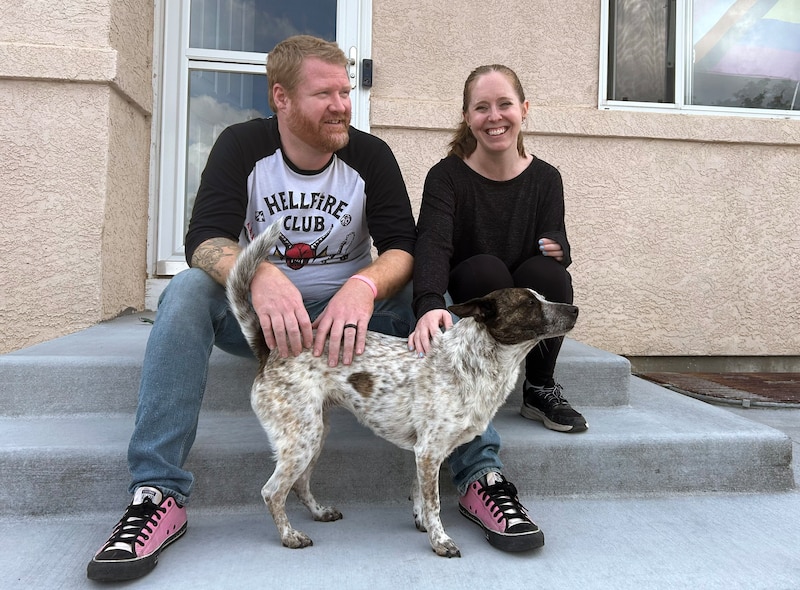
“They incrementally tested those boundaries … and found that even with some pushback, they were successfully getting what they wanted,” McDowell said.
“I think that’s what made it right for Riverstone,” she said of the Pueblo community. “What better place could you think of?”
A district leader tried to warn the state
Rein, the former Pueblo District 70 Superintendent, disagreed with the plan to let Riverstone into the district, but felt like she was between a rock and a hard place.
She worried she could lose her job if she publicly revealed Riverstone’s religious nature because Miller had labeled his email message “confidential.” Even so, she said she decided to warn state officials, hoping they might “take a harder look at it” and withhold the school code.
Rein called the Colorado Department of Education in July 2025. She said she was surprised to learn during the three-minute conversation that department officials already knew Riverstone would be religious and planned to give it a school code anyway.
“I felt like they, too, felt … they were also in a rock and a hard spot, and that there was no stopping” the school, she said.
Rein has since retired to help her husband with health challenges. Looking back, she said her district was complicit in Riverstone’s creation because she and other officials knew the school was religious but didn’t publicly share that information.
But she also believes the district was a victim: “I felt like we were all bamboozled. Brad Miller is a very good puppeteer of his boards.”
Asked to respond, Miller said, “I don’t know what she intended by that characterization, and I’ve heard it recited in other media, but I’ve never voted on a school board action, and I don’t think I’ve got the power to influence the way people suspect I might.”
Did Riverstone change the debate?
With strict limits on co-ops like ERBOCES now enshrined in state law, there’s no clear path for another Riverstone. But with another Oklahoma charter school case swirling through the court system and the Trump administration’s tax credit scholarship program on the horizon, it may be a matter of time.
McDowell said the Riverstone saga strengthened her belief in separation of church and state.
“For my own kids, I’m happy that they should read any of the religious texts that they want .. They should learn and explore their curiosity because it’s all part of our society or the human condition,” she said. “But being taught that one thing is the truth, I don’t think that should be any part of public school.”
Kelsen describes himself as a big supporter of Pueblo District 70 schools, where some of his children have graduated. But he thinks the Riverstone experiment, “got the ball rolling at least to have people considering the options.”
That’s true for his own growing church, which has begun to contemplate building a school on the church grounds.
“I know that as a church, we are much more interested in Christian education today than we were before Riverstone,” he said.
Asked if he’d want public funding for the school, he said, “Probably not.”
Timeline: Riverstone from start to finish
Ann Schimke is a senior reporter at Chalkbeat. Contact Ann at aschimke@chalkbeat.org.