Did you know search engines like Google are changing the way you see news? Keep Chalkbeat’s valuable education coverage at the top of your feeds by clicking here and checking the box next to our name.
Tutoring. SAT prep. Summer camp. Field trips.
These are just some of the things that education advocates hope to offer public school students through the federal scholarship tax credit, a major school choice expansion that has the potential to become the one of the largest sources of federal funding for schools.
The list includes things that well-off families provide their own children as a matter of course, as well as things that public schools used to provide that now feel like luxuries.
A small but growing set of organizations — school districts, charter schools, public school foundations, start-up nonprofits, and after-school providers — is working to turn a tax credit primarily designed to cover private school tuition into a benefit for public school students. The extent of their success could determine how many children are ultimately helped by the tax credit, and influence whether more Democratic governors in particular opt their states into the program.
“Critics would say this wasn’t created for us,” said Sara Hazel, the president and CEO of the Denver Public Schools Foundation, which raises money for Colorado’s largest school district and hopes to use tax-credit dollars for tutoring and after-school scholarships. “I believe there’s money on the table, and public school students should benefit from that. That’s the bottom line of why we’re doing this.”
Some are enthusiastic, like New York charter school leader Ian Rowe, who wants his students to have, yes, SAT prep, but also horizon-expanding experiences like going up in small planes with trained flight instructors to spark an interest in aviation and aerospace careers.
Others are reluctant, like the Southern Education Foundation, whose leaders say they felt compelled to launch a tutoring-focused scholarship organization even though they oppose the policy on principle.
And some ideas challenge traditional understandings of how public schools should operate. School finance expert Marguerite Roza says districts should create a fixed package of services and charge a hefty fee for what she calls the K12 Plus Plan. That fee would then be covered by scholarships.
Treasury Department rules released this week don’t answer all the outstanding questions about how this money can and can’t be used, which could complicate planning efforts.
Skeptics say private schools, and in particular networks of religious schools, remain far better positioned to benefit from the tax credit. They also say the program is ripe for fraud and abuse, and that it will end up being profoundly regressive. In other words: Take the financial disparities in PTA fundraising, then add a few more zeroes.
“This money will disproportionately flow to private school families, and to the extent it flows to public school families, it will disproportionately flow to better off families,” said Jon Valant, director of the Brown Center on Education Policy at the Brookings Institution, a think tank.
Education tax credit could boost tutoring, enrichment
Passed last year as part of President Donald Trump’s One Big Beautiful Bill Act, the federal scholarship tax credit goes into effect in 2027. The program reimburses taxpayers up to $1,700 for donations to scholarship-granting organizations, which in turn give the money to families for educational expenses, such as private school tuition, tutoring, or special needs services.
The law provides a mechanism to expand private school choice in states without voucher programs. It also specifies traditional public school and charter school students can benefit.
But what does it mean to provide a scholarship to a student in public school?
Deb Gist saw district leaders struggle to take advantage of similar provisions in Oklahoma’s state education tax credit when she was superintendent of Tulsa Public Schools.
Reading the federal law, Gist saw a chance for a do-over on a larger scale. “I immediately had my superintendent hat on and thought of all the things we could have funded with this,” she said.
Gist launched Future School Fund as a scholarship-granting organization to help traditional public schools and charters pay for various enrichment and education services.
Rowe, the New York charter leader and a senior fellow at the conservative American Enterprise Institute, said a school’s role with the tax credits should be connecting families to trusted providers, such as a top SAT prep company that wants to work with talented students from low-income backgrounds.
“It’s not just that there’s tutoring,” said Rowe. “It’s tutoring from a best-in-class partner that your school has built a trusted relationship with.”
The Southern Education Foundation, which traces its roots back to post-Civil War efforts to educate formerly enslaved people, adamantly opposes the tax credit and supports efforts to repeal it.
Yet after agonizing internal debate, the group decided to launch its own scholarship-granting organization.
“We asked ourselves, ‘what do we do?’ Those 15 states educate roughly 20 million students, the majority of whom are low-income students and Black and brown students,” said Fred Jones, the foundation’s senior director of public policy and advocacy, referring to Southern states that have opted in. “How much can we redirect dollars in this ecosystem to ensure these students are best served?”
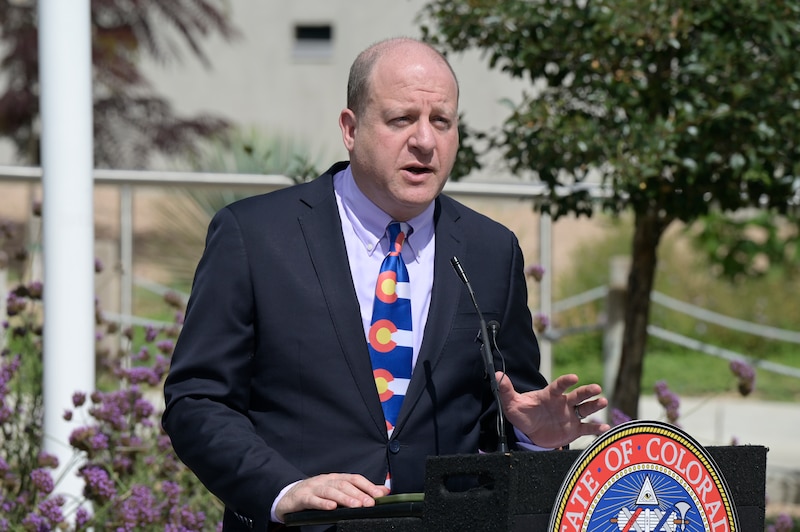
Colorado, where Gov. Jared Polis is the lone Democratic governor to enthusiastically embrace the program, has emerged as a hot spot for organizing ways to use the tax credit.
One possible use: fifth-day programming in the state’s roughly 130 school districts, most of them small and rural, that operate on four-day school weeks.
Can the education tax credits prevent painful cuts?
Some advocates say school districts should make the program what they need it to be.
Roza, who heads the Edunomics Lab at Georgetown University, said her proposed K12 Plus Plan might cover what districts would have funded with federal pandemic aid, or activities covered by fees, or programs they might cut in a lean budget year — like tutoring, but also sports, arts education, and counseling.
She acknowledges that using private donations reimbursed by the federal government to pay hefty student fees is “certainly a circuitous route to get money into school districts.” But she believes it is legal, and it doesn’t require asking voters for a tax increase or begging the state legislature for more money.
Clark County Public Schools and the Public Education Foundation in Las Vegas are exploring this model. They hope to put together a package of services that local donors will find compelling.
Not everyone loves the look, though.
“We will never make up fees and then go pay for those fees with the scholarship,” said Shannon Hancock, chair of the Colorado School Foundations Association. “That’s so dishonest.”
Public school efforts to capitalize on the tax credit led Daniel Buck, a research fellow at the American Research Institute, to worry the tax credit will end up funding “a glorified slush fund for public schools.”
But private school choice groups like American Federation for Children and EdChoice — who have a vested interest in Democratic governors saying yes — have been bullish on the potential benefits to public schools.
“Educational freedom isn’t private school choice,” said Jim Blew, who worked at the U.S. Department of Education in the first Trump administration and cofounded the conservative Defense of Freedom Institute. “It’s the ability to direct your child’s education.”
Still, realizing the vision will require a massive marketing campaign and buy-in from large employers, who could facilitate payroll deductions. There are also questions about who will decide which students and districts get how much money when there isn’t enough to go around.
Even with those challenges, Josh Cowen, an education researcher at Michigan State University and a prominent opponent of private school vouchers, finds himself unexpectedly optimistic.
Similar to Roza, he believes schools can use the credit creatively, and that it will help shield them from the vagaries of federal and state budgets.
“None of my state voucher critiques have changed,” he said. “This is a different policy.”
Editor’s note: This story has been updated to link to Treasury Department rules governing the program that were released after publication.
Erica Meltzer is Chalkbeat’s national editor based in Colorado. Contact Erica at emeltzer@chalkbeat.org.
Melanie Asmar is the bureau chief for Chalkbeat Colorado. Contact Melanie at masmar@chalkbeat.org.