Did you know search engines like Google are changing the way you see news? Keep Chalkbeat’s valuable education coverage at the top of your feeds by clicking here and checking the box next to our name.
The high school application season is a perennial source of stress for Philadelphia eighth graders.
But this year, some students and families say the process is even more frustrating. That’s because a key criteria for admissions into several of the magnet schools — state test scores — still haven’t been released.
“We don’t really know what they’re going to do,” said Alma Huth, 13. She plans to tour around seven schools this fall and submit her top choices by the district’s November deadline. But when it comes to how schools will review her scores, “they don’t really tell us anything,” she said.
Most years, district leaders share preliminary scores from the Pennsylvania System of School Assessment, or PSSAs, with teachers and families before the school year begins. But that hasn’t happened over a month into this school year, leaving the roughly 8,500 district eighth graders who usually go through the school selection process without key information for their applications.
In response, Superintendent Tony Watlington delayed the school selection process by several weeks, and the application window will be open from Oct. 5 to Nov. 24. He also announced that applicants will submit both 2025 and 2026 assessment data as part of the process.
Students and parents Chalkbeat spoke with said they appreciated the delay, which gives them more time to tour schools and consider their options. But they said the application process, which has changed several times in recent years, has become only more confusing. That’s because without state test scores, many students still don’t know whether they’ve met eligibility requirements for admission to certain schools.
What makes the situation more puzzling for families is that several city charter schools and other districts in the state have released PSSA scores. Yet Philadelphia school officials have said the release of official results for district elementary and middle school students, along with scores for the state Keystone test for high schoolers, is “on hold” by the state. The district’s website states that results are expected sometime in November.
“What I don’t understand is what they’re checking,” Leo Stober, an eighth grade student at the Science Leadership Academy Middle School, told the Board of Education during its meeting last week. “It shouldn’t take this long for these PSSA scores to come out.”
Watlington acknowledged the frustration of students like Stober during the meeting and said families would get district support with school selection decisions once scores are released. In the future, he said, “it’s my hope that test results will be reported faster and there will be no need for subsequent delays.”
Erin James, press secretary at the Pennsylvania Department of Education, said the department’s review of state assessment data continues.
Students, families lament Philly’s complicated choice system
Philadelphia is home to several competitive magnet schools, which often offer more-rigorous academic options compared with the district’s neighborhood schools. While Watlington has said he wants to reinvest in neighborhood schools, many regard magnet schools as more prestigious.
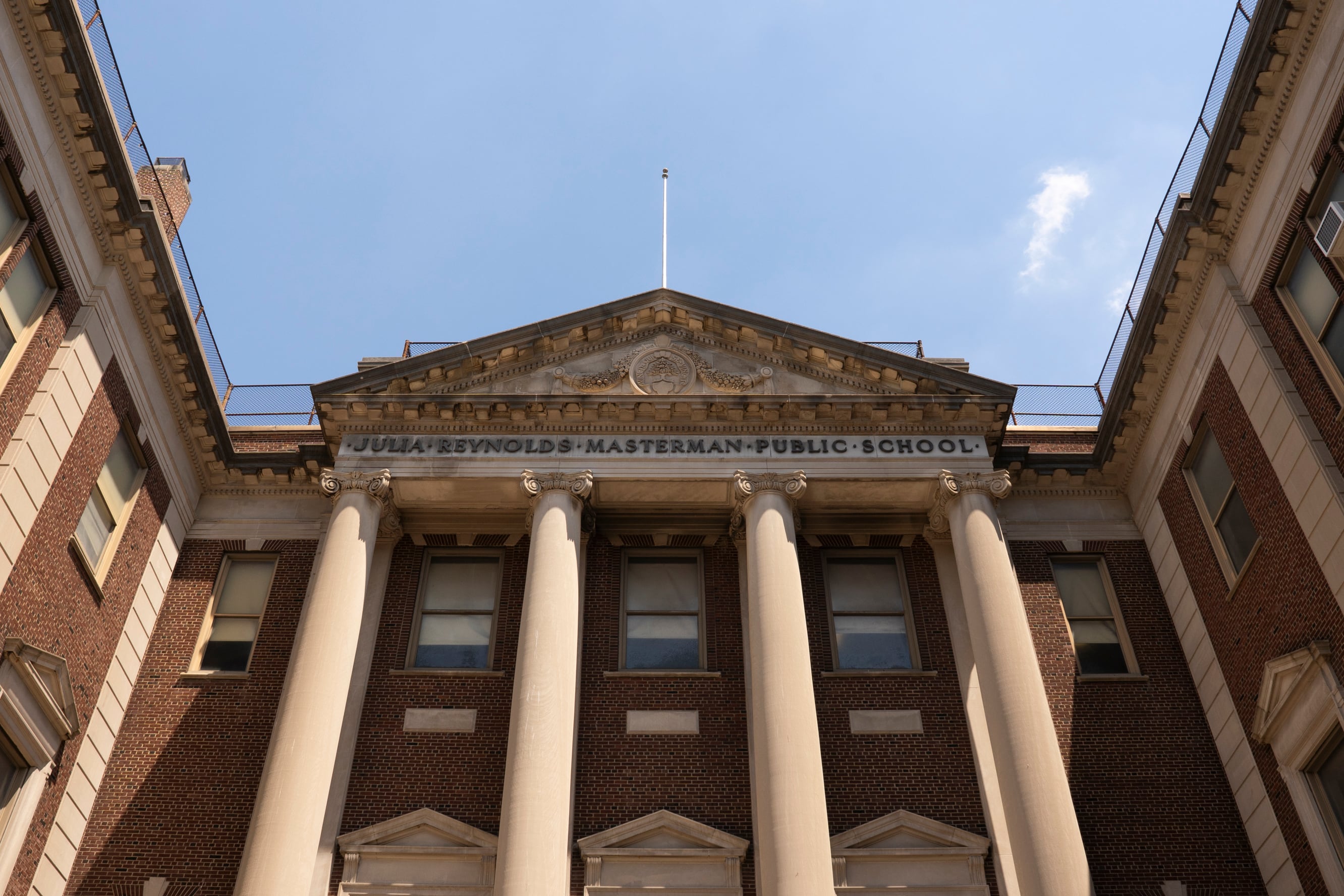
The result is families often scramble to get their children a seat at the most competitive magnet high schools, like Julia R. Masterman and Central High School. Some kids also covet selective admissions schools for specialized arts or science programs.
Some have criticized the system for creating unequal educational opportunities for families, and favoring those with time and resources to navigate the complicated application process.
The district revamped the process in 2021, which included designating priority ZIP codes, in an effort to make it more equitable. Still, the most coveted magnets have proportionally fewer Black and Hispanic students and more white and Asian American students compared with the district average.
To get a spot in a selective school, students submit grades, PSSA scores, attendance information, and in some cases, portfolio elements. Students rank their top choices, and those who meet a school’s standards then enter a lottery to determine if they get a spot.
Still, more students are eligible for many competitive schools than there are seats. If a student applies to a school where they don’t meet the standards, it can essentially waste one of their lottery picks.
Julia Farmer, 13, said she thinks she did well on the PSSA but is also “kind of afraid” to see her scores: “I rather them come out sooner so I could just get it over with.”
One positive, Farmer said, was that the application process felt “a little more chill” because of the delay, which gave her and her mom more time to look at schools. She hopes to get into an arts-focused high school for next year.
Margaret Hogan, whose 13-year-old daughter is applying to schools this year, has gone through this process previously with her son, who is now a senior. She’s used to the uncertainty, she said, but “not having the data, I think, is causing stress on the kids.”
For eighth grader Alma Huth, high school holds excitement and opportunity. She hopes to go to either the High School For Creative and Performing Arts or Central. But the process would ultimately be a lot easier, she said, if there weren’t so many choices.
“I feel like there’s just so many good options,” she said. “It’s like, I don’t know, sometimes I would rather not have so many.”
Rebecca Redelmeier is a reporter at Chalkbeat Philadelphia. She writes about public schools, early childhood education, and issues that affect students, families, and educators across Philadelphia. Contact Rebecca at rredelmeier@chalkbeat.org.