

Sign up for Chalkbeat New York’s free daily newsletter to get essential news about NYC’s public schools delivered to your inbox.
While all eyes this school year will be on New York City’s new artificial intelligence rules, that’s not the only new policy coming in 2026-27.
When it comes to instruction, Mayor Zohran Mamdani has yet to change things up, essentially just continuing to expand his predecessor Eric Adams’ curriculum mandates. The state is phasing in financial literacy and phasing out Regents exam requirements for diplomas. And all New York City schools now will have school avoidance liaisons to tackle student chronic absenteeism due to mental health or social emotional issues.
Here are seven things expected to change this school year.
The next phase of the city’s math curriculum mandate is coming to elementary schools.
Under the Adams administration, the Education Department overhauled its approach to instruction by phasing in curriculum mandates for literacy and math — a practice the Mamdani administration has continued.
All elementary schools must now teach one of three approved literacy curriculums, and all schools — from elementary to high school — must use one of nine city-approved intervention programs designed to help struggling readers.
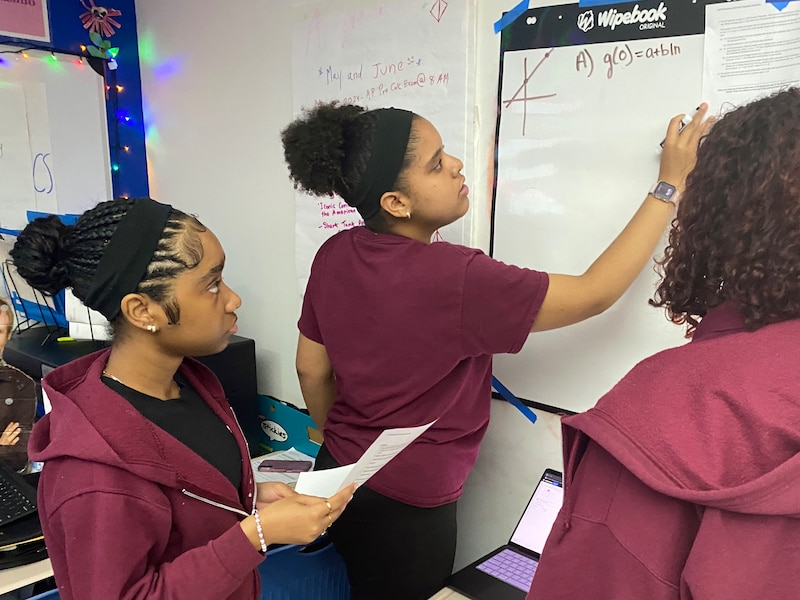
The city requires nearly all high schools to use a particular curriculum for Algebra 1, and all middle schools will be mandated to teach certain literacy and math curriculums by fall 2027.
Starting this fall, the city will require elementary schools in four local districts to use city-approved math curriculums.
It’s the last year that students will need Regents exams to graduate.
The Class of 2027 will be the last cohort that must pass Regents exams to graduate, according to the current timeline from the state’s Education Department.
After this year, students will no longer be required to earn their diplomas based on passing Regents tests — exit exams that date back to the mid-1800s — and instead will have to demonstrate they’ve mastered six high-level qualities that comprise a “portrait of a graduate,” including effective communication skills, critical thinking, and being a global citizen. The state’s Board of Regents has yet to formally approve the change but is expected to consider new regulations this fall.
In place of the exams, schools will have a variety of ways to assess students, including through research projects and internships, state officials have said. But officials have yet to provide more concrete examples of what the new graduation standards will look like.
“Teachers are going to need time to figure out what the requirements are and how to translate that,” Robert Effinger, a teacher at the Bronx High School of Business, previously told Chalkbeat. “There’s no information.”
School districts across the country have moved away from exit exams, and research suggests these tests do little to promote student learning. Many educators are hopeful the change could free them to focus on more hands-on projects and that it will help reduce some students’ test anxiety. But others have raised equity concerns, fearing the changes could push schools to graduate students even if they haven’t mastered key skills.
Get ready for financial literacy classes.
New York state is now mandating that schools teach personal finance — a topic that many students have said they want. Starting this year, students in grades 5-12 will learn about budgeting and money management, credit and debt, and saving and investing. The mandate will apply to K-4 students the following year. New York City already had been making inroads into financial literacy, with a pilot program to give students hands-on experience with saving and managing money through affordable on-site banking options.
“After high school, some of us will never again solve a calculus problem. Our test scores and GPAs will fade into inconsequential measures of past achievement,” a Stuyvesant student previously wrote for Chalkbeat. “But every single one of us will have to manage our finances. That is what we need to learn.”
Every school must designate a school avoidance liaison.
School avoidance — or school refusal as it’s sometimes called — is when students consistently don’t show up to class due to social or emotional disabilities, such as severe anxiety or depression. Between 1% and 15% of children are school avoidant, researchers estimate. Parents believe the problem increased after the pandemic’s shift to remote learning, and now the Education Department is mandating every school designate a staffer as a school avoidance liaison by Oct. 31 to help tackle the issue. Staffers, however, aren’t getting extra money for the role.
Without systemwide guidance, the city’s nearly 1,600 schools have responded unevenly to school avoidant students. The new policy is meant to change that. Liaisons will get a two-hour training on behaviors that lead to school refusal, and they will provide families information about mental health programs and options such as special education evaluations or reevaluations.
Middle schools are now required, along with high schools, to add students to their school leadership teams.
New York City students will now have a bigger say in shaping their schools’ direction.
School leadership teams, or SLTs, are committees of educators, parents, and students who collaborate to develop and evaluate school policies aimed at improving student outcomes and ensuring that a school’s goals and budget align. These teams create a blueprint for the school year, known as a comprehensive education plan.
The city already required high schools to have at least two students on their SLTs. In practice, however, this doesn’t always happen: Nearly a quarter of high schools have no student representatives assigned to their SLTs, Education Department officials said.
Now, the city is requiring middle schools to add at least two students to their SLTs. And officials are encouraging elementary schools to add students to their leadership teams. All SLT members can earn up to $300 for their service.
NYC plans to pilot virtual student OMNY cards at 7 schools.
Student OMNY cards have been a gamechanger for many kids since the city introduced them two years ago. Students now get four free rides a day, 365 days a year, at any time, a significant upgrade from the three daily rides during limited hours on school days. But complaints have been growing about the flimsy, paper-thin student OMNY cards and the delays in getting replacement cards.
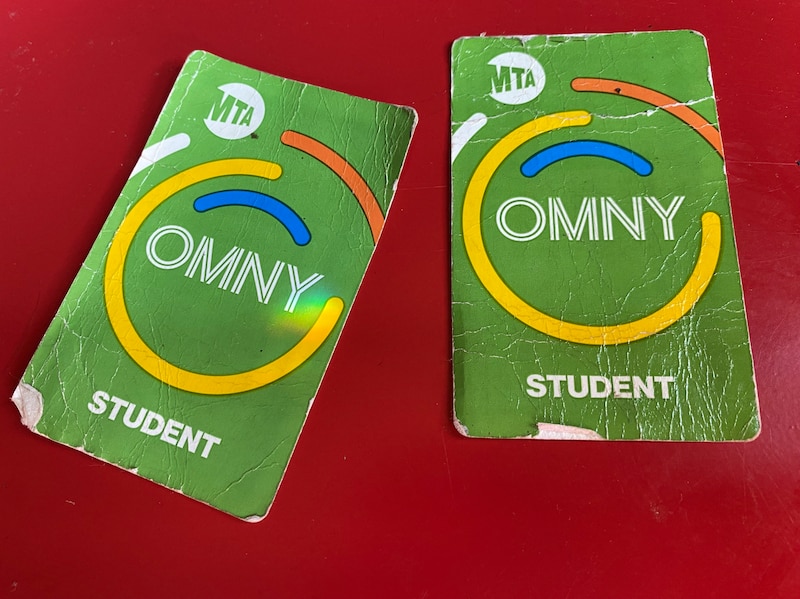
Schools Chancellor Kamar Samuels said at a recent school board meeting that he was “deeply concerned” by the quality of the cards and that the city was planning to provide students with plastic sleeves for them. He also confirmed that the Education Department and Metropolitan Transportation Authority planned to pilot virtual cards at seven schools “some time” this school year, although names of the schools have not been released.
For virtual cards, students will be able to use their cellphones to tap for their commutes (though, of course, they can’t use phones in school). The school system has been in talks with the MTA about virtual cards for more than a year. Students who don’t have phones still will be able to use physical cards.
The Education Department is replacing its outmoded platform that manages student data, scheduling, attendance, and admissions.
For decades, New York City schools have relied on the Automate The Schools, or ATS, a platform that manages everything from student biographical information — such as home language, contact information, and immunization records — to attendance, grades, standardized test scores, and admissions. The Education Department is in the process of transitioning to a new system known as the Online Academic and Student Information System, or OASIS. Officials switched to OASIS for its Office of Pupil Transportation this summer, and schools already had some issues using the tool to find routes for students attending summer school who required busing. Some school leaders are preparing for a bumpy rollout.
Issues during the summer rollout “were immediately addressed,” Education Department spokesperson Onika Richards told Chalkbeat after this story initially published.
The system is taking a “phased, module-by-module approach,” she said, “allowing us to carefully manage the modernization and support schools throughout the process.”
Correction: Sept. 5, 2026: ATS stands for Automate The Schools, not Automated Teaching System.
Additional reporting by Alex Zimmerman.
Amy Zimmer is the bureau chief for Chalkbeat New York. Contact Amy at azimmer@chalkbeat.org.