Sign up for Chalkbeat Newark’s free newsletter to get the latest news about the city’s public school system delivered to your inbox.
The New Jersey Senate Judiciary Committee on Thursday unanimously advanced Lily Laux’s nomination to serve as the state’s commissioner of education, moving her one step closer to leading the state’s public schools that serve 1.3 million students.
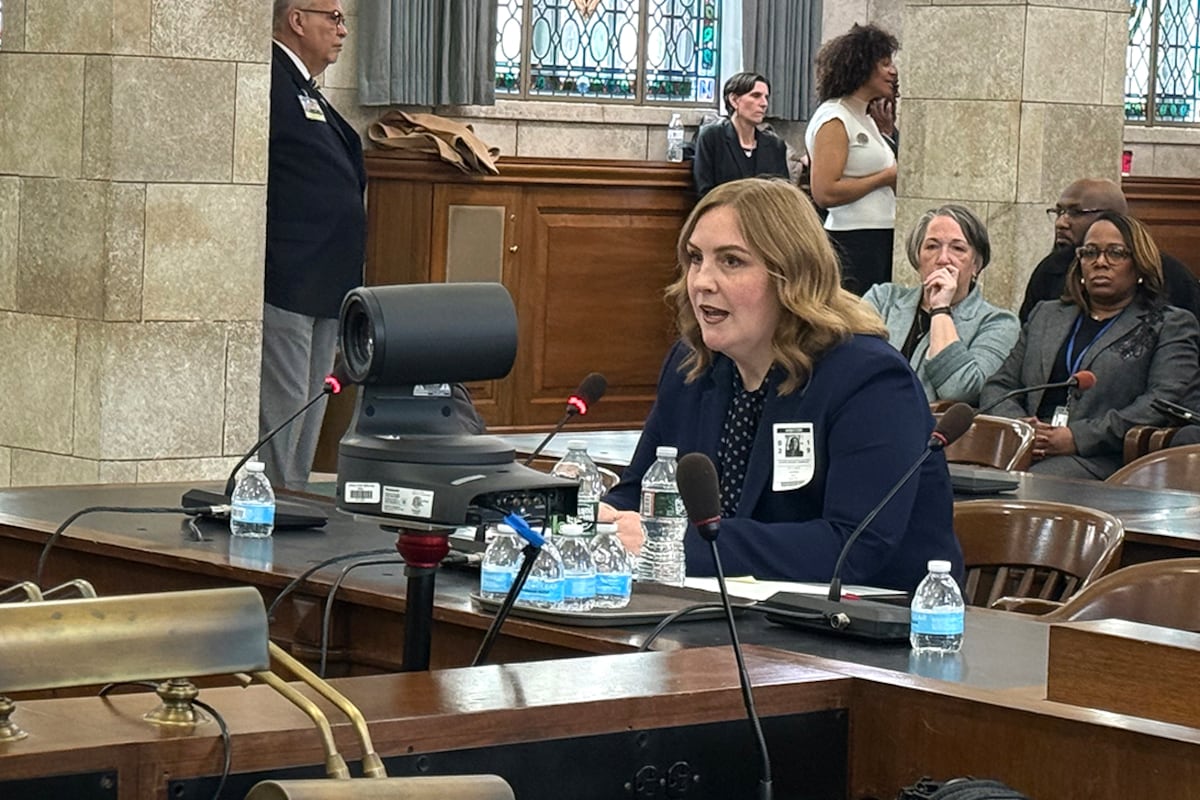
Speaking to senators before the vote, Laux discussed the need to identify the root causes of school budget deficits; expand academic recovery efforts; support schools in implementing artificial intelligence; and fix the state’s aging school buildings.
Laux, however, did not mention specific plans or initiatives she would launch as head of the state’s education department, which oversees more than 500 school districts.
During Thursday’s hearing, senators questioned Laux for more than an hour about how she would tackle New Jersey’s biggest educational challenges. Senate Majority Leader M. Teresa Ruiz, who represents Newark, said she feels excited about Laux taking the state’s top education role.
“I know that with Lily the momentum is going to continue on behalf of students and that to me is the most important part,” Ruiz told Chalkbeat after the hearing.
A former deputy commissioner of school programs in Texas, Laux told senators that “everything is on the table” to support Gov. Mikie Sherrill and the legislature’s goals to improve schools and support students. Sherrill nominated Laux to the commissioner’s job earlier this year. Following the Senate Judiciary Committee’s vote on Thursday, the state Senate will hold a final vote at a future date to confirm Laux.
“I’ve learned that state agencies can help or hinder [school districts],” Laux said Thursday. “We can work hand in hand to make sure students have real opportunities and measure outcomes in an honest way.”
Laux’s nomination comes as districts continue to grapple with changes to the state’s school funding formula that have led to budget deficits in some districts and increases in others, aging and crumbling buildings, and shifting enrollment trends.
In Newark, the state’s largest school district, the next commissioner will help shape how state aid is distributed; provide support for the city’s most vulnerable students; oversee initiatives to help improve third grade literacy; and continue monitoring district performance, as local leaders navigate budget pressures and enrollment fluxes.
Laux also stressed her commitment to expanding opportunities for students through career and technical education programs, expanding high-impact tutoring efforts, and helping school districts understand new policies and initiatives. She did not go into specifics about her plans but stressed that state data would help drive those discussions in collaboration with Sherrill’s office, the legislature, and school districts.
Ruiz and Sen. Vin Gopal, who represents parts of Monmouth County and chairs the Senate Education Committee, also raised the urgent need to fix New Jersey’s oldest school buildings. This month, Ruiz introduced legislation that would create a $10.5 billion bond to fund school construction projects in Newark and other districts, subject to state voters’ approval.
Laux said she has not yet met with the Schools Development Authority, the state agency tasked with overseeing school construction projects. Although the state’s education department isn’t tasked with managing school construction, Laux said she wants to ensure that school buildings are meeting students’ needs.
Senators also spent a portion of Thursday’s hearing discussing the state’s school funding formula amid ongoing budget deficits in many districts across the state. Laux, who will be tasked with helping modernize the funding formula, said she wants to ensure school funding is supporting student outcomes and performance.
“We need to make sure this conversation as a whole is not just about the money, but really about the impact it has,” said Laux about school funding.
In Newark, state aid makes up 84% of the district’s budget, but last year, officials with the city school district said they were $34.2 million below what the state defines as adequate funding.
Before her nomination to the commissioner’s job, Laux worked for the ILO Group, an education policy and strategy firm that develops educational strategies with state and district leaders. She also spent nearly seven years with the Texas Education Agency, where, as deputy commissioner of school programs, she led the implementation of school finance reform, the agency’s COVID-19 response, and a comprehensive literacy initiative.
Jessie Gómez is a reporter for Chalkbeat Newark, covering public education in the city. Contact Jessie at jgomez@chalkbeat.org.