Sign up for Chalkbeat New York’s free daily newsletter to get essential news about NYC’s public schools delivered to your inbox.
New York State will fund the first two years of a free child care program for 2-year-olds in New York City, Gov. Kathy Hochul and Mayor Zohran Mamdani announced Thursday.
The program, known as 2-Care, was central to Mamdani’s campaign promise of creating universal child care for families in the five boroughs. However, many were skeptical that the mayor would succeed in convincing state officials to invest in a major child care expansion.
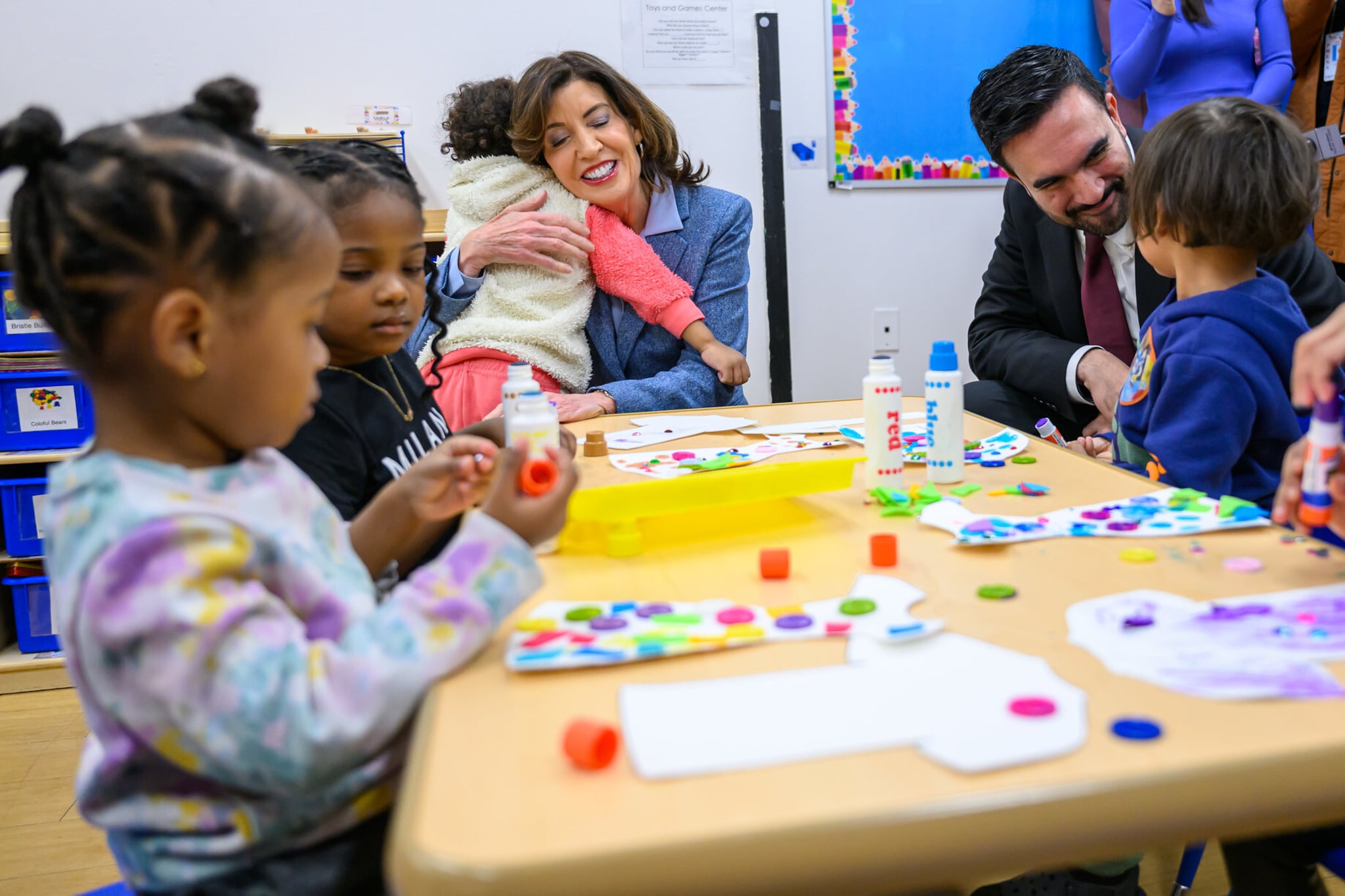
The state is taking the “unprecedented step” of committing to two years of funding “to show you that we’re in this for the long haul,” Hochul said, appearing alongside Mamdani at a YMCA in Flatbush, Brooklyn.
Statewide, Hochul is proposing to invest $4.5 billion this year for child care initiatives. Her office did not immediately say how much of that will go to New York City programs. The Fiscal Policy Institute, a nonprofit think tank in Albany, estimates that 2-Care will cost about $1 billion per year.
Hochul made the announcement ahead of next week’s State of the State address, where she will outline her priorities for the budget, which must be approved by April 1. In addition to the 2-Care funding, the governor plans to invest $470 million to support universal prekindergarten across the state, making seats available for every 4-year-old by 2028. The state will also increase funding for child care vouchers by 40%, helping “hundreds of thousands of families keep their costs low and keep their heads above water,” Hochul said.
Neither the mayor nor the governor took questions, and neither addressed a major looming threat: Thursday’s announcement comes under the shadow of a massive federal funding freeze that threatens billions of dollars in New York’s child care funding. On Wednesday, the governor said that approximately $3 billion in child care funding is at risk.
2-Care too fast?
Many advocates, including the influential grassroots group New Yorkers United for Childcare, have pushed to see 2-Care grow as quickly as possible. However, some early child care education providers are wary of an expansion that happens too quickly or without enough attention to the effect on small child care providers.
When the city expanded its pre-K and 3-K programs under former Mayor Bill de Blasio, it inadvertently destabilized the smaller programs that make up a crucial sector of the child care ecosystem. As 3- and 4-year olds moved to classrooms in public schools, many family child care programs — which look after younger kids in home-based settings — and small, mom-and-pop day care centers were forced to close their doors.
Child care centers lost qualified teachers to school-based programs, which pay more and offer better benefits. Additionally, the new programs largely left behind kids with disabilities, who require specialized teachers and cost more to serve.
Mamdani said that the city’s new child care expansion “will include children with disabilities and children who live in homeless shelters,” but he did not offer details on how those kids’ needs will be met.
Meanwhile, destabilizing inequities still exist, said Lauren Melodia, director of economic and fiscal policy at the Center for NYC Affairs at The New School. According to a New School survey last year, family child care providers earned just over half as much per child as providers in child care centers in fiscal year 2025. That’s “despite the fact that they’re offering the same service,” Melodia said.
If the city wants 2-Care to be successful, it will have to include family child care providers and people who work with young kids in the planning, said Helen Frazier, a longtime early childhood educator and member of the advocacy group People’s Early Childhood Coalition.
Toddlers need caring environments that meet their needs, including flexible schedules and easy access to bathrooms and outdoor space, Frazier said. “We hope that Mamdani will start to focus more on what could be great for children, as well as what could be great for parents.”
At Thursday’s event, Mamdani addressed some of those concerns. “We will deliver 2-Care by working in partnership with child care providers, especially home-based providers who have been doing this work without thanks or recognition for far too long.”
Abigail Kramer is a journalist in New York City. Contact Abigail at akramer@chalkbeat.org.