Sign up for Chalkbeat New York’s free daily newsletter to get essential news about NYC’s public schools delivered to your inbox.
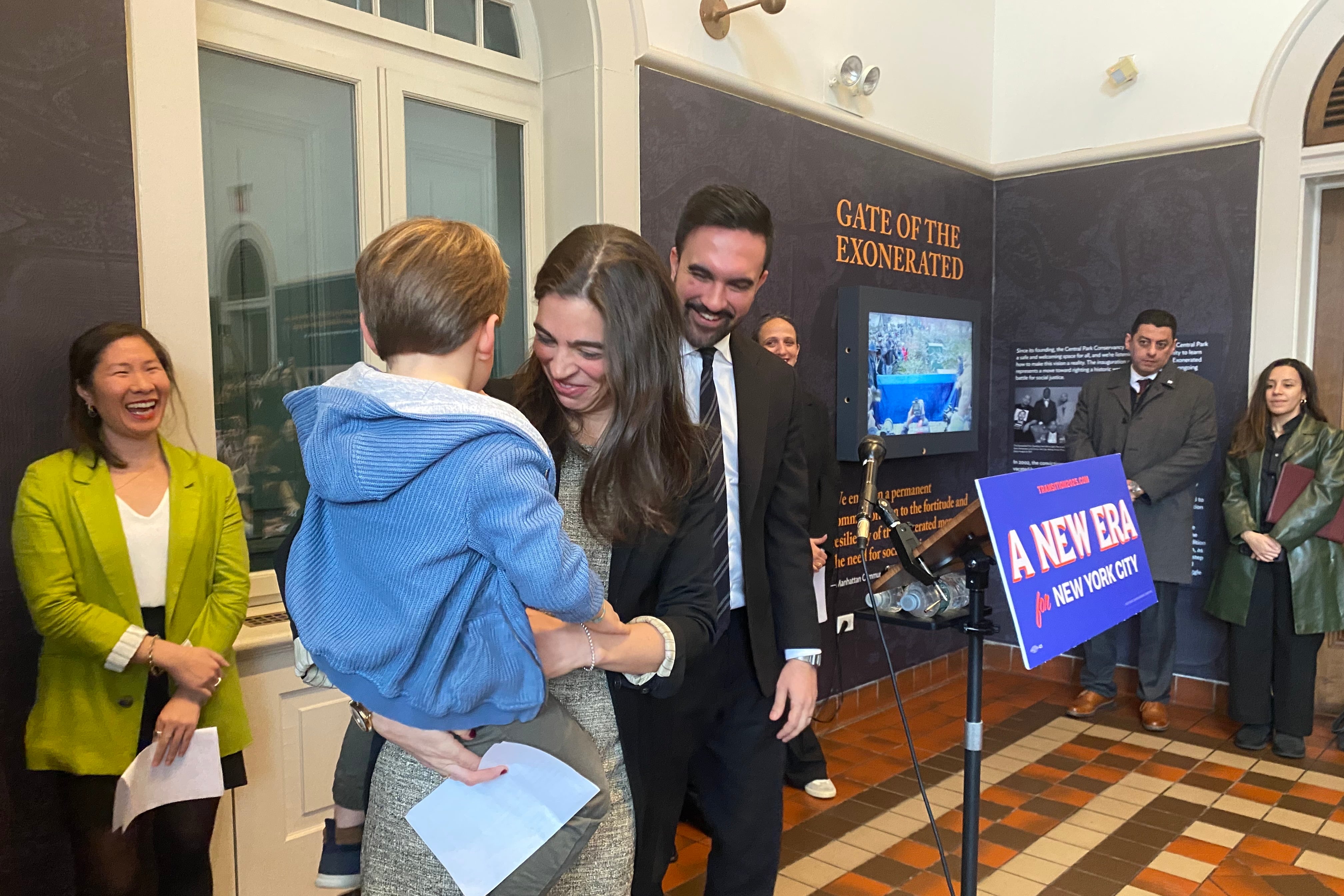
When Emmy Liss publicly accepted her appointment as head of the Office of Child Care at the New York City Mayor’s Office, she acknowledged the people taking care of her own kids. “I would not be standing here today without the caregivers and educators in my children’s lives,” she said.
In addition to her experience as a user of child care in New York City, Liss brings a long history in child care policy and strategy. As the chief operating officer for the city’s early childhood education program under former Mayor Bill de Blasio, Liss was central to the rollout of universal prekindergarten.
Now, she’ll oversee another expansion of New York’s sprawling, unwieldy system of day cares, child care centers and pre-K programs. The job comes with major challenges. While Gov. Kathy Hochul promised to pay for the first two years of a new child care initiative for 2-year-olds, many of the city’s current child care providers are struggling to stay afloat. Low salaries, high staff turnover and onerous regulations hobble programs’ ability to accept kids, even as families clamor for seats. Meanwhile, hundreds of kids with disabilities sit on waitlists for preschool classrooms that can meet their needs.
In an interview with Chalkbeat, Liss discussed the new administration’s vision for free, universal child care.
The following interview has been edited for length and clarity.
What has your experience been with child care in New York City?
I think about this every day, that without all of the caregivers in my children’s lives, I literally would not be sitting here doing this work. My own children have been cared for in multiple different settings, including now in a public pre-K program. I am so grateful for the caregivers and educators who have cared for them, looking out for their development and supporting their growth.
I want that for every parent in New York City – to know that their children are safe, that their children are learning, that their children are being recognized for the wonderful, tiny, hilarious little people that they are. And then be able to enjoy time with their families because they will not be going into debt to pay for that care.
You were very involved in the rollout of Universal Pre-K, which, while vastly increasing access to early education, has also been criticized for destabilizing community-based providers and for leaving out kids with disabilities. What do you see as the most important lessons from that rollout?
I think one of the most important lessons to take from [pre-K] is its universality. There are families, and particularly children with disabilities, whose needs were not fully met in the initial rollout and we still need to do important work there. But in starting with the premise of a universal program, we built the support from families and communities and the expectation that this would be there for them, and then we rallied all of government around delivering it. That’s a really important lesson as we think about what it will take to marshal the resources to deliver on universal child care.
We also recognize that we cannot build a universal child care system without community-based and home-based child care providers, and that not all providers had their needs met in the initial rollout of 3-K and pre-K. We want to work closely in partnership with them in this next phase of work, because we cannot do this work without them.
We’re still working through the policy details but we really want to make our commitment clear: that this program and our commitment is to all children.
What is the role of family child care providers in this expansion?
When we think about where families are choosing to send their children for care, for so many families that choice is family child care. These are providers who are important pillars of their community. As we think about expanding the system, we plan to really engage with and listen to providers about what they need in order to be successful in a program like this.
What can the city do to address salary disparities between teachers in public schools and teachers in community-based child care programs?
That’s something we’re going to be looking at closely, in collaboration with our partners in labor and others. If we want our child care providers to be able to expand and to serve more children, they need a workforce, and that workforce needs to be respected and well paid.
Finding space for new programs is clearly a challenge. How will you approach that?
We’re going to start by looking comprehensively, neighborhood by neighborhood, at what our supply looks like and what we anticipate the demand is. Where we see unmet demand for child care services, we will work across all of the city agencies that touch physical space to think about [how we can] use existing space and create new space.
How do you think about ensuring program quality, especially with such a large number of small-scale providers? Is there a tension between ensuring quality and allowing programs to be culturally responsive and flexible to meet kids’ interests?
It is absolutely possible to have a system that promotes and ensures quality, and that includes programs that are culturally responsive. Not all programs will look exactly the same. There is often a narrative that you have to choose [between] access or quality, and I disagree.
The way that we rolled out Pre-K for All is a good case study. When you look at the data from that expansion, you see that at the same time that we were rapidly increasing access for families, we were also delivering results for children, as measured by nationally normed assessments. We saw that those classrooms and programs were high quality.
It requires being really thoughtful about how we use our resources and how we coach and support programs. But it’s a false choice to suggest that quality means uniformity, or that we can’t have programs that really meet the needs of each cultural community of the city.
Abigail Kramer is a reporter in New York City. Contact Abigail at akramer@chalkbeat.org.