Sign up for Chalkbeat Philadelphia’s free newsletter to keep up with news on the city’s public school system.
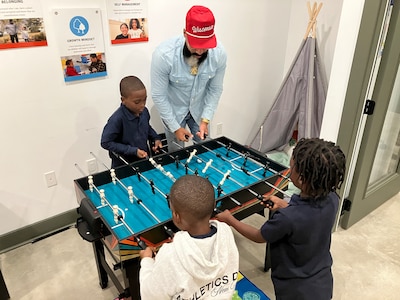
The secret to a perfect dirt bowl snack isn’t in the pudding, or the crushed Oreos, or even the gummy worms. It’s about patience, according to Kevin Kelley.
That’s something second graders Donte and Chris and first grader Derrick are working on one Wednesday after school with Kelley and Justin Agard, their mentors.
“Just a little bit, pour it slowly since it’s a liquid,” Kelley said, watching as the boys cautiously tipped a jug of milk into measuring cups and stirred in whipped topping.
“That tastes good!” exclaimed Donte. “Like, real good. But I need more Oreos.”
Kelley, a Philadelphia native, works with Donte and Chris and six other Philly youngsters through a new nonprofit program called Friends of the Children Philadelphia. (Chalkbeat is using pseudonyms for the kids to protect their identities.)
The program serves at-risk young kids, starting at ages 4 to 6, who have experienced trauma due to gun violence, poverty, family incarceration, abuse, or other adverse factors that can affect their mental health and academic performance.
Friends of the Children isn’t a typical after-school program or mentorship — Kelley will be with his little ones and their families consistently for the next three years, at least. Friends of the Children offers families a commitment that the program will be there in a child’s life from kindergarten through high school graduation — “12+ no matter what,” they say.
Betty Handy, executive director of Friends of the Children Philadelphia, said the model is based on rigorous research that shows long-term, stable, positive relationships with a caring adult can make a meaningful difference in a child’s life. She said she believes the program can help lessen generational poverty in the city and keep young people out of the prison system.
While it’s new to Philly, the organization has branches in more than 30 locations nationwide. A five-year study of the program found “significant effects” in favor of the model, including students reporting less trouble in school and greater emotional strengths. In its first year in Philadelphia, the program served 24 children.
Each mentor, called a Friend, is required to sign a three- to five-year full-time paid contract and takes on a caseload of around eight kids from North Philly and Kensington who have been referred to the program by school staff, community organizations, or foster care workers. Those Friends become immersed in that child’s life starting at elementary school and a program mentor will stay with them through high school. In its first year, the program had three Friends on staff, but is looking to grow that number.
The Friends sit in on classes in school, they can attend report card meetings, offer homework help, take the kids on trips to the library or aquarium. Currently, the program is working with kids at William D. Kelley Elementary and Bayard Taylor Elementary schools, as well as the North 10 Lenfest community center.
The Friends also act as a lifeline for caregivers who are trying to find employment or get back to school themselves.
“We’re not prescribing what they need, but we are offering support in a way that keeps their dignity intact” Handy said.
Kelley may help a parent navigate a job-hiring process or point them to the right city contact person if their heat or electricity goes out. If one of his kids is struggling with behavioral challenges in the classroom, Kelley will speak with the teacher, the student, and the caregivers to come up with a comprehensive plan to work through any issues.
“The most important aspect is we start them young,” Handy, known by the kids in the program as “Mama Betty” said. “We do early intervention, and we are here to guide the child, one on one, for several years, staying in their lives, to see them succeed.”
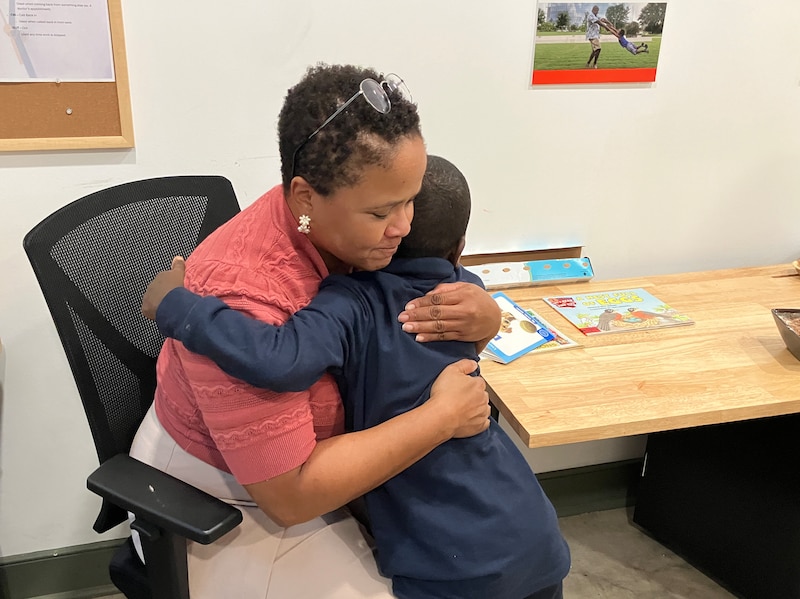
For Justin Agard, another Friend in the program, caring for these kids is personal.
In 2007, while Agard was at Temple University, his younger brother was murdered in New York City for his rumored involvement with gangs and drugs. Years later, one of Agard’s son’s friends — whom he had coached — fell victim to gun violence.
After his brother’s death, Agard got involved in anti-violence work, coaching, substitute teaching, and working within the foster care system. He and his wife raised successful kids of their own and thought of fostering or adopting.
When he discovered Friends of the Children, he realized their model “is what I’ve always felt was missing” in the behavioral health field in the city he said.
“It just made me feel like I can really impact a kid’s life for the better over a long period of time” Agard said.
Kelley and Agard are both Black men and they say that representation is vital to relationship-building, trust-building, and the ability to make young Black kids like Donte, Chris, and Derrick feel supported, understood, and safe.
For young Black men, who make up the majority of the kids the program serves, asking for help can be really hard, Kelley said. The kids he works with are learning to become comfortable making mistakes in front of Kelley and asking for assistance with things like reading or spelling in a safe space. They work on confidence-building and emotional regulation in addition to academics.
Kelley said when he’s working with his eight kids through the program, he’s constantly thinking about a line his nana, a longtime Philadelphia school district teacher, used to say to him: “I love you and there’s nothing you can do about it.”
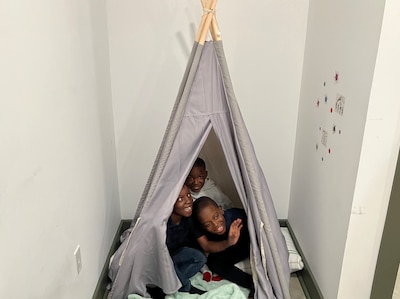
The Friends program just wrapped its first operating year this past August, Handy said, but she’s already thinking about expanding to South Philly and other neighborhoods where young kids are at risk.
Handy said she’s aware of the good they can do for Philly’s youngest learners and their families. But it’s a duty and a responsibility she and Kelley and Agard don’t take lightly.
“Lives are in the balance,” Handy said. “Too many times there are adults who don’t show up for our youth. But our Friends at Friends of the Children, they show up.”
This story has been updated to clarify details about the length of the program.
Carly Sitrin is the bureau chief for Chalkbeat Philadelphia. Contact Carly at csitrin@chalkbeat.org.