Chicago plans to reopen child care centers in early June, Mayor Lori Lightfoot said Friday, while the governor announced that other cities may reopen their centers even sooner.
Gov. J.B. Pritzker’s phased economic reopening plan has been on a faster timeline than Chicago’s. He has said that some restaurants and businesses could resume operations next Friday.
Throughout the state, providers and parents should expect changes in the way their centers operate, from the number of children in a class to hygiene precautions and possible tuition increases, though many details remain unsettled.
Only 15% of the state’s child care centers are currently running, all on emergency licenses, and those centers may immediately expand the number of children served, according to new capacity guidelines.
But for most centers in the state, class sizes must remain at 10 or fewer children in the first four weeks of opening so that providers can establish safe social distancing and sanitation routines and guidelines. After four weeks, providers may increase capacity, but there will be tighter restrictions on class sizes than before the pandemic.
Children ages 2 and younger will not be required to wear masks, Pritzker said, but older children will.
Class size caps mean centers will re-enroll fewer children. The governor acknowledged Friday that limits on numbers of children in child care centers will be roughly 30% lower than their pre-pandemic levels.
How that will impact enrollment depends on the center. Bela Mote, CEO of the long-running Carole Robertson Center for Learning in Chicago, said only 40% of her families signaled they’d bring children back right away.
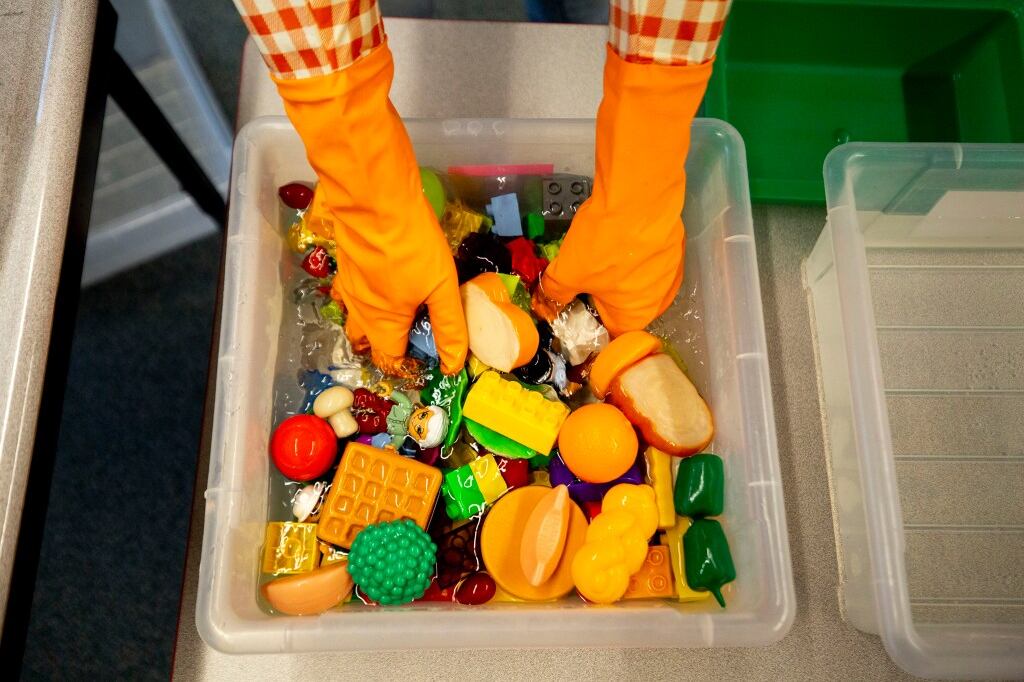
Centers will have to conduct new health and safety routines. Some providers said they were preparing to implement temperature checks and new pickup and drop-off procedures and to put limits on who can enter a building.
Some center owners have also warned of possible tuition increases, as the costs of additional precautions and staff put stress on already thin margins.
Both the governor and mayor underscored on Friday that they were working to provide businesses with relief funding. Nationally, child care advocates have warned that a wave of child care centers could close.
The state has continued to pay providers who previously received public monies, through its Child Care Assistance Program, and it has offered emergency licensees one-time stipends. But the closures have cost many centers private tuition payments that helped sustain them.
Some providers have warned that the current assistance may not be enough.
According to the Illinois Department of Public Health, the state had 2,758 more confirmed cases of COVID-10 on Friday to total 105,444 coronavirus cases so far. About 40% were in Chicago.
Speaking Friday, Lightfoot said that she would issue more guidelines next week and that other activities for children would resume later in Phase 3. Parks offering activities for youth and private summer camps may open later in June.
Lightfoot did not offer a specific reopening date. Pressed by a reporter, she said the city would move into Phase 3 by June 10.
Under the city’s timeline, schools would not reopen until Phase 4. Reaching that milestone depends on the rate of the virus’ spread and other health metrics. Chicago Public Schools has already said it plans to host summer school virtually.
Despite broader concerns about small numbers of children who contract a mysterious inflammatory illness linked to COVID-19, the governor said Illinois had not seen significant transmission of the coronavirus in child care settings. He called that encouraging evidence that child care can be provided safely.