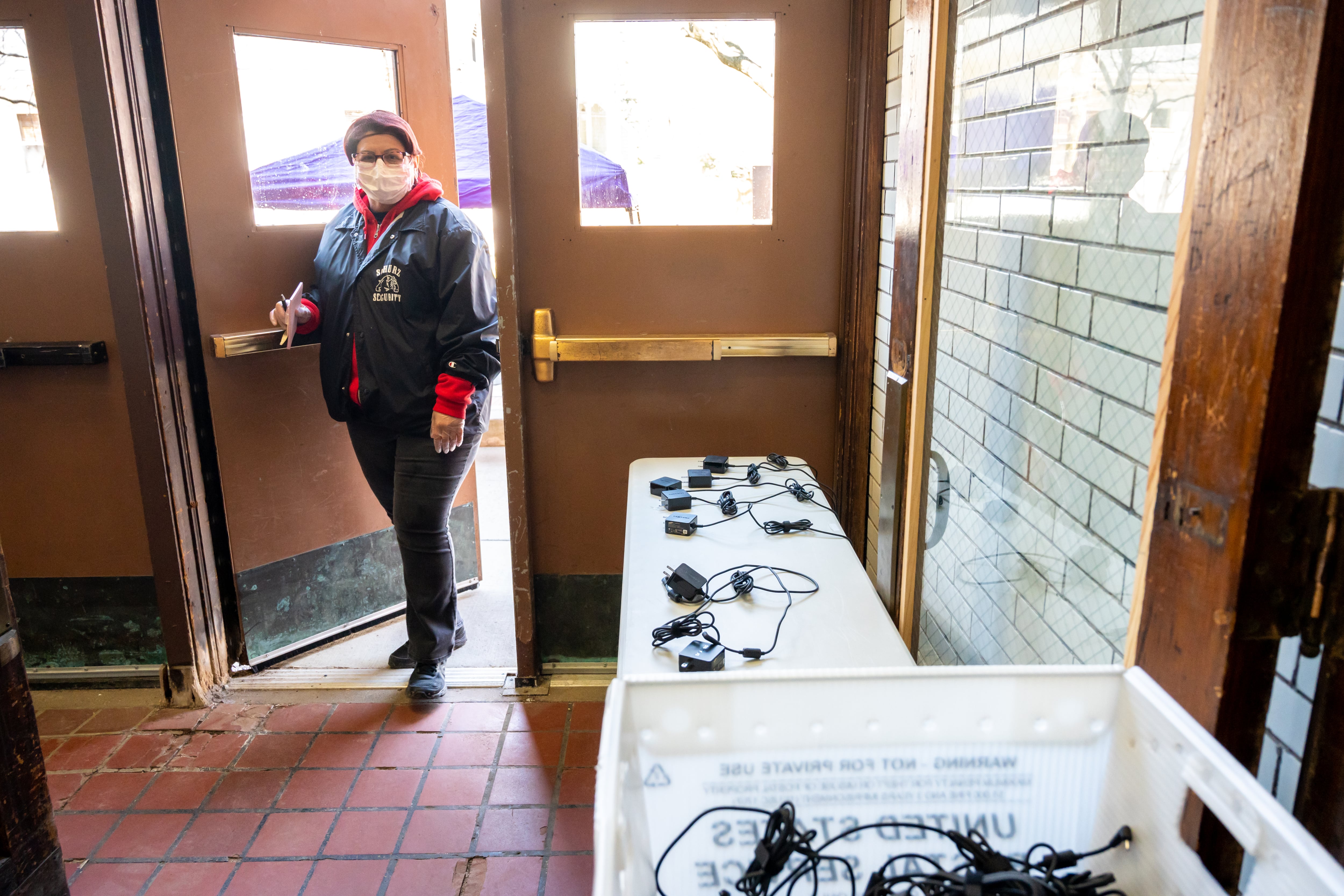
Chicago Public Schools has spent about $55 million responding to the coronavirus crisis so far, with about $25 million on technology.
To react quickly to the pandemic and statewide school closures, the board back in March gave district leaders a green light to spend up to $75 million without prior board vetting through June. Much of the money has gone to computers and other devices. But the district also has paid almost $19 million for premium pay for frontline workers, $5 million for meal delivery to students’ homes, and more than $1 million on cleaning supplies and protective equipment.
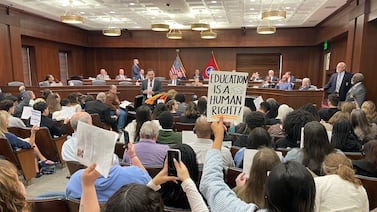
District leaders gave their governing board an account of their spending during the pandemic at a Wednesday meeting, and the board extended the permission to spend without board approval through September.
District officials also said that they are working on a draft plan for reopening school buildings in the fall, which will be presented for public comment in the coming weeks. Districts across the country are bracing for an onslaught of added expenses as they plan to reopen schools safely; those could include smaller class sizes, more protective equipment, and other changes.
“We are determined to meet the needs of our students, families and staff,” said Arnie Rivera, the district’s chief operating officer, who went over the expenses. “Our approach will be nimble and focused on safety.”
Chicago is slated to receive an estimated $205.7 million in federal coronavirus relief dollars, according to preliminary figures. It will have to pass some of the money on to the city’s charter and private schools. Critics such as Chicago’s teachers union have argued that the district should be spending more aggressively on efforts to prevent its most vulnerable students from falling behind amid the pandemic.
About $18 million of the total expenses so far were made under the board’s authorization to spend without its prior approval; the remainder were under contracts the board had approved before the coronavirus outbreak.
At its Wednesday meeting, the board also voted to allow the district to begin spending down its 2020-2021 budget before its scheduled presentation to the board in July and to dip into some unrestricted debt service funds.
The district spent about $4.1 million on educational materials, including printing and translating remote learning paper packets for students. It also paid more than $167,000 to reimburse students for cancelled international spring break trips and other travel.
Chicago school chiefs Janice Jackson told board members the district will develop multiple scenarios for reopening school buildings, and she said that she would seek feedback from families and others. She urged public members to weigh in on the draft plan when it becomes available.
She said the district’s response so far has been robust, with 15 million school meals served, more than 51,000 classrooms deep-cleaned, and more than 12,000 calls and emails handled by the district’s coronavirus-response “command center.”
“This year will go down as the most eventful year in CPS history,” Jackson said. “If it isn’t, I don’t know how much I can take.”