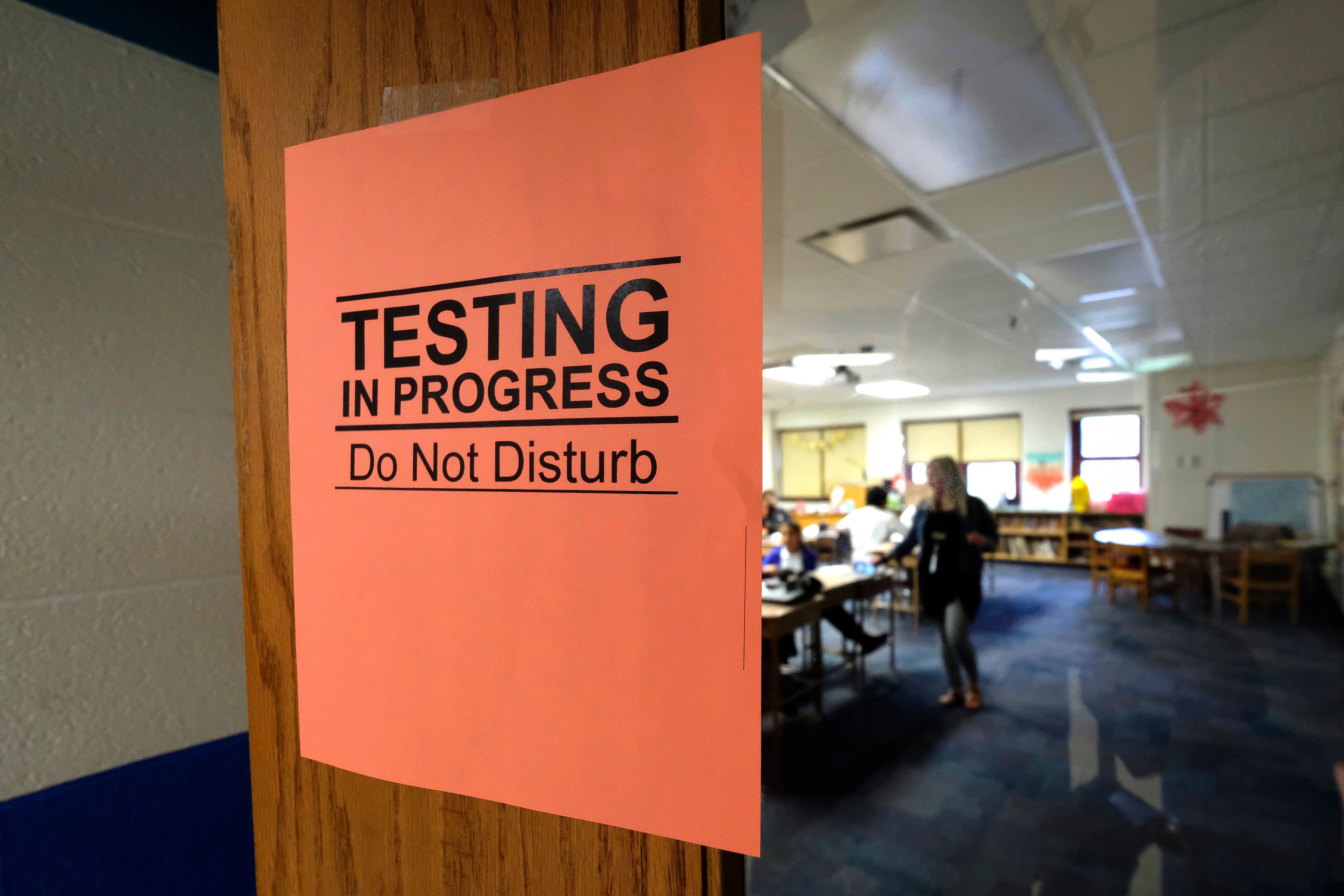
With the pressure mounting on the Biden administration to decide whether states can waive spring tests, the majority of Illinois superintendents have signed a letter opposing spring assessments.
More than 600 superintendents — representing more than two-thirds of Illinois school districts and over a million students — statewide have signed the letter, which says that while school leaders welcome accountability, they have concerns about administering tests during a pandemic.
“We are working diligently to get a larger portion of students back into schools for in-person instruction, working to address the social and emotional, and academic, needs of our students which includes plans to address lost opportunities, getting staff and community members vaccinated, and serving as a lifeline for so many members of our communities,” says the letter.
Many school districts in the state are in the process of reopening school buildings. The state is currently reporting that more than a million students in Illinois are participating in remote learning, about 925,000 have the option of some in-person learning.
The state’s top educator backs the superintendents’ call. On Friday, state Superintendent Carmen Ayala wrote her own letter to school district leaders to say that the state also will be advocating for the U.S Department of Education to provide waivers for the spring 2021 assessments. If they do, Illinois plans to apply for one.
“We believe it is more important to focus on supporting our students’ transition back to in-person learning, than to focus on assessments. Our focus belongs on building our students’ reconnection with their teachers and re-engagement in learning in the classroom,” Ayala wrote in the letter.
Depending on what the federal government decides, the state has said that districts can push testing timelines back to mid-March.
This week, Biden’s pick for education secretary, Miguel Cardona, has been sending mixed messages on his position on spring assessments. While he does not feel that students need to be brought into school buildings to be tested, he believes that students should be assessed.
“If we don’t assess where our students are and their level of performance, it’s going to be difficult for us to provide targeted support and resource allocation in the manner that can best support the closing of the gaps that have been exacerbated due to this pandemic,” Cardona said.
Some national education advocates are pushing the federal government to continue with state assessments. In a joint letter to the federal Department of Education, groups like The Education Fund, National Center for Learning Disabilities, National Urban League, and others said that assessing student learning is key to ensuring that students have the resources they need to recover from learning loss during the pandemic.
“As state leaders, policymakers, and families continue to navigate this uniquely challenging time and take steps to accelerate learning, it is imperative that they have accurate information on how students are performing, so that scarce resources can be directed to the students, schools and districts that need them most,” the letter said.
States use testing data to assess overall academic achievement and to focus on the performance of a variety of groups, including students who live in poverty, English language learners, and students with disabilities. In Illinois, the data is used to help draft district improvement plans and to send more money to districts with pronounced test-score gaps. Without the data, it’s not clear how states will decide how to financially support districts that need the most help.