Sign up for Chalkbeat Chicago’s free daily newsletter to keep up with the latest news on Chicago Public Schools.
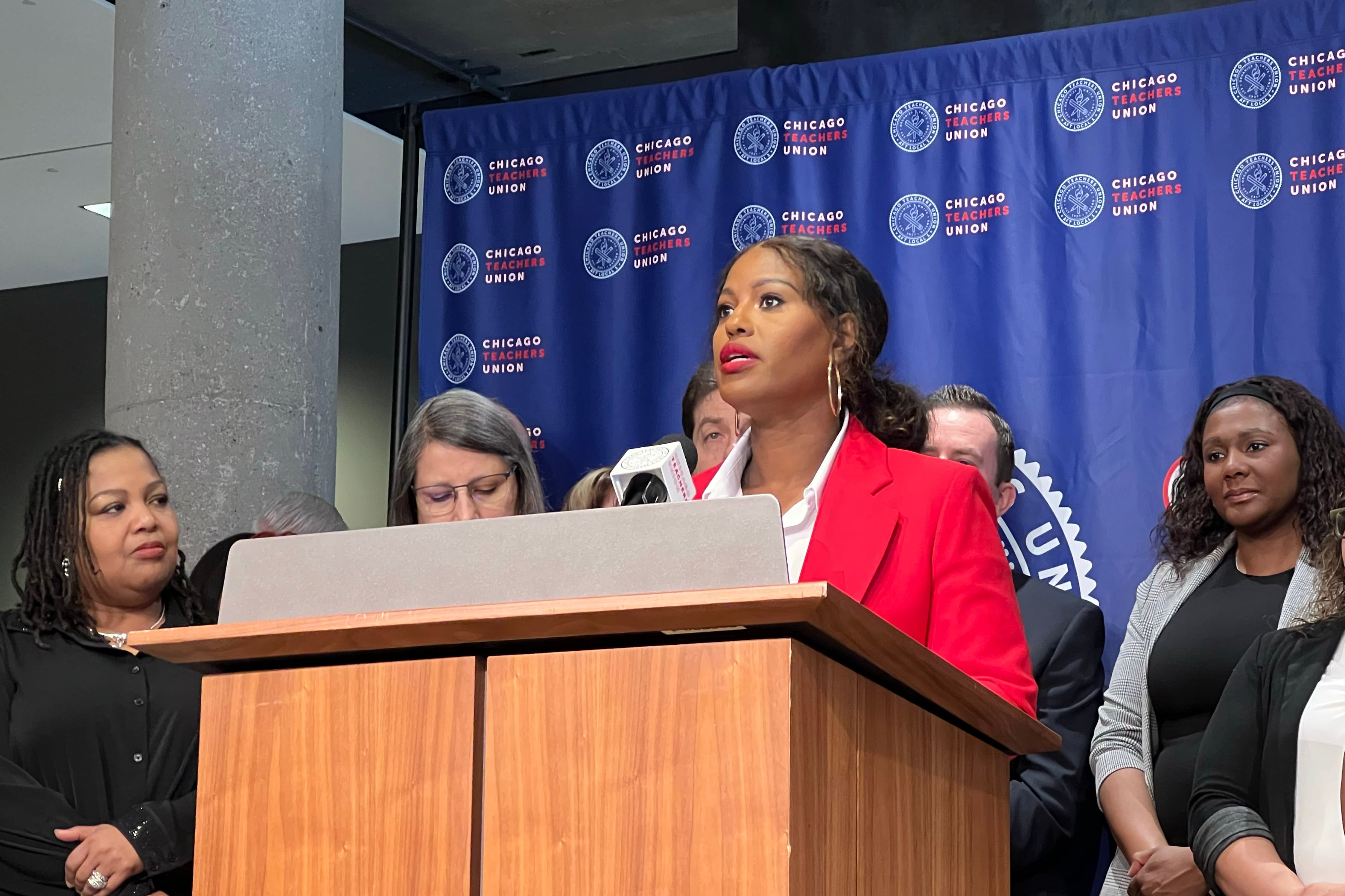
Chicago Teachers Union President Stacy Davis Gates said Tuesday Chicago Public Schools should “absolutely” sue the U.S. Department of Education over its decision last week to cut millions in federal magnet school funding from the district.
Trump administration officials said $5.8 million will not be awarded to Chicago in the coming year under the Magnet Schools Assistance Program and $17.5 million would not be awarded for the remaining years of the district’s grants. The move created an $8 million hole in the current school year’s CPS budget, district officials said.
The federal government’s decision stems from a dispute over whether Chicago’s school district is violating federal civil rights laws with its efforts to help improve Black student achievement and protect transgender students’ rights.
“This time period is going to require an entire encyclopedia of strategies employed at every turn, because that’s what it’s going to take to both resist, challenge, and win in this moment,” Davis Gates said. “So yes, they have to sue. That is their duty to sue.”
A CPS spokesperson said the district is “considering all legal options” regarding the magnet school money.
A spokesperson for Chicago Mayor Brandon Johnson echoed the district, noting that with CPS’ current budgetary constraints, “every single dollar counts.” Johnson said earlier this year that he would take the Trump administration to court if it took federal funding away from CPS because of the district’s diversity, equity, and inclusion efforts.
About two weeks ago, the U.S. Department of Education’s acting assistant secretary of civil rights Craig Trainor told CPS he would not certify the district’s eligibility for the magnet school money unless the district abolished its Black Student Success Plan and changed its policies on transgender students by Sept. 23.
Chicago called the demand “unreasonable and untenable” and requested an additional 30 days to respond. The district’s interim general counsel Elizabeth K. Barton also argued that the federal department was violating its own procedures and “investigatory process” given that there are still two open investigations into both the Black Student Success Plan and Chicago’s compliance with Title IX as it relates to transgender students.
Both of the matters under investigation are requirements of Illinois law, putting Chicago’s school system between a “rock and a hard place,” Davis Gates noted. A 2024 state law requires Chicago’s school board to create a Black Student Achievement Committee and make a plan for serving Black students. Illinois Human Rights Law also requires schools to allow transgender students access to facilities that correspond to their gender identity.
Becky Vevea is the bureau chief for Chalkbeat Chicago. Contact Becky at bvevea@chalkbeat.org.