Sign up for Chalkbeat Chicago’s free daily newsletter to keep up with the latest news on Chicago Public Schools.
State Superintendent Tony Sanders is extending the timeline for the public to weigh in on the proposed overhaul of the state’s accountability system for schools.
In early November, the Illinois State Board of Education announced plans to change what data is used to categorize schools and to tweak the five labels used to define performance.
Sanders wrote in a weekly message on Tuesday that the Illinois State Board of Education will keep the current public comment window open until Jan. 7, instead of Dec. 7. There will also be opportunities for the public to weigh in on the proposal’s drafts between January and April.
Under the new timeline, state board members would discuss the final plan during the March board meeting and vote on new accountability metrics in April, instead of discussing the plan in December and voting in January.
The agency plans to send a final draft to the U.S Department of Education by April 17 under the extended timeline. The goal to implement the new system in October for the state’s 2026 report card remains the same.
“We cannot stretch the timeframe further without jeopardizing our federal approval, but we are happy to extend our schedule to make sure we get such a significant change right,” Sanders wrote.
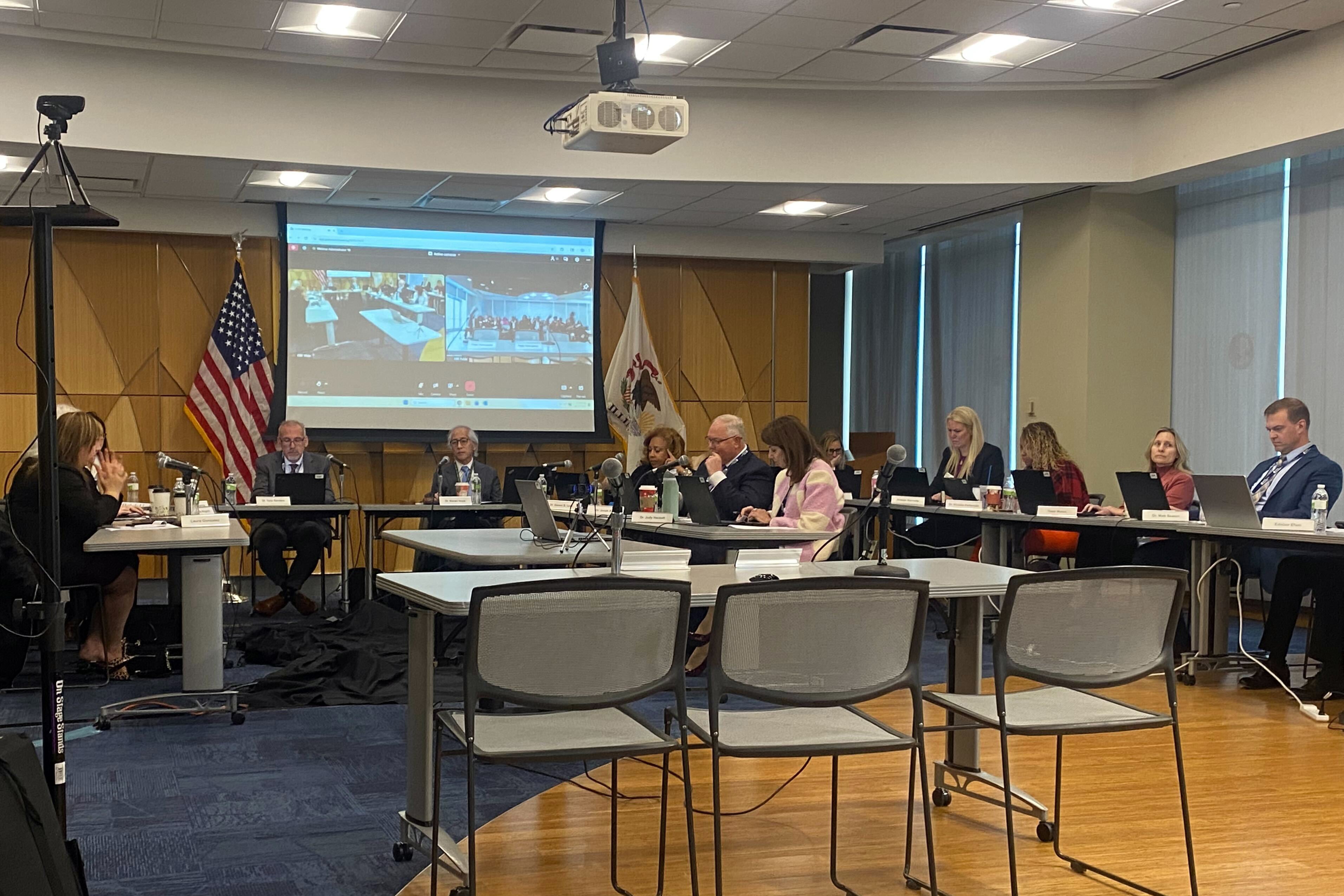
The announcement to extend the state’s timeline comes after state board members and community members raised concerns about changes to the accountability system during the November board meeting.
Advance Illinois, a nonprofit state education advocacy organization, asked the state board to allow more time for public comment during last month’s meeting. A spokesperson for Advance Illinois said the organization “applauds” the Illinois State Board of Education for taking more time to get feedback because it is “critical that the agency get it right.”
“This system is a tool that represents the state’s commitment to transparency, equity, readiness, and continuous improvement,” the statement read. “Done well, it focuses schools, parents, and communities on important outcomes and indicators in a way that supports good practice, identifies areas of strength and/or concern, and prioritizes those schools that need specific resources.”
In November, the Illinois State Board of Education proposed changing the five labels used to assign schools. The new system would label schools as Exemplary, Commendable, Approaching, Developing, or Comprehensive.
The current proposal also removes the 9th Grade On-Track metric from the calculation used to label schools. This metric measures the percentage of first-year high school students likely to graduate based on grades. While this metric will continue to be reported on the state’s annual report card, advocates were concerned about removing it from the data.
The agency plans to host several virtual listening sessions on Jan. 15, Jan. 21, Feb. 11, and March 16 between 4-6 p.m., according to Sanders’ weekly message.
Samantha Smylie is the state education reporter for Chalkbeat Chicago covering school districts across the state, legislation, special education and the state board of education. Contact Samantha at ssmylie@chalkbeat.org