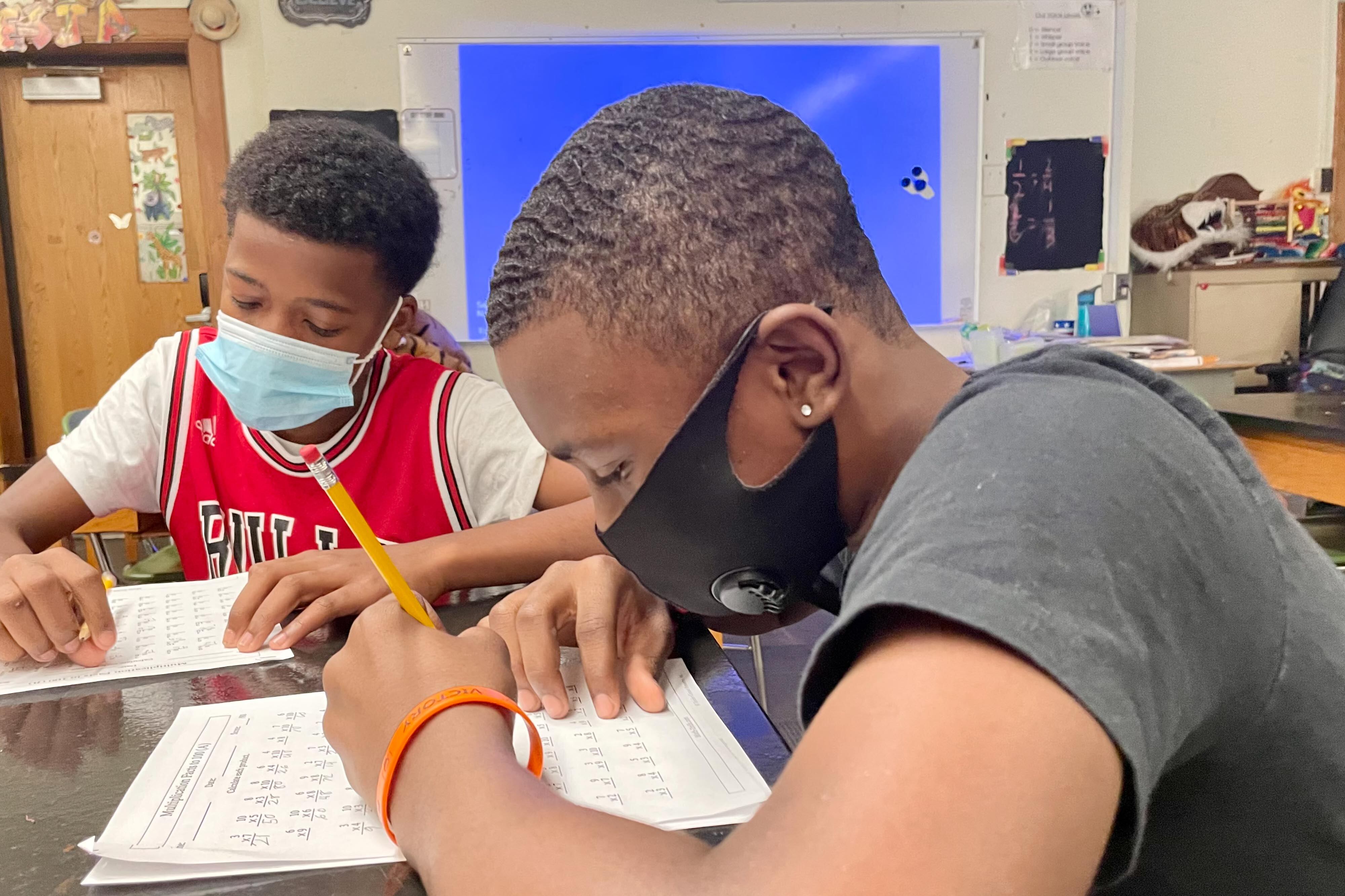
Michigan’s largest school district plans to keep its mask mandate in place despite the Wayne County Health Department’s decision last week to rescind its requirement that masks be worn in K-12 schools and day care centers.
Wayne County was one of more than a dozen Michigan counties that had a mask mandate in place starting in the fall. But in recent weeks, Wayne and all of the other counties have since rescinded those orders, leaving it up to local school districts to decide if those requirements should be in place. The lifting of the orders is happening as COVID cases and hospitalization rates decline.
Nikolai Vitti, superintendent of Detroit Public Schools Community District, said Monday during a news conference that the school district’s K-12 mask requirements will stay for the foreseeable future as the district waits for recommendations from city health officials.
“We’ll continue that conversation with the Detroit Health Department regarding their view of the mask policy,” Vitti said, emphasizing that the Detroit school district follows the guidance of the city’s health department rather than the Wayne County Health Department.
“All things will always be unique, and they need to be unique and different in the Detroit context, mainly because of low vaccination and still high transmission rates. We’re looking forward to the day where it’ll be optional to wear the mask for adults and students.”
The school district, Vitti added, will continue to follow city, state, and federal health recommendations when it comes to its COVID safety measures.
Terrence Martin, president of the Detroit Federation of Teachers, said the union would negotiate if necessary to discuss ongoing COVID safety protocols. Ahead of the 2021-22 school year, the union and district officials reached an agreement over the district’s mitigation strategies to reopen schools, including universal masking.
“As the virus changes we have to look at possibly changing,” Martin said.
The U.S. Centers for Disease Control currently recommends universal indoor masking for all staff, teachers, and visitors to K-12 schools, regardless of vaccination status.
Nationwide, as new COVID cases and hospitalizations decline from the omicron surge in early January, more state leaders are ending their universal mask requirements. Nevada lifted its mask mandate for schools and other public places on Friday. New Jersey school districts announced its universal mask requirement will end on March 7. Denver Public Schools will no longer require masks in schools and child care settings after Feb. 25. Connecticut and Massachusetts’ school mask mandates will end on Feb. 28.
Ethan Bakuli is a reporter for Chalkbeat Detroit covering Detroit Public Schools Community District. Contact Ethan at ebakuli@chalkbeat.org.