Sign up for Chalkbeat Detroit’s free newsletter to keep up with the city’s public school system and Michigan education policy.
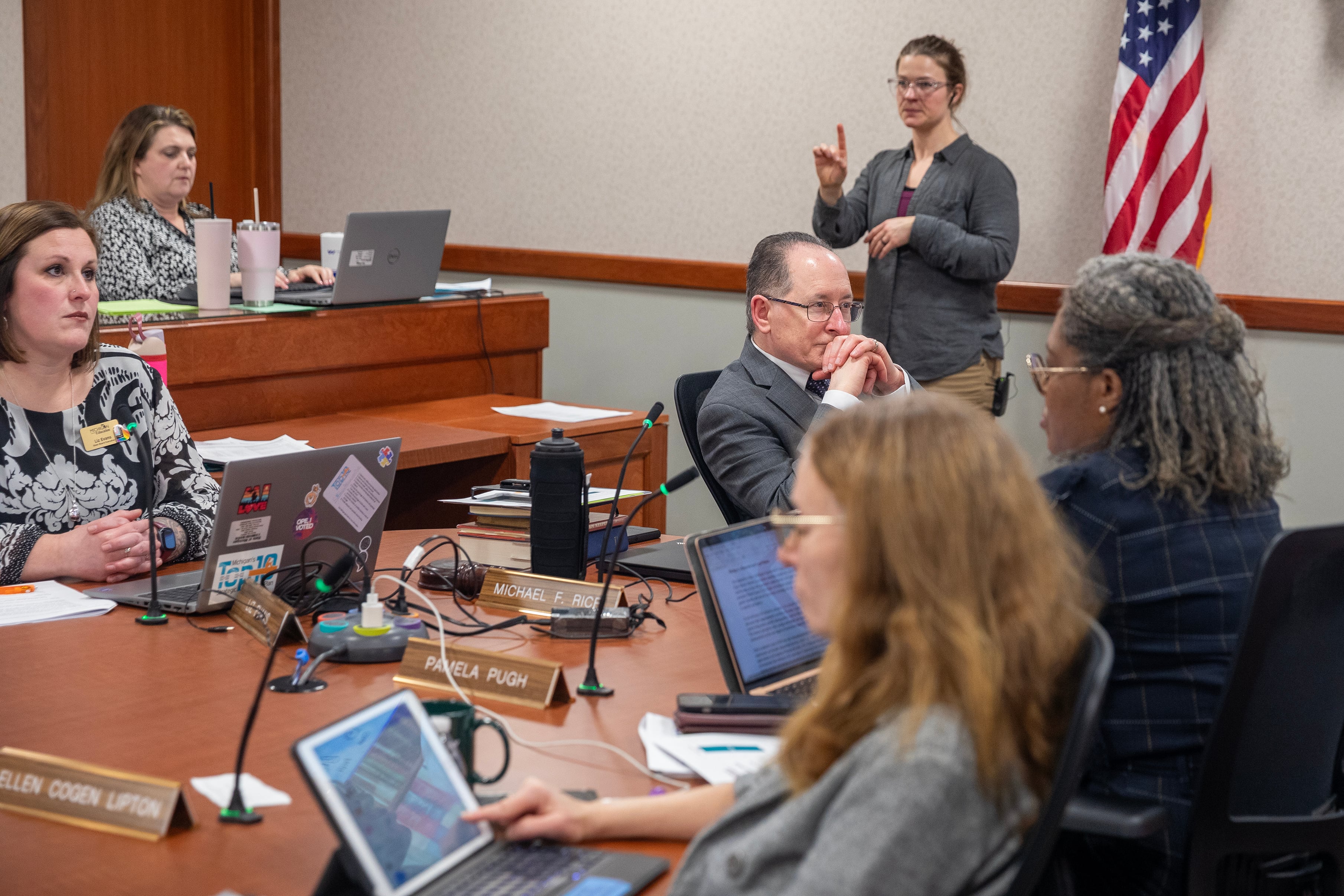
Michigan’s State Superintendent of Public Instruction Michael Rice on Thursday responded to the Trump administration’s demand to certify that it does not illegally promote diversity, equity, and inclusion.
Last week, the U.S. Department of Education gave state education agencies 10 days to sign a certification that they are in compliance with the administration’s controversial interpretations of civil rights laws. The department said states that don’t sign will not receive any federal funding.
In his letter, Rice told the federal government the Michigan Department of Education had previously certified its compliance with civil rights laws, as all states are required to do so regularly. The superintendent also said he believes all of the state’s more than 800 local education agencies have also previously given the same assurances.
For instance, Nikolai Vitti, superintendent of Detroit Public Schools Community District — the state’s largest school system — told Chalkbeat Wednesday it “does not use preference or quotas regarding race in any area so that restriction does not apply to us.”
Rice said his letter would serve as the state’s response to the federal department’s April 3 demand.
Craig Trainor, acting assistant secretary for civil rights, said in a statement last week that states use DEI programs to “discriminate against one group of Americans to favor another based on identity characteristics.” Trainor alleged such programs violate Title VI of the Civil Rights Act of 1964, which prohibits discrimination based on race or shared ancestry.
Though schools must regularly certify Title VI compliance, the federal department’s demand goes a step further. It asks schools to confirm they are in compliance with the U.S. Supreme Court decision in Students for Fair Admissions v. Harvard. The decision meant colleges could no longer use race as a deciding factor in admissions. The Trump administration’s interpretation of the precedent is that it bans many diversity practices and programs.
Rice said in a memo to local school leaders any programs in Michigan schools that may be considered to fall under the broad definition of DEI do not illegally discriminate against any groups of students.
“Many efforts to promote programs that support diversity and inclusion seek to expand opportunities, not limit them, and therefore do not discriminate,” said Rice in the letter.
The superintendent told Chalkbeat in February that President Donald Trump’s January executive order attempting to ban DEI in schools would not change the state’s efforts to incorporate curriculum that reflects its diverse student body.
Rice said in addition to those efforts, many federally mandated services could be considered DEI, such as educating students in the least restrictive learning environment.
“Pre-K-12 programs that promote diversity representing all children, regardless of race, and inclusion of all children, regardless of race, do not inherently harm particular groups of children and are not de facto violations of Title VI,” said Rice.
States have until April 24 to sign.
Other state education agency leaders have had mixed responses.
In Colorado, New York, Pennsylvania, and Illinois, top education leaders said they will not sign the certification. Similarly to Rice, they said their states already certify compliance with civil rights laws.
The Indiana Department of Education said it will sign the certification and collect signed forms from local schools.
Hannah Dellinger covers K-12 education and state education policy for Chalkbeat Detroit. You can reach her at hdellinger@chalkbeat.org.