Sign up for Chalkbeat Detroit’s free newsletter to keep up with the city’s public school system and Michigan education policy.
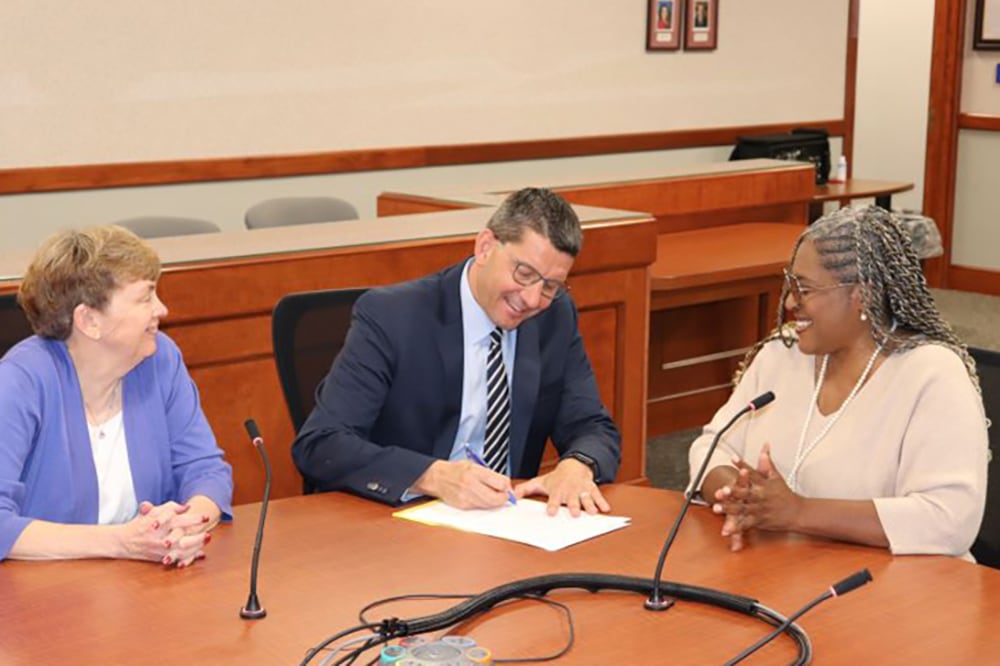
Glenn Maleyko, selected last month to be Michigan’s next state superintendent, formally signed a three-year contract on Tuesday.
Maleyko, currently superintendent for Dearborn Public Schools, will begin the job Dec. 8. He will earn an annual salary of $272,000.
Earlier this month, the State Board of Education appointed Sue Carnell, the chief deputy superintendent at the Michigan Department of Education, to the interim superintendent position effective Oct. 3 and lasting until Maleyko takes over. Current State Superintendent Michael Rice is retiring effective Oct. 3
In August, Maleyko was chosen by the board in a 5-3 vote from among three finalists. The other two were Lisa Coons, former state superintendent in Virginia and a former Tennessee education official, and Judy Walton, superintendent of Harrison Community Schools.
“I am thrilled to have the opportunity to support children and families, educators, and other school staff at all of Michigan’s public schools,” Maleyko said in a Michigan Department of Education statement Tuesday.
“From my experience in Dearborn Public Schools and the relationships I have with educators across the state, I know that local districts, the Michigan Department of Education, and the State Board of Education are all strongly committed to doing whatever we can to improve student achievement.”
He will be taking on the job at a critical time. State test results released a day after he was selected showed slight gains for students in many areas, but third grade English language arts results reached an 11-year low. There has long been criticism and concern about school performance in Michigan, especially in literacy, with the most vocal critics being many Republican lawmakers and even Democratic Gov. Gretchen Whitmer, who said earlier this year that the state must “face our literacy crisis with fierce urgency.”
The contract was signed Tuesday by Pamela Pugh, the president of the State Board of Education, and Judy Pritchett, the board secretary. On Sept. 9, the board voted to allow Pugh to negotiate on its behalf with Maleyko.
Here is a breakdown of the contract’s benefits:
- He’ll be eligible for the same retirement, insurance benefits, and deferred compensation plans as other state of Michigan cabinet level officials.
- He’ll receive 104 hours or 13 days of sick leave each year.
- He’ll receive 240 hours or 30 days of annual leave.
- He’ll be provided with a state vehicle for work within the scope of his official duties. The vehicle can be used for personal use, but Maleyko will have to reimburse the state each year.
- The board will evaluate Maleyko’s work each year. If his work is deemed satisfactory, his salary will be increased by “at least the average percentage increases granted to other department directors in state government,” according to the contract.
Lori Higgins is the bureau chief for Chalkbeat Detroit. You can reach her at lhiggins@chalkbeat.org.