Sign up for Chalkbeat Indiana’s free daily newsletter to keep up with Indianapolis Public Schools, Marion County’s township districts, and statewide education news.
Indiana lawmakers are trying again to restrict minors’ access to social media, citing bullying and mental health concerns that begin on the platforms and spill over into schools.
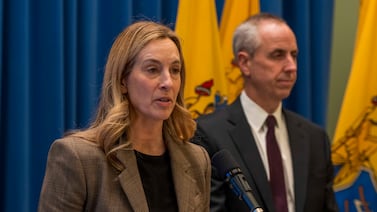
SB 199, presented to the Senate Education Committee by Secretary of Education Katie Jenner, would require social media platforms to verify users’ ages and obtain parental permission for the accounts of teenagers aged 14 to 17. Children under 14 would not be allowed to make — or keep — accounts.
The bill also enacts a curfew for teen accounts from 10:30 p.m. to 6 a.m. and bans social media operators from recommending algorithmic content to these accounts.
Jenner, speaking passionately about the topic, said schools and families are seeing children afraid to come to school due to online harassment or experiencing sleep loss, eating disorders, and anxiety. Common apps to block access to social media aren’t enough, she said.
“For most of us in the room, social media arrived when we were already well into adulthood. We had childhoods free from constant comparison, cyberbullying, algorithm-driven manipulation, and 24/7 access to content that is intentionally addictive,” Jenner said. “Our children growing up today do not have that same luxury.”
A similar social media ban passed the Indiana Senate last year, but did not pass the House in part due to concerns that it would’ve led to legal challenges. Critics also say the bans violate parental rights and users’ First Amendment rights and are too easy to skirt via VPN services and other means.
But while social media bans usually face a legal battle, recent court decisions have allowed such laws to go into effect in Missouri and Florida. In December, Australia also became the first country to ban users under 16 from social media platforms.
“I’m hyperaware that other states that have pursued legislation related to social media have faced lawsuits,” Jenner said. “We know the battle we’re up against and to be very clear, when it means standing up for something that is right and protecting our kids, I’ll battle all day.”
The impact of social media use on students in schools took center stage at the committee hearing, as educators described fights and bullying started online, as well as risky behavior made possible by online platforms, such as drug use.
SB 199 does not list which social media platforms would be affected. Rather, it defines social media as an online forum or website that:
- Allows users to upload content or view the content of other users.
- Employs algorithms that analyze user data or information on users to select content for users.
- Has addictive features, like continuously scrolling content, autoplaying videos, likes, or a livestreaming feature.
- Has a user base in which 10% or more of the daily active users who are 16years of age or younger spend an average of two hours per day or longer on the platform.
The social media ban has been proposed alongside separate bills this year to tighten the state’s existing rules on cell phone use in schools, effectively enacting a bell-to-bell ban on devices like phones, watches, and personal laptops. Senate education lawmakers advanced one of those bills — SB 78 — Wednesday. They also discussed SB 159, which would require school technology policies to allow parents to restrict how school-issued devices are used at home.
Cindy Long, executive director of the Indiana Association of School Principals, said past legislation on cellphones, bullying, student behavior, and discipline has focused on managing symptoms of a larger issue. SB 199 is different, she said, because it targets the digital platforms at the root of the other issues.
“While schools can limit device use during the school day, the influence of social media extends beyond our buildings,” Long said. “We see discipline reports showing two to three hours every day addressing issues that originate on social media.”
Bryan Ramirez, assistant principal at North Central High School, said online platforms exacerbate conflicts and make it easy for students to seek things like vapes online.
“All of this is happening through messaging apps and social media,” he said. “They’re easy to create, they’re easy to hide. And the parents, they’re just shocked.”
Two of the 17 or so speakers opposed the social media language in the bill.
DeOnyae-Dior Valentina, the executive director of the nonprofit Strength Over Struggle, said the ban would cut marginalized youth — like LGBT youth, rural youth, and children in unsafe homes — off from sources of information and support.
The ACLU of Indiana said the language violates free speech rights not just for minors, but for all by forcing users to hand over personal data to access speech.
Furthermore, SB 199 actually trumps parental consent by restricting when minors can access social media even after a parent gives permission, said Samantha Bresnahan, ACLU senior policy specialist during testimony.
“The Constitution is clear: Lawmakers cannot control what ideas and information parents can allow their families to access,” Bresnahan said. “This is government overreach.”
Lawmakers did not vote on the bill Wednesday, but it will likely return to a future hearing.
Aleksandra Appleton covers Indiana education policy and writes about K-12 schools across the state. Contact her at aappleton@chalkbeat.org.