Sign up for Chalkbeat Newark’s free newsletter to get the latest news about the city’s public school system delivered to your inbox.
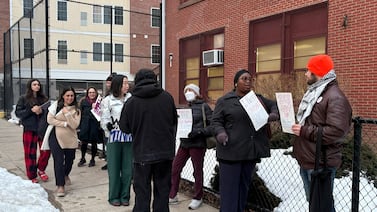
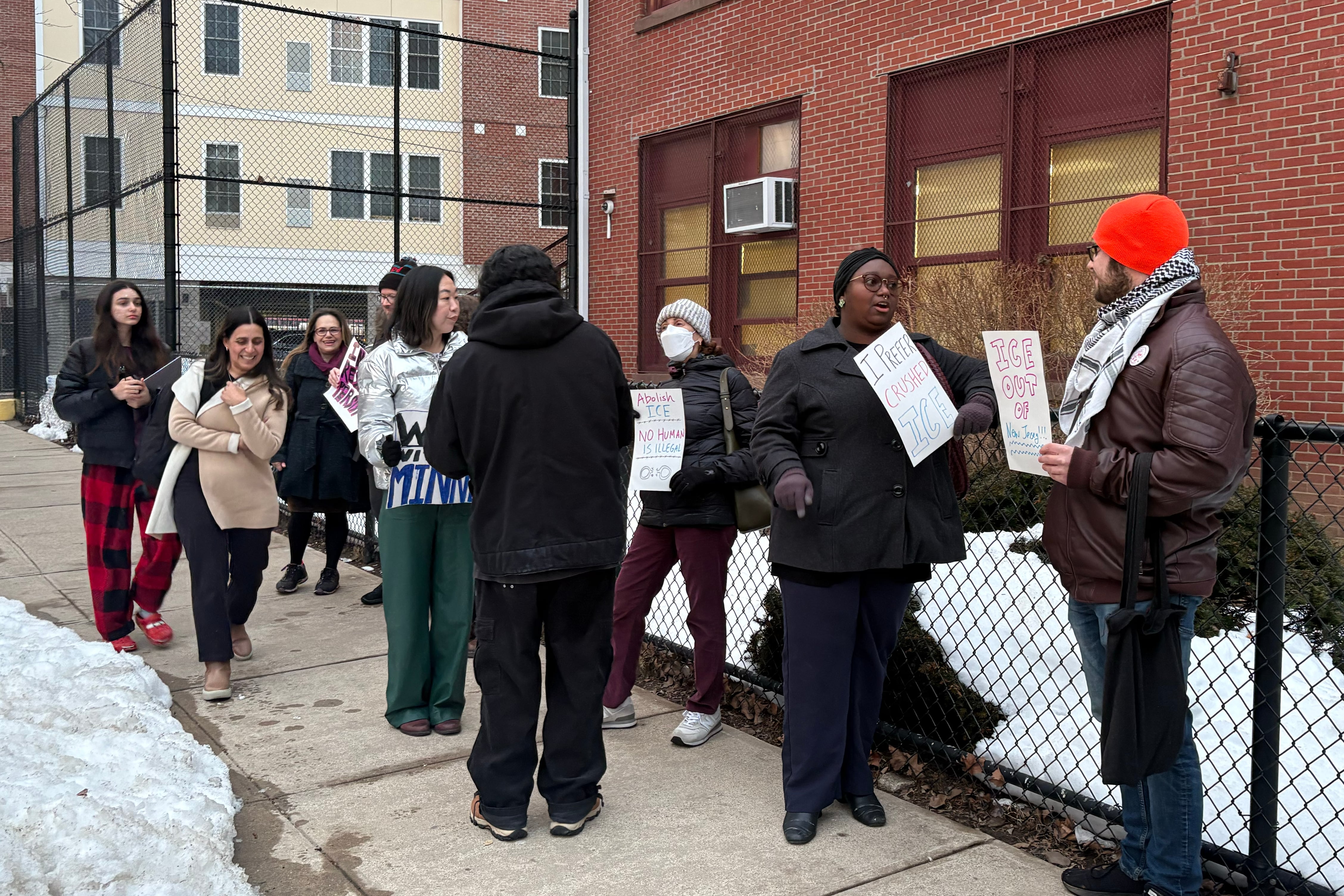
As Newark Board of Education members, parents, and students shuffled into Sir Isaac Newton Elementary School in advance of the board’s February meeting, they passed a small group of activists protesting on the sidewalk.
Chatting quietly with each other, some eight activists stood along the school fence and held handwritten signs saying, “I prefer crushed ICE” and “ICE out of New Jersey!!!”
The advocates, members of local groups like Cosecha, Democratic Socialists of America, and Eyes on ICE, were gathered as part of “Ditch Driscoll Foods,” a campaign to pressure the school board to end its relationship with a food vendor that services a controversial immigration detention center.
“We don’t want the school system doing anything that is going to contribute to the current climate of fear that’s going on in our neighborhood,” said Amy Brown, a member of the campaign and a parent at Oliver Street School, where the majority of students are Latino. Many of her daughter’s classmates and their parents, she said, live in fear of ICE.
Last summer, volunteers photographed a Driscoll Foods truck exiting the Delaney Hall ICE detention facility near Newark. The photo sparked a series of public records requests, which revealed the details of multiple contracts between Newark public schools and Driscoll Foods authorizing the district to spend up to $12 million with the vendor.
The contracts are set to expire on June 30, and advocates hope to pressure the Newark Board of Education to choose a different vendor for the upcoming school year. Advocates testified at the January Board of Education meeting; since then, they say, board members have ignored their repeated requests for comment and information.
“How is it possible that the school district is contracting with a company that already has a history of providing terrible quality food, not only to students but now also in immigration detention centers?” Carlos Castañeda, a member of the immigrants rights organization Cosecha told Chalkbeat, in Spanish. “We are demanding that the school district stop the contract.”
A parent of a 4-year-old girl at Sir Isaac Newton Elementary School spoke with the activists as he left the building before the board meeting.
“I don’t think we should be using our tax dollars, our education dollars to support companies that are getting rich off of feeding inmates bad food. Companies that are supporting essentially concentration camps,” the parent, who declined to share his name, told Chalkbeat. He had not been aware of Newark schools’ connection with the ICE contractor.
“I don’t want my tax money going to that and I hope the Board of Education takes that seriously,” he said.
Advocates want Newark schools to cut ties with Driscoll Foods
Delaney Hall, the privately-run ICE detention facility operated by the GEO Group, the largest prison operator in the United States, has faced a stream of complaints around detainee treatment since it opened last May. Detainees have reported abusive treatment, from frigid temperatures to vindictive guards to missing essential toiletries. In December, Jean Wilson Brutus, an asylum seeker from Haiti, died one day after being detained at Delaney Hall.
Detainees at Delaney Hall also say they have been served rotten and spoiled food, often at irregular times and in insufficient quantities. Last June, dozens of detainees protested the conditions at Delaney Hall, focusing on the quality and quantity of food they were provided.
“The same food that you’re giving to the detained people at Delaney Hall who haven’t gotten their due process, you’re giving to felons and people in jail at Essex County jail. That’s crazy that you’re serving that to elementary school students,” a Newark public school elementary teacher who attended the meeting told Chalkbeat. The teacher asked not to share their name because they feared retaliation from the district.
Until the meeting, the teacher had not known about Newark schools’ ties to detention facilities.
“It kind of says a lot about what you think about the students in Newark,” the teacher said. “They deserve the best. These are children we’re talking about.”
Driscoll Foods has also come under criticism for its work in New York City. In 2024, then-Comptroller Brad Lander found the company had overbilled New York City’s Department of Social Services by $9 million, according to reporting at the time from The City.
Driscoll Foods did not reply to a request for comment.
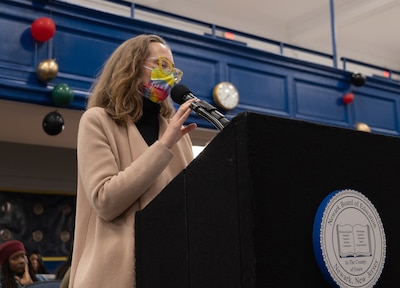
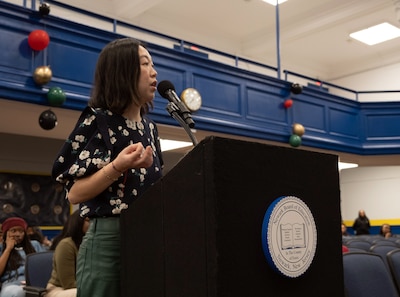
During the school board meeting’s public participation period following reports from the superintendent and board members, advocates associated with the “Ditch Driscoll Foods” campaign spoke against Newark Public Schools’ ties to the company. Some read statements written by undocumented parents of Newark schoolchildren.
They repeatedly expressed frustration that the board had not responded to their messages or requests for information.
Teresa Yi-Bourdett, an activist with “Ditch Driscoll Foods,” urged board members to take action. “They are not a responsible supplier to work with,” she said. “So just remove them from competition, right?”
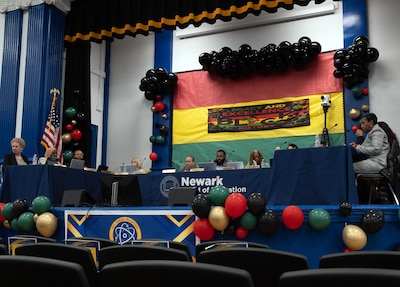
“That’s not how that works,” a board member said. Other board members appeared to be on their phones as advocates testified.
The presentations were followed by enthusiastic claps from the advocates and some attendees, including high schoolers who’d attended the meeting to push for better mental health support.
Some speakers at the meeting, unaffiliated with “Ditch Driscoll Foods,” called attention to what they said was the poor quality of food served to Newark public school students. Others questioned why the coalition was not advocating for the Newark school board to cut ties to suppliers to Essex County prisons.
“We’re serving a community where most of the students that make up that community are predominantly immigrant students,” the Newark teacher said. “I would think that we wouldn’t want to support a harmful company in that way.”
In response to a series of testimonies, board members repeatedly emphasized that they are required to follow procedural rules in selecting contractors.
Following the public comment period, School Business Administrator Valerie Wilson read a statement that addressed the selection of Driscoll Foods in the previous cycle.
“Vendors must be selected through a competitive procurement process to ensure fairness, compliance, and continuity of service. Does the district endorse all business practices of its vendors? No,” Wilson said. “We have a responsibility to ensure uninterrupted access to nutritious, compliant meals for students while adhering to public contracting law.”
Some advocates were not convinced.
“I just thought [the board members] were advocating for the quality and the nutritional value of the food, but the food isn’t that great,” the Newark teacher told Chalkbeat. She cited several occasions when students have been served expired food, and criticized the uniformity, cold temperature, and insufficient portions of breakfasts.
In response to a question from Chalkbeat about the food quality at Newark schools, Hasani Council, president of the Newark school board, said “That’s something that we are working on and we want to continue to work on and train our staff.”
The choice of food supplier, he added, was not in the power of Newark school board members to decide.
Board members, he said, only have final voting approval on the bid once it has already been awarded after a public bidding process. In response to a question from Chalkbeat about how he would vote if the superintendent were to recommend renewing Driscoll Foods’ contract, Council said, “I don’t know yet.”