Sign up for Chalkbeat New York’s free daily newsletter to get essential news about NYC’s public schools delivered to your inbox.
Mayor Eric Adams’ shakeup to elementary school reading curriculums had a clear goal: to align instruction with the “science of reading,” the catchphrase for a longstanding body of research.
But in the rush to train teachers on the new curriculums, some literacy experts worried that there wasn’t enough emphasis on the basic theory and research behind the science of reading. As hundreds of schools transition away from popular programs that have become widely discredited, many teachers have craved guidance.
A free training program available to New York City teachers aims to fill that gap, helping thousands of educators parse the fundamental principles of the science of reading. The program, now in its second year, was developed by The Reading Institute, a nonprofit launched by Katie Pace Miles, a Brooklyn College professor.
“I wanted to make sure that it wasn’t just about the how‚” Miles said. “No matter what curriculum they have, they’ve got to know: What are the tenets that actually move the needle for readers?”’
Miles underscored that the training could also help address a long-term challenge: Curriculums often come and go during a teacher’s career. Mayor-elect Zohran Mamdani, who will take control of the city’s schools on Jan. 1, has signaled he will continue the reading curriculum mandate, though he has indicated teachers should have more flexibility around how to implement it in their classrooms.
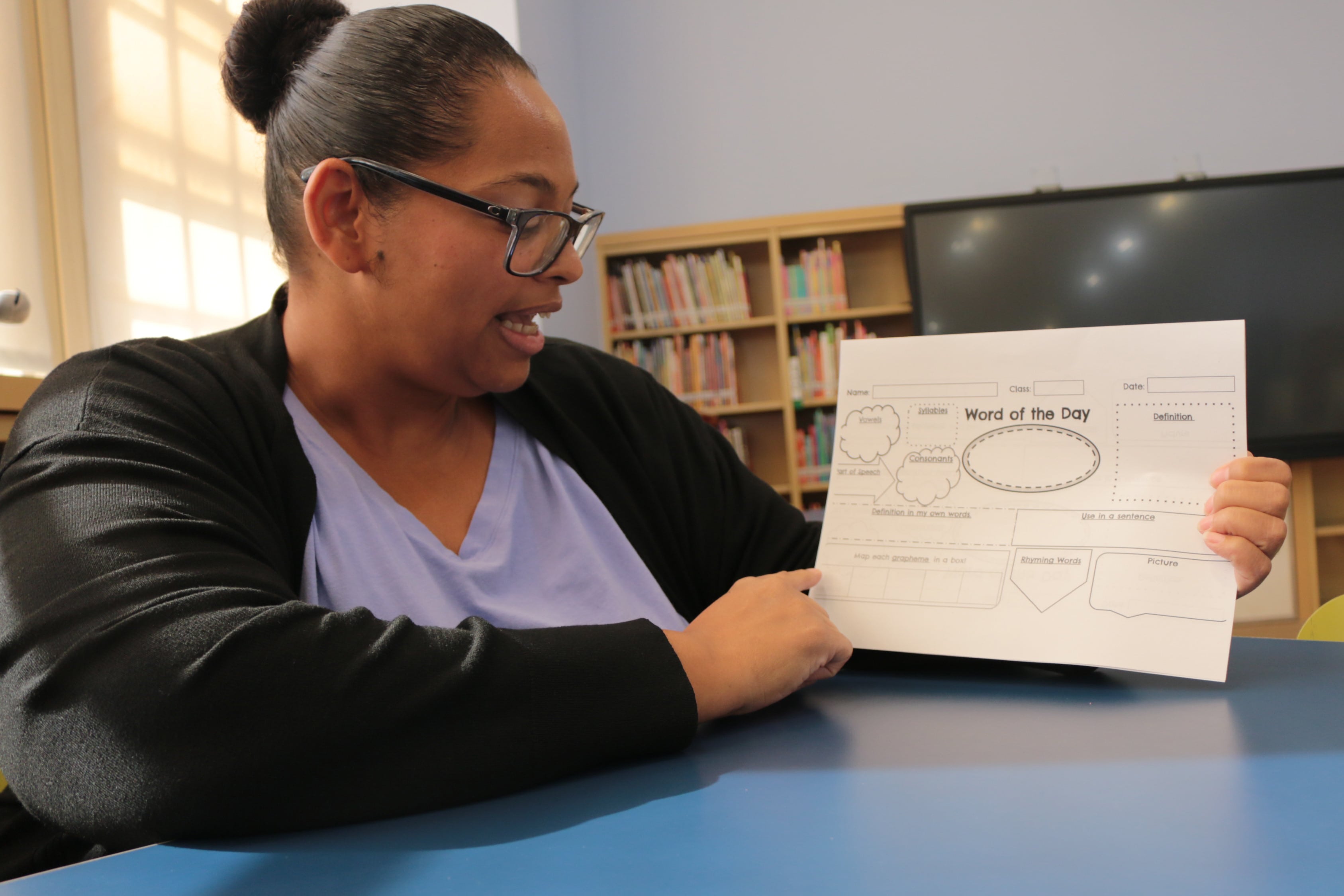
The 10-hour virtual course emphasizes phonics — how students learn the relationships between sounds and letters — a key piece of the city’s literacy push. Other segments cover vocabulary, comprehension, writing, and reaching neurodivergent learners. Video footage from three New York City public schools is woven throughout the training to show how teachers are using the science of reading in real-world classrooms.
The introductory course has free slots for nearly 1,200 New York City teachers for the remainder of this school year (it is also free for all CUNY students). When the slots are filled — or for teachers outside the city— the cost is $25. Of the 2,800 people who took the course last school year, more than 2,000 were from the city’s public schools. (The course is funded by the Benedict Silverman Foundation, which funds Chalkbeat, and the Heckscher Foundation for Children.)
Experts say the training could help fill gaps for teachers who did not receive adequate instruction in their teacher preparation programs about how children learn to read, as schools of education have been criticized for failing to embrace the latest research on reading. New York State officials have said they’re working to address the issue.
Cut to the video: Recorded literacy lessons inspire change
At P.S. 189 in Washington Heights, Principal Johanny Grullon has embraced the additional training, setting aside time during the school’s existing Monday training blocks.
Now, virtually all of the school staff are taking Miles’ science of reading course, including art, music, and gym teachers.
“Everybody plays an important role in teaching students how to read,” Grullon said. “The gym teachers aren’t gonna take out flashcards … but I want them to think about: What can I do in my daily routines as kids are warming up to develop vocabulary?”
The science of reading intro course has won attention from other states. Last school year, P.S. 189 showed off the training program to the governors of Rhode Island and Colorado, along with a representative from New York Gov. Kathy Hochul’s office.
Julia Rosa, the library teacher at P.S. 189, was one of the first educators at the school to complete the training and helped convince her colleagues it was worth the time.
The video footage from other New York City classrooms helped persuade her to shift some of her approaches — and try new ones. When her students ask her to spell words during writing exercises, she used to reflexively give them the answers, worrying that veering into spelling exercises would district from the lesson. But videos of students making confident spelling guesses help convince her to change.
In another video, Rosa saw a phonics lesson that involved students using their fingers to trace out letters in blue sand. That activity seemed like it would make a mess in a room with over 20 children. But soon, she was off to the dollar store to buy tupperware containers to try it herself.
“Seeing it done — it gives you more confidence to try it,” she said.
Education Department officials said they hope the training will help teachers reluctant to change their practice and give them a more solid foundation as they deploy the new curriculums.
Staten Island’s superintendent is encouraging educators to take the training, and nearly 1,000 teachers in the borough are enrolled. Allison Angioletti, a district achievement and instructional specialist in the Staten Island superintendent’s office, said she hopes the training helps teachers tailor their lessons and navigate curriculums that are often packed with more content than can fit in a traditional literacy block. On Staten Island, teachers are required to use Into Reading, the most commonly mandated program across the city.
“I want them to be good decision makers,” said Angioletti. “I want them to keep the parts that are most helpful to kids about how they learn how to read.”
Literacy experts said the relatively short course was unlikely to spur major changes in student achievement by itself. But Tim Shanahan, a former Chicago Public Schools official who oversaw that district’s training efforts, said it is still important.
“There are lots of things that need to happen to raise reading achievement,” he said, “and one of them is professional development.”
Alex Zimmerman is a reporter for Chalkbeat New York, covering NYC public schools. Contact Alex at azimmerman@chalkbeat.org.