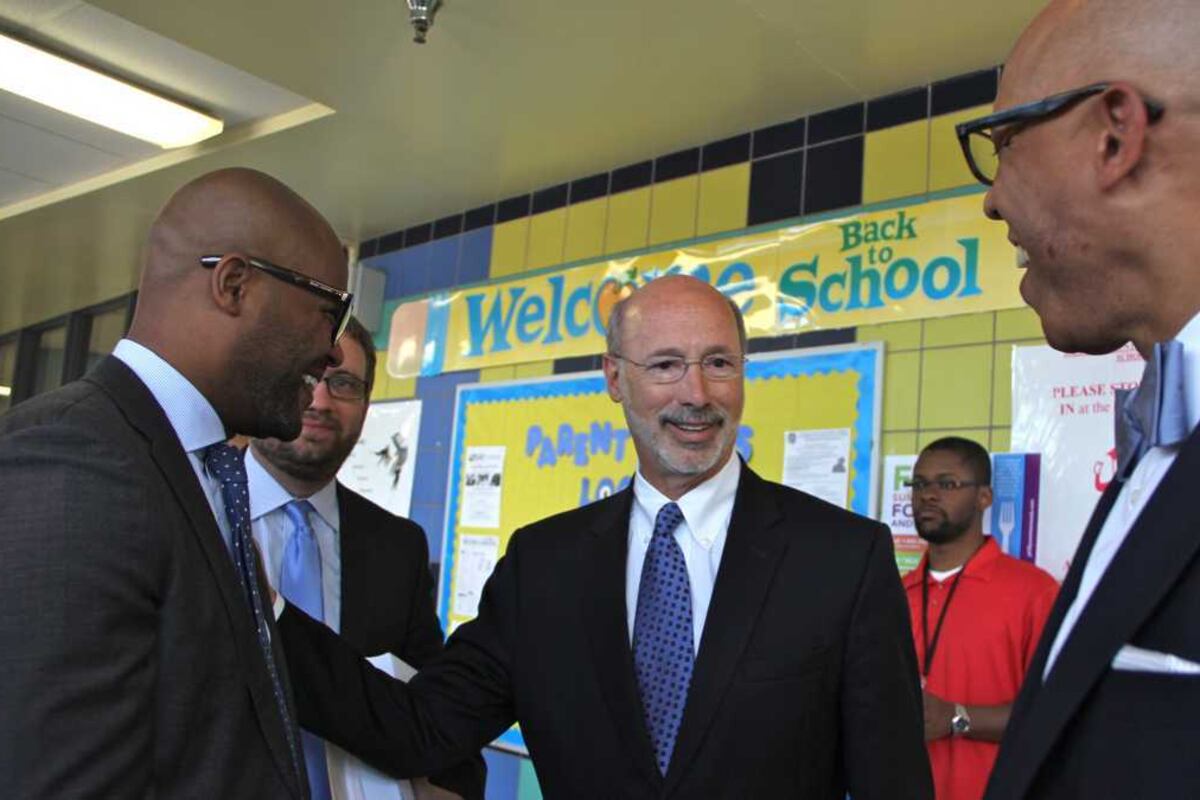
Gov. Tom Wolf has signed legislation that would allow 21-year-old students with disabilities to receive another year of instruction.
The new law, Act 66, also would permit students enrolled in the 2020-21 school year to repeat their most recent grade, even if they met the requirements for promotion and don’t have a disability. The decision would be up to their parents, not the school or district.
The law, which passed the General Assembly unanimously, provides more time for students with disabilities who usually would “age out” of the public school system. Under federal law, school districts are required to provide specialized services to students with individualized education programs, or IEPs, at least through the school year in which they turn 21. Students whose IEPs call for services up to age 21 typically have disabilities that require support for life skills.
To opt for an extra year, or to choose to repeat a year, families must fill out a form on the Pennsylvania Department of Education’s website and submit it to their school or district before July 15.
Advocates say students with disabilities need the extra year because they missed necessary services and fell behind after the pandemic forced learning online. In their last few years of school, students with disabilities often participate in transitional programs designed to teach job skills. Many of the services couldn’t be offered online.
Kim Caputo, a special education attorney for McAndrews law firm who worked at the Philadelphia school district for decades prior to representing families, said the extra year of services could make a significant difference in the lives of students with disabilities, especially coming off of a year of regression during the pandemic.
“If someone has a disability such that they continue to need support dressing themselves, using utensils, using a knob on an electronic wheelchair, which is helping them get to a bus station, which is helping them board the bus, that extra year, working with that occupational therapist, could mean a door to independence that was otherwise closed,” Caputo said.
Pennsylvania data indicate that Philadelphia schools through 2019-20 typically enrolled between 15 and 50 21-year-old students every year. Statewide, that number is between 300 and 400. The data only counted students who turned 21 by Dec. 1 during the given year.
UPDATE: Officials from the Pennsylvania Department of Education said Wednesday that, as of December 2020, there were approximately 1650 21-year-old students statewide and 160 in Philadelphia.
Pennsylvania is one of the only states that has enacted legislation granting students with disabilities extra time in school. Similar bills passed in New York and New Jersey, and fizzled in Maryland. In Illinois, a similar bill is on the governor’s desk.