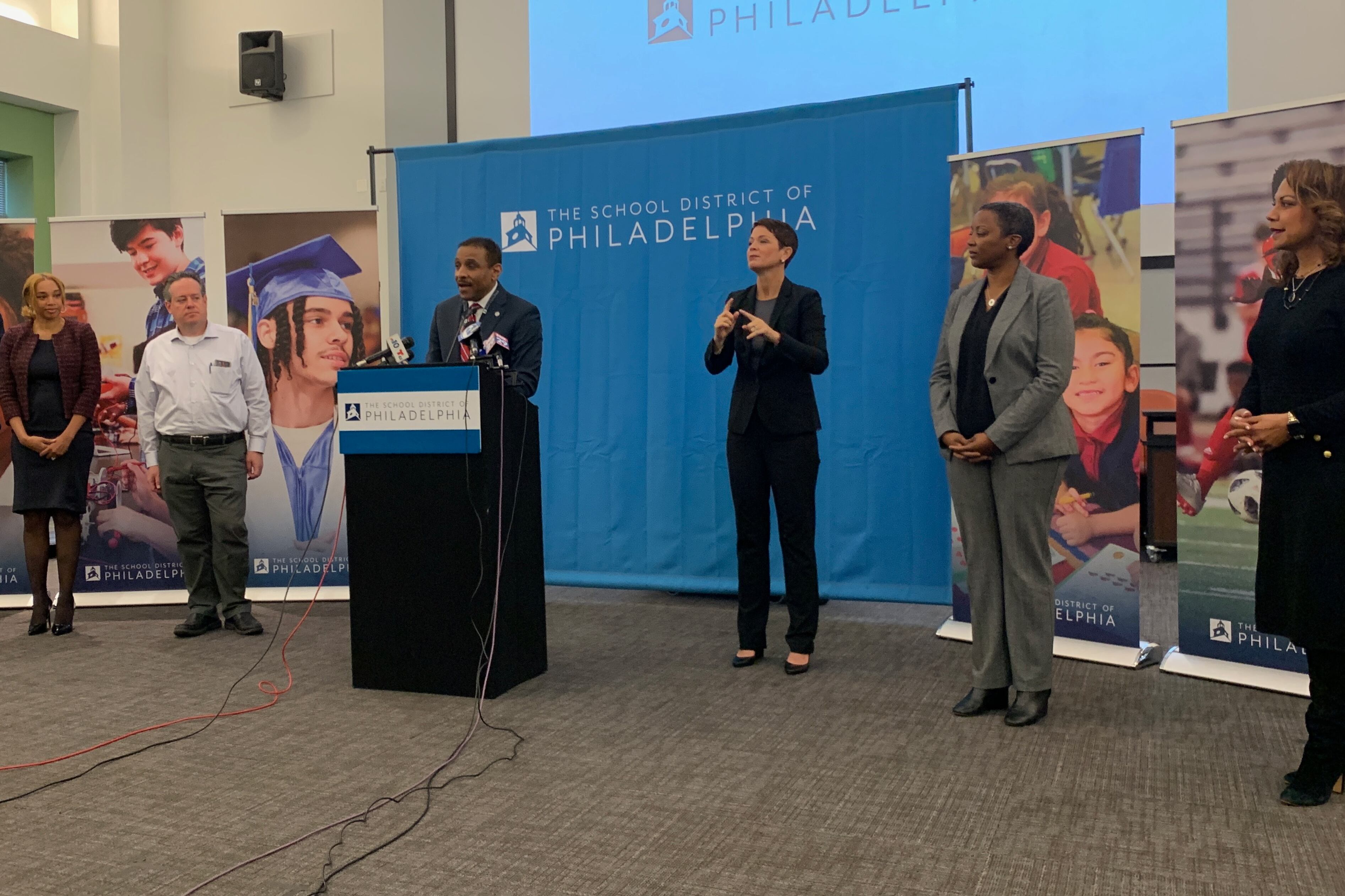
Philadelphia Superintendent Tony Watlington said the district has paused the process it’s developed to decide on upgrades to school facilities, in order to align it more closely to the district’s future five-year strategic plan.
During a school board meeting Thursday, Watlington said the facilities planning process will be put on hold until the district adopts that strategic blueprint, but added that building work that’s already been approved will proceed.
The district’s “facilities planning process” sets long-term priorities for building and other infrastructure upgrades. In April, Philadelphia officials unveiled an interactive map that let people learn about specific conditions at neighborhood schools. And in May, the district announced public forums where people could discuss the best way to repair and upgrade the city’s aging public schools; the average Philadelphia school building is about 75 years old.
However, those moves occurred before Watlington took over as superintendent in mid-June. Since then, Watlington has focused much of his attention on trying to create that five-year roadmap for schools by — among other things — gathering input from the public and different groups and officials. The district aims to adopt that roadmap next year.
Watlington has a near-term goal of making Philadelphia one of the fastest improving large school districts, and a long-term goal of being the most improved.
Although district plans to upgrade facilities have stopped and restarted before, Watlington characterized the new pause as not just another delay.
“The difference now is that we are moving in a direction to be very clear about what our academic strategies will be,” he said Thursday.
For example, he said, if the district’s work on the five-year plan discovers a need for more advanced placement classes, career and technical education programs, or even a reconfiguration of the current K-8 structure into a middle-school format, that would dictate how and where money would be spent.
Watlington noted that he would “absolutely” consider the possibility of reconfiguring grades at schools if warranted.
“We have to take the time to identify the specific strategies and what we are going to do differently in the school district of Philadelphia to get much improved outcomes,” he said.