Sign up for Chalkbeat Philadelphia’s free newsletter to keep up with news on the city’s public school system.
The Philadelphia school district will not announce its recommendations this month for which schools will close, pushing back a long-awaited deadline, the district said Tuesday.
Instead, the district will launch a survey to get further community feedback about its facilities planning process and shape its recommendations. The district will share results from its survey in December, and “will go through a comprehensive public feedback period before [submitting] final recommendations to the Board of Education” according to a statement from district spokesperson Monique Braxton.
District officials have said the final facilities plan will include a list of schools to close, as well as ones to modernize, repurpose, and colocate.
Superintendent Tony Watlington has said repeatedly in recent months that the district’s goal for that plan is to increase access to high-quality academic and extracurricular programming across the city.
To accomplish that, he and other school leaders have also said they aim to “rightsize” the district by addressing underenrollment in some schools and overcrowding in others. It is unclear when school closures would begin, but officials have said the process will likely play out over a number of years.
The looming school closures have drawn scrutiny and concern from Philadelphia families, educators, and education advocates. Many have called for more details about which schools could be slated for closure, as well as more information about how the district is weighing different factors in its decision-making process.
The district has missed other deadlines it set for itself throughout the process that will lead to school closures. School leaders initially said they would share data about school facilities in April, but did not publicize a data repository until September.
When the district finally released that data, including scores for schools on their building condition and utilization, officials said the ratings themselves did not dictate whether individual schools would close.
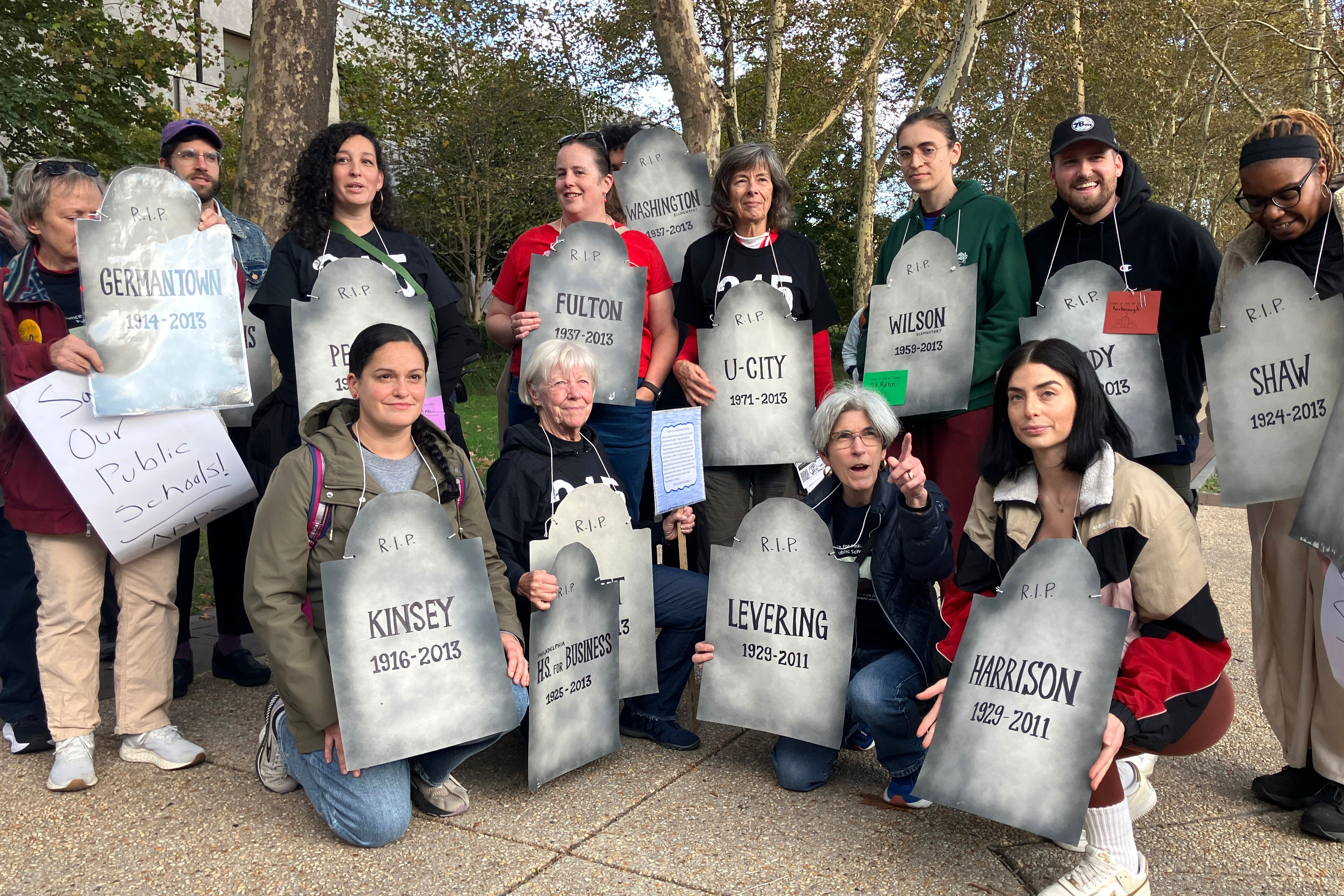
At a protest last month organized by Stand Up For Philly Schools, community members, educators, and city leaders urged the district not to close schools.
“When schools close, communities pay the price,” said Councilmember Kendra Brooks. “The communities who paid a price are communities like mine, Black and brown communities that have already suffered decades of disinvestment.”
Melanie Silva, a parent of a student at Rhawnhurst Elementary, said at the rally that the district has lost the trust of families as it misses its own deadlines and fails to share information that people are desperate to see.
“After months of delays and missing data, it’s clear why so many families don’t trust this process,” Silva said.
Rebecca Redelmeier is a reporter at Chalkbeat Philadelphia. She writes about public schools, early childhood education, and issues that affect students, families, and educators across Philadelphia. Contact Rebecca at rredelmeier@chalkbeat.org.