Sign up for Chalkbeat Philadelphia’s free newsletter to keep up with the city’s public school system.
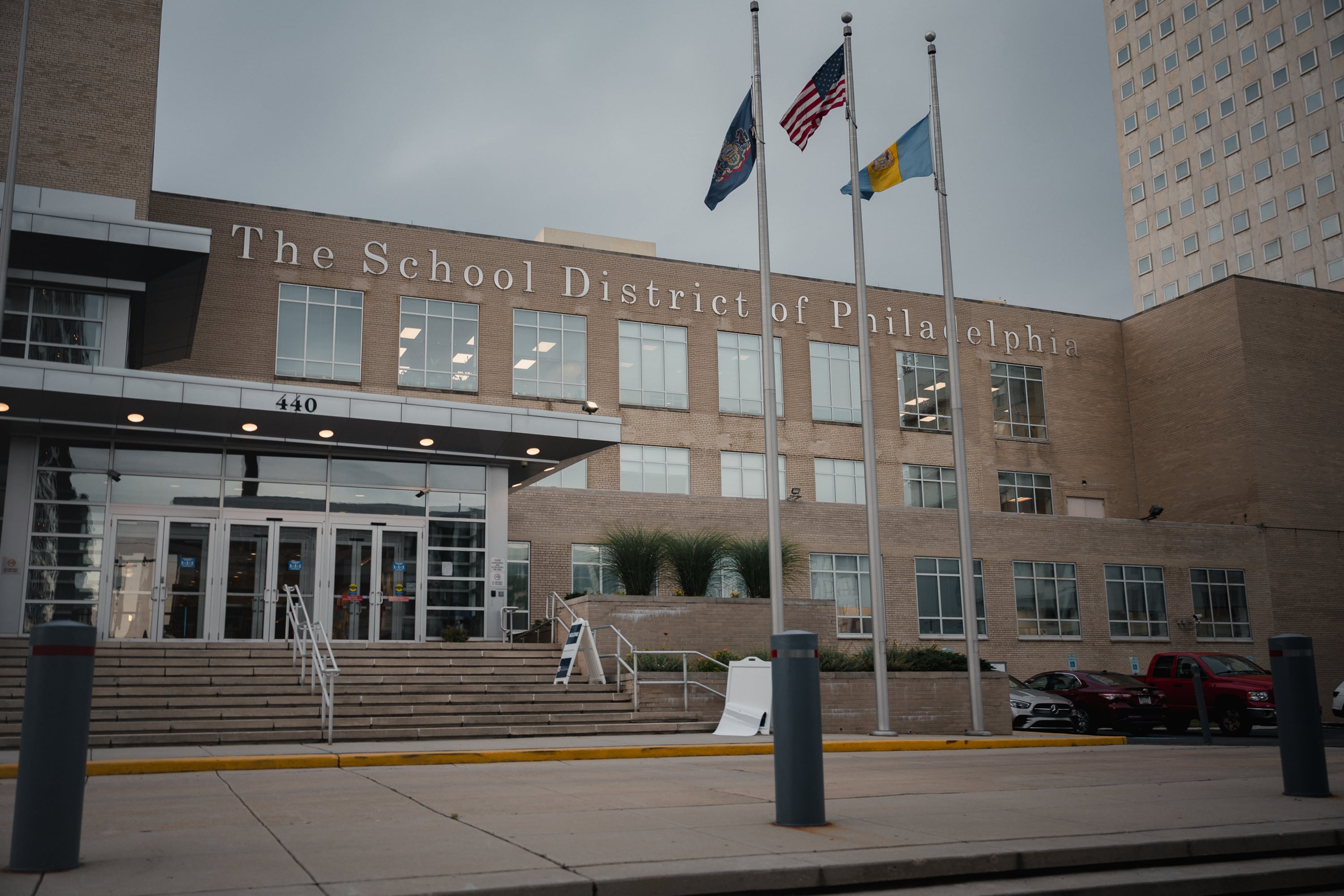
More than 1,050 fewer students are enrolled in Philadelphia’s district and alternative schools this year compared with last year, according to recent district data.
That marks a sharp contrast from last school year, when the district logged its first enrollment increase in a decade. Superintendent Tony Watlington later said increasing enrollment was one of his proudest achievements.
But since last school year, the district has returned to its previous trend of losing students each year. Over the same period, the city’s charter and cyber charter school enrollment grew by around 500 students each.
District spokesperson Naima DeBrest said in a statement that public school enrollment has been decreasing nationally due to declining birth rates “as well as families exploring alternative education options.”
The district now has nearly 20,000 fewer students than it did a decade ago and is planning to close schools in part to address the decline. Dozens of district schools have hundreds of empty seats, while some in the city’s Northeast are overcrowded.
District officials have said that early next year, they plan to release a list of schools to close and colocate, along with ones to modernize and repurpose.
The district’s enrollment decline doesn’t fully match citywide population trends. Census data shows that Philly’s population steadily grew in the 2010s and peaked in 2020. It then began to decline, only increasing again last year. The city’s population count now looks similar to what it was in 2015.
Still, some citywide demographic shifts are reflected in Philadelphia’s schools. With more immigrants in Philadelphia, around 1 in 5 district students are now English language learners. That’s more than double the share from a decade ago.
The district has three “newcomer” academies meant to support migrant students, but advocates have previously said students and families regularly run into problems accessing translation services and other supports.
The number of Hispanic students has also steadily increased over the past decade, while the number of Black students has steadily declined, which reflects the changing demographics of the city. The number of white students has remained fairly stable.
Rebecca Redelmeier is a reporter at Chalkbeat Philadelphia. She writes about public schools, early childhood education, and issues that affect students, families, and educators across Philadelphia. Contact Rebecca at rredelmeier@chalkbeat.org.