Mayor Lori Lightfoot said Friday she will not take police out of schools, even as community groups around the city plan to strategize over the weekend on how to amplify their campaign to remove city police schools by school.
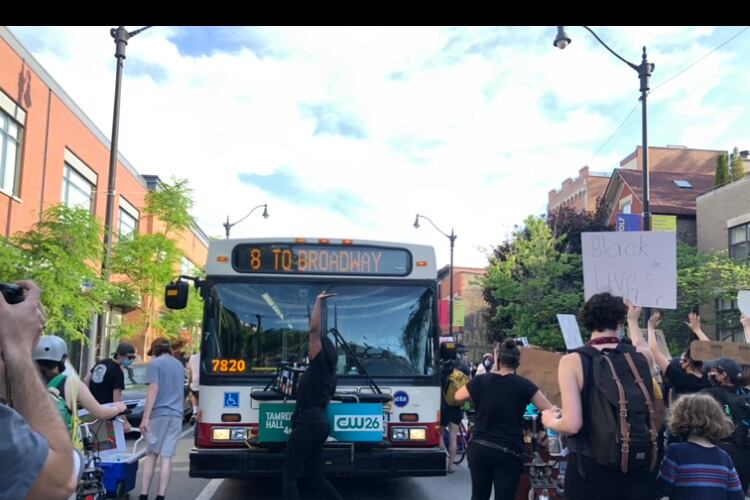
It was the first time the mayor, who has promised a raft of police reforms in the next 90 days, directly addressed the future of school policing in Chicago. Her comments came the day after hundreds of marchers took over city streets to call for school policing changes.
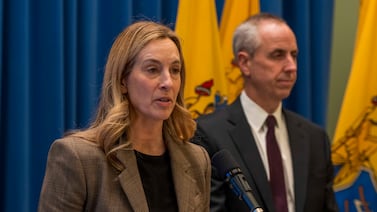
“We’re not going to do that. Unfortunately, we need security in our schools,” Lightfoot said in a press conference Friday addressing city efforts to support small businesses affected by recent unrest. “I think we’ve got a system in place that works very well.”
Groups including the Chicago Teachers Union, Raise Your Hand, and the Brighton Park Neighborhood Council are planning a Saturday discussion about what police-free schools could look like, and how Local School Councils, which are representative bodies of parents and community members, could vote to remove officers.
“We are building it as we go,” Jianan Shi, executive director of Raise Your Hand, said Friday. “We want to remove Chicago Police Department officers from schools and reallocate funding to other supports.”
Chicago overhauled its school policing system this year in response to changes mandated by a federal consent decree. As part of that process, Local School Councils were given authority to vote on whether or not to keep officers in their schools.
Last year, all 70 of Chicago’s Local School Councils at schools where police are stationed voted to retain officers in their schools, though some council members raised concerns about the votes, saying they were rushed or weren’t able to speak.
Earlier this week, both the school district and police department put out a request for public comment on the school police rules developed this year. The police department will create a school police working group to incorporate the statements from the public.
Some of the marchers Thursday called for removing police from Chicago schools, a demand that has drawn more support since Minneapolis’ school board voted to cut ties with its police department earlier this week.
In Chicago, the school board in August approved the $33 million, one-year school police contract. Jadine Chou, head of safety and security for the district, spoke ahead of the vote and said there had been a drop in Chicago students being referred to police across the district since last school year, part of a less punitive and more restorative approach to school discipline.
Even then, some board members criticized the police role in schools.
Elizabeth Todd-Breland, the sole dissenting vote, commended the school district on its efforts to seek community voices, but said she worried that any officer presence in schools would hurt black and brown students.
“Research is overwhelming that having police in schools is the entry point to the school to prison pipeline,” Todd-Breland said.
This weekend, multiple protests are planned, including several that list removing police from schools among their demands. The Chicago Teachers Union, which opposes stationing police in schools, has planned a car caravan Saturday morning starting at a now-closed in Englewood.