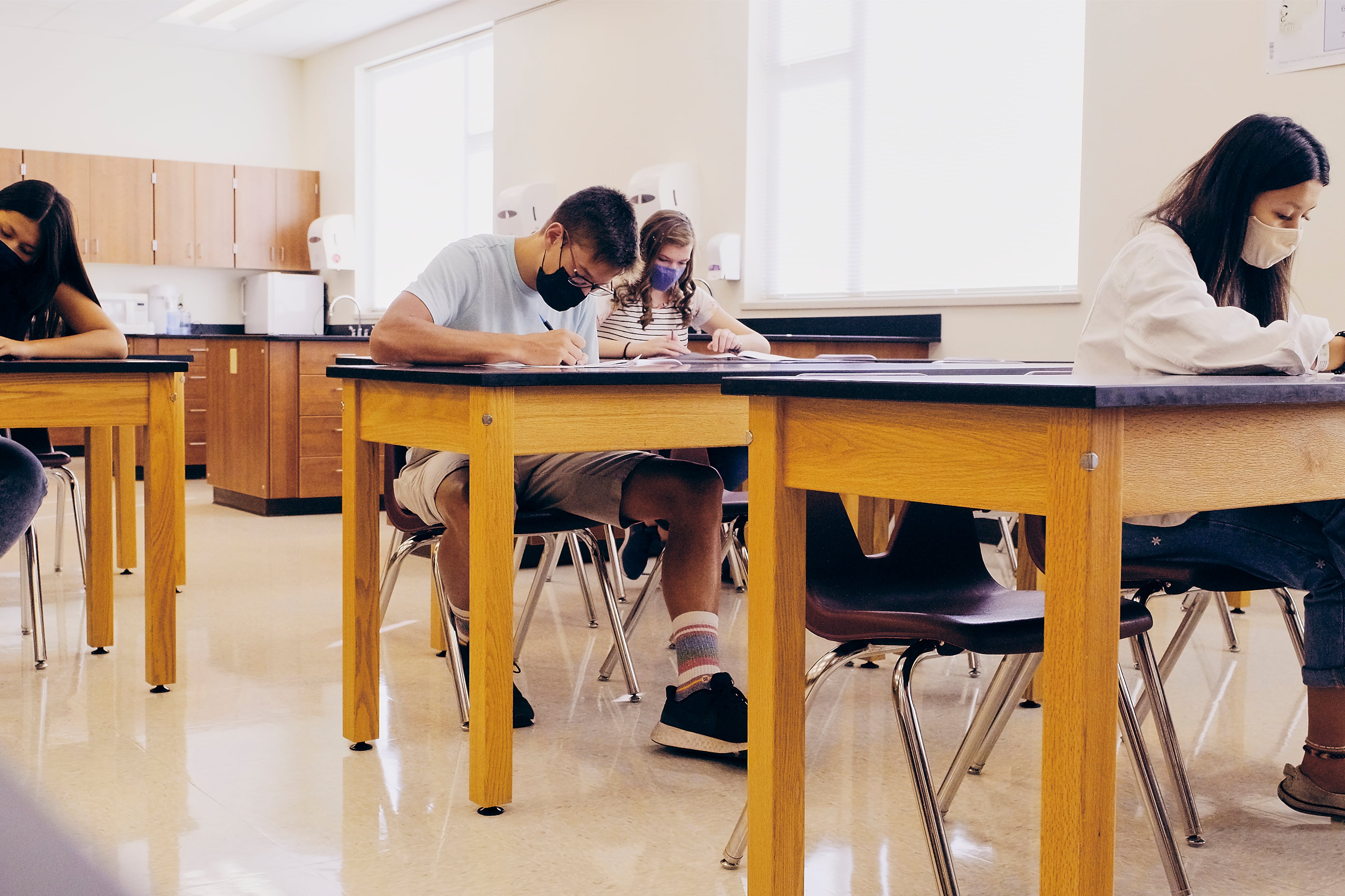
Illinois school districts will have to reopen school buildings to students this fall with few exceptions for remote learning.
On Wednesday, the state board of education voted unanimously to pass a resolution requiring in-person learning beginning in the fall. Remote instruction may only be offered to students who are not eligible for a COVID-19 vaccine and are under quarantine orders by a local health department. That combination of conditions could strictly limit the circumstances.
The resolution was adopted despite concerns from parents, school district leaders, and some board members. It comes as the debate grows nationally over whether districts should offer remote options when students return in fall. The Biden administration has stressed the importance of fully reopening schools for in-person learning, but some cities, such as Philadelphia, have said they plan to preserve some virtual options.
The resolution paves the way for a formal declaration, which will come from the superintendent.
Still, Board members raised concerns about how school districts can bring students into classrooms safely — since children under the age of 12 are not yet eligible for the COVID vaccine – and how they should handle remote learning going forward.
Donna Leak, superintendent of Community Consolidated Schools District 168 in the suburbs far south of Chicago, wanted to know the guidelines for school districts regarding quarantining students since they’ve tended to set their own rules.
“Right now the way schools are quarantining is based on close contact and some districts have closed the whole school,” said Leak.
State Superintendent Carmen Ayala said school districts will have to continue working with local health departments, as they have throughout the school year.
Leak called for more guidance on what districts should do in the fall and expressed concern that the language in the resolution was not clear enough for school leaders, especially if they have COVID-19 cases in their district.
Currently, the resolution allows districts the ability to use e-learning days under the state’s school code. However, there is a difference between e-learning and remote learning days under the law. E-learning plans have to be created by a district and are meant for emergency weather conditions, not for a pandemic.
“We have remote learning plans which are separate from our e-learning plan. I think that’s where the confusion lies is the remote learning plan for my students,” said Leak. “For all those students whose parents have opted for them to be remote, based on this resolution that opportunity is not available.”
During comments from the public, Katherine Eastvold, whose four children are enrolled in Springfield District 186 public schools, worried about sending her youngest daughter, who is 10 years old and not yet eligible for a vaccine, back into the classroom.
All of Eastvold’s children stayed remote during the current school year due to the pandemic. Her oldest child is fully vaccinated, while her two middle children have received their first shot. Eastvold asked the state board not to adopt the resolution as is, but to allow flexibility for school districts to offer a remote learning option.
“Their question, as I see it, isn’t whether to offer remote learning indefinitely,” said Eastvold. “Instead it’s just whether to allow districts to offer it for a finite period of time, for a finite population — just those students too young to be vaccinated at the start of the 2021-22 school year.”
This announcement occurred just days after Gov. J.B. Pritzker announced that the state will not require vaccinated residents to wear masks or practice social distancing in public — however, schools and childcare centers will have to continue to do both. The state has not yet said if masks will be required in schools in fall.
Ayala said the state needed to make decisions now so she wanted to update superintendents on how 2021-2022 will look so they can prepare to budget for the next school year, especially since some school districts throughout the state start in early August.
“Superintendents have asked for clarity about the scope of remote learning next school year, so that they can make critical budgeting and staffing decisions right now,” Ayala said. “They need to know if they need to hire a cadre of remote teachers for next year. ‘Should I focus my ESSER dollars on in person or remote tutoring?’ ”
Update: The story was updated to reflect that the state school superintendent must make a formal declaration of full in-person fall learning.