Chicago Public Schools is testing far fewer students for COVID-19 this summer than it did during the school year, even as a more contagious omicron subvariant spreads and rates of transmission remain high across the city.
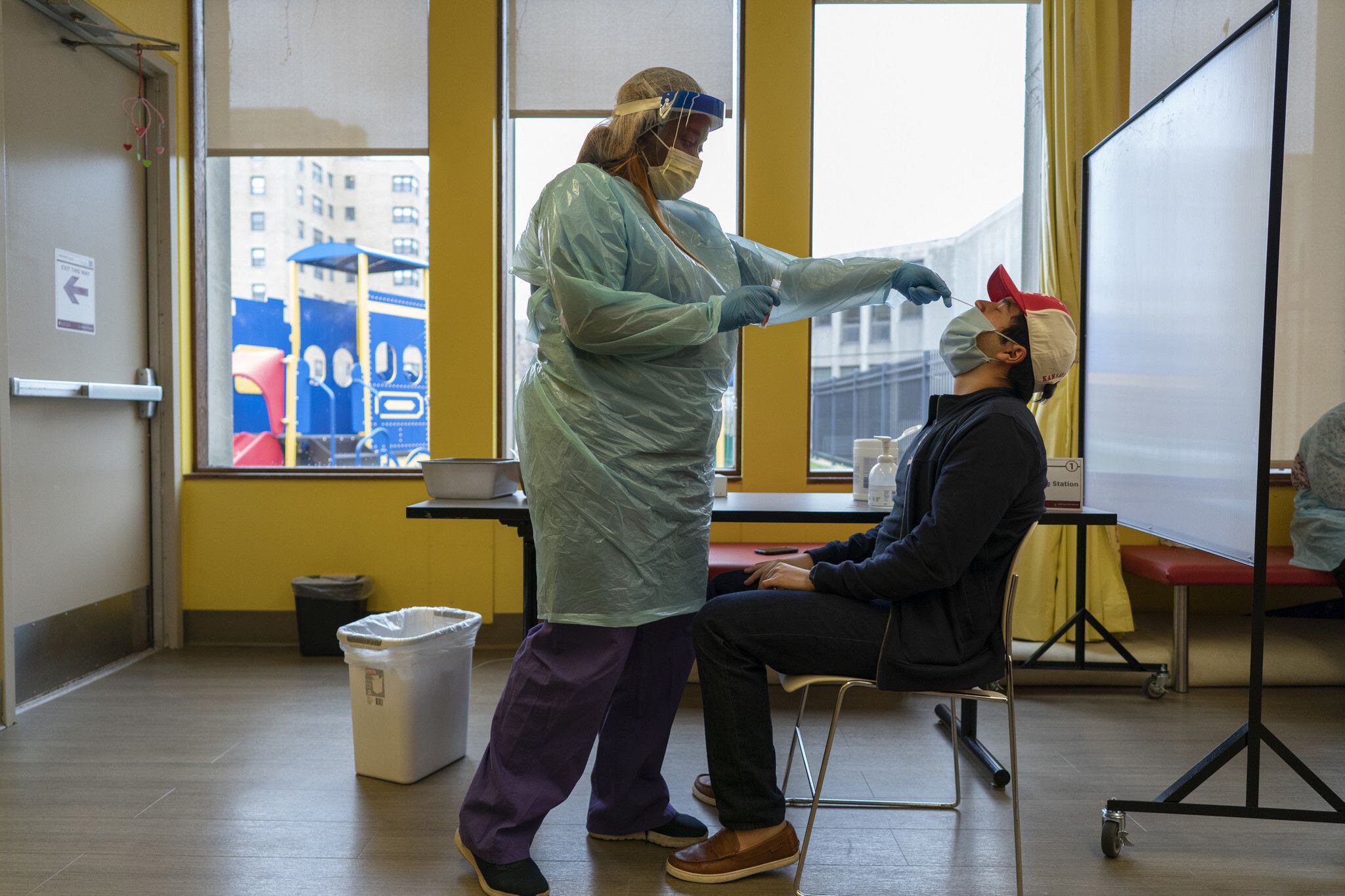
Roughly 2,500 out of 57,000 students — fewer than 5% — consented to COVID-19 testing as of July 5, according to figures provided to Chalkbeat by Chicago Public Schools. These are students participating in academic summer programs, CitySpan, and out-of-school activities across 290 schools, officials said.
The numbers represent a sharp drop from the end of the school year, when about 35% of students across district-run campuses were enrolled in school-based COVID testing. The current opt-in rates also fall far below CEO Pedro Martinez’s goal during the school year to test at least 10% of students at each school.
But a district spokesperson cautioned the numbers of students who opted in to testing do not include a full accounting of all summer programs, and may be higher than 5%. Officials are still compiling the total number of students enrolled in school-based testing across all district-run summer programs.
The district’s decision to use an opt-in model, where only students who choose to participate are tested, has been a point of contention since schools fully reopened in August 2021. Last year, union leaders and some parents argued for an opt-out model — where all students would be tested unless they expressly chose not to — that would ensure a random sample of students were being tested daily as a form of public health surveillance.
The first week of summer school — July 3-9 — 2,680 tests were conducted, according to district data. The following week, the number climbed to 3,894 students and staff tested.
About 179 staff and 84 students have tested positive since the start of the summer. Among those, 122 staff and 41 student cases were self-reported, CPS data shows.
In a statement, Chicago Public Schools said it was continuing to provide COVID-19 testing during summer programming, following guidance from local, state, and federal health experts.
Unvaccinated staff working during summer school are also required to get tested weekly at their school, the spokesperson said in an email.
In addition to school-based COVID testing, the Office of Sports Administration distributed more than 20,000 home test kits for unvaccinated student-athletes. They are required to use rapid antigen test kits twice a week during the summer, according to a district spokesperson.
Across the country, cities are experiencing a surge in COVID-19 in the face of a new omicron subvariant called BA.5. Chicago is currently averaging 776 new daily cases with a 10.3% positivity rate, data shows.
The city is also designated high risk for COVID-19 transmission, according to the Centers for Disease Control and Prevention’s rating system.
Chicago Public Schools does not require masks, but has encouraged students and staff to wear masks indoors. The district was among the last in the state to lift its mask mandate in mid-March. That decision prompted a mixed response from parents, students, and teachers.
On Tuesday, Dr. Allison Arwady, the city’s health commissioner, said she didn’t anticipate an indoor mask mandate returning unless the local hospital system became overburdened or threatened.
Throughout the year, the district has urged families to get vaccinated to protect against the virus, especially with all school-age children eligible for vaccines. Last year, CPS hosted over 1,500 vaccination clinics. It has partnered with local health providers including Lurie Children’s Hospital and Humboldt Park Health to expand vaccination events in high-priority areas, according to the district.
In early May, rates of vaccination among Chicago Public Schools students varied widely. Students at majority Black schools on the South and West Sides were less likely to be vaccinated than students attending schools on the North Side, according to a data analysis by Chalkbeat.
At the start of last school year, CPS struggled to implement COVID-19 testing at every school. Officials cited staffing shortages with the district’s vendor. The district also struggled to get students to opt in to testing.
In January, after a weeklong standoff between the district and its teachers union that abruptly halted school for several days, some teachers spent the first day back going through class rosters calling parents to get students signed up for the district’s school-based COVID testing.
By late March, the district ramped up testing capacity to about 66,000 tests per week. According to the district, more than 1.5 million COVID-19 tests have been administered since Sept. 1, 2021.
The district last month announced it would continue offering COVID testing for students and staff regardless of vaccination status for the upcoming school year.
Mauricio Peña is a reporter for Chalkbeat Chicago, covering K-12 schools. Contact Mauricio at mpena@chalkbeat.org.