Sign up for Chalkbeat Chicago’s free daily newsletter to keep up with the latest news on Chicago Public Schools.
The Illinois State Board of Education has escalated a yearslong investigation into violations of special education law at Instituto Health Sciences Career Academy, a charter school in the Little Village neighborhood, Chicago Public Schools officials announced Thursday.
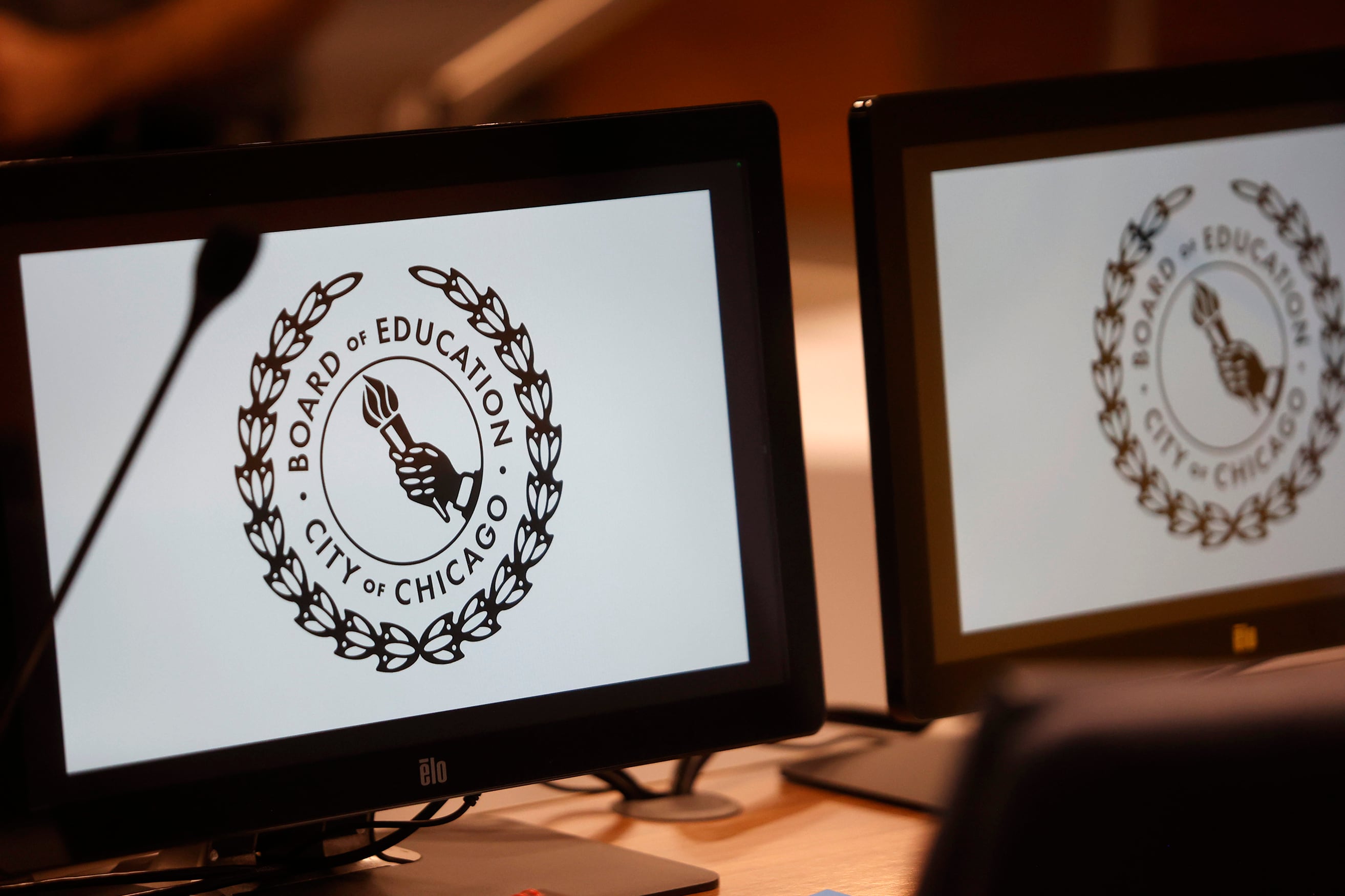
Instituto, which has been open since 2010, has “repeated and unresolved failure to correct documented special education violations over multiple school years,” according to a letter from Josh Long, the district’s chief of the Office of Students With Disabilities, to the Chicago Board of Education describing the state’s investigation. Long read his letter aloud, as required by the state, to the board at its meeting.
Despite the ongoing state investigation, CPS renewed Instituto’s contract in May for another three years.
State officials estimate Instituto failed to provide more than 100 students with disabilities with services they were legally entitled to last school year, amounting to a loss of between 12,000 to 80,000 minutes of instruction.
The state is now requiring CPS to provide additional oversight to Instituto, including biweekly check-ins, monitoring how the school is providing paraprofessional services, and monthly visits from CPS to Instituto to ensure the school is completing its requirements to compensate kids with services they missed over the previous two school years, the letter said.
As a charter school, Instituto is a privately run, publicly funded school and operates under a contract with CPS. CPS considers various factors when deciding to renew a charter school’s contract, including how well a school serves its students with disabilities.
The charter school enrolled 479 students at the start of this school year, and about 16% of those students have disabilities, on par with schools citywide, according to district demographic data. Schools create plans — either Individualized Education Programs, or IEPs, or 504 plans — for many students with disabilities that outline which services students are entitled to and how often they should receive them.
As part of its recommendation to renew Instituto’s contract, CPS said the school must “demonstrate progress” toward implementing unspecified recommendations from the Office for Students with Disabilities.
CPS did not immediately respond to a question about why it recommended renewing Instituto’s contract despite the investigation. But in a separate statement, a spokesperson said it “takes seriously its responsibility to uphold students’ rights and to ensure compliance with all applicable special education requirements.”
The state says Instituto has not yet provided documentation to show that it has fixed five of the 10 violations alleged by the state, including failure to provide speech and language services to students who require them and maintain required class size limits for special education classes. There are still students who are owed services from the 2022-23 and 2023-24 school years, according to the state letter.
“This delay resulted in students graduating, transferring from the school and district, no longer being eligible or revoking consent for special education services, further impeding their access to required compensatory education minutes,” according to the letter.
Board members did not discuss the matter or ask questions after Long finished reading the letter.
Several educators from the school spoke to board members during the public comment portion of Thursday’s meeting, saying their issues worsened with the mass departure of special education staff shortly before the 2023-24 school year. They said the school has now hired more staff and improved its services for students under the school’s principal, Alberto Mendez, who took over during the 2024-25 school year, after the state investigation began in July 2023.
In a brief interview with reporters, Mendez said more staff has allowed the school to be able to offer compensatory services for students during and after school.
“When I first stepped in, it was almost like I inherited the systemic issues that pertain to the past and it’s been a priority to rebuild the special education department and program,” Mendez said. “We’re progressing in the right direction; unfortunately it takes time.”
Since the state first opened its investigation into Instituto, ISBE found Instituto had failed to follow special education laws. For example, in August 2023, the state said Instituto had not made up services to three students who required special education services, and for three other students, had provided only a fraction of what was required.
Instituto had at one point offered summer school to students, according to the letter. But the state said such an offer “did not dismiss Instituto’s obligation” to provide services to students who have not received them since the 2023-24 school year.
Reema Amin is a reporter covering Chicago Public Schools. Contact Reema at ramin@chalkbeat.org.