Sign up for Chalkbeat Chicago’s free daily newsletter to keep up with the latest news on Chicago Public Schools.
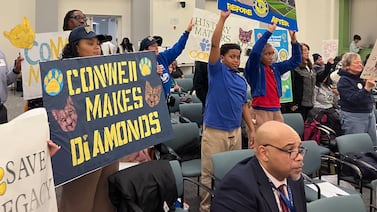
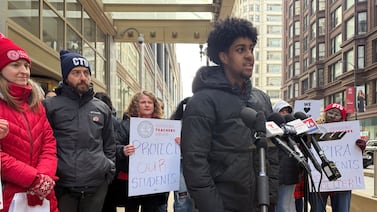
The Chicago Board of Education unanimously adopted calendars Thursday for the next two school years after initial pushback on having the first semester end after winter break.
The calendars for the 2026-27 and 2027-28 school years will include 176 days for student attendance, four Teacher Institute Days, four school improvement days, four professional development days, and two days for parent-teacher conferences.
The first day of next school year will be Aug. 24 for K-12 students and Aug. 25 for pre-K students, about a week later than this year. For the 2027-28 school year, the first day will be Aug. 23 and 24, respectively, for K-12 and pre-K students. Students would again get a week off for Thanksgiving break and a two-week winter break under both calendars.
But unlike this school year, the first semester would end after winter break, meaning final exams would occur after break — prompting concern from some board members when the calendars were first presented in January.
“The No. 1 concern I hear from students is about mental health, and having a break as an opportunity for resetting, recovering, and spending time with their families is really important,” appointed board member Anusha Thotakura said during a January meeting to review that month’s board meeting agenda. “If you have testing for second quarter after winter break, students won’t have that opportunity to reset, relax, and come into the new year energized.”
In order to have the first semester end before winter break, CPS would have to make certain shifts on the calendar, Nicole Milberg, chief of teaching and learning at CPS, has said. CPS considered getting rid of the full week of Thanksgiving break and moving more professional development days to the second semester, but that scenario would require starting school long before Labor Day in order to meet state requirements for school days.
Board members asked CPS to reconsider the calendars and survey families again on what they wanted. At a meeting earlier this month to review Thursday’s agenda, officials said 55% of the 22,000 people surveyed preferred ending the first semester after winter break. Another 37% of people wanted the option of ending the first semester before break, and 8% wanted to start school a few days earlier and also have a shorter Thanksgiving break. It was not clear how many of the respondents were high school students, parents, or staff.
Board members did not discuss the calendars further before their vote.
Reema Amin is a reporter covering Chicago Public Schools. Contact Reema at ramin@chalkbeat.org.