Sign up for Chalkbeat Chicago’s free daily newsletter to keep up with the latest news on Chicago Public Schools.
An Illinois congressman is seeking to expand support for immigrant students in schools — a move that builds on protections state lawmakers approved last year.
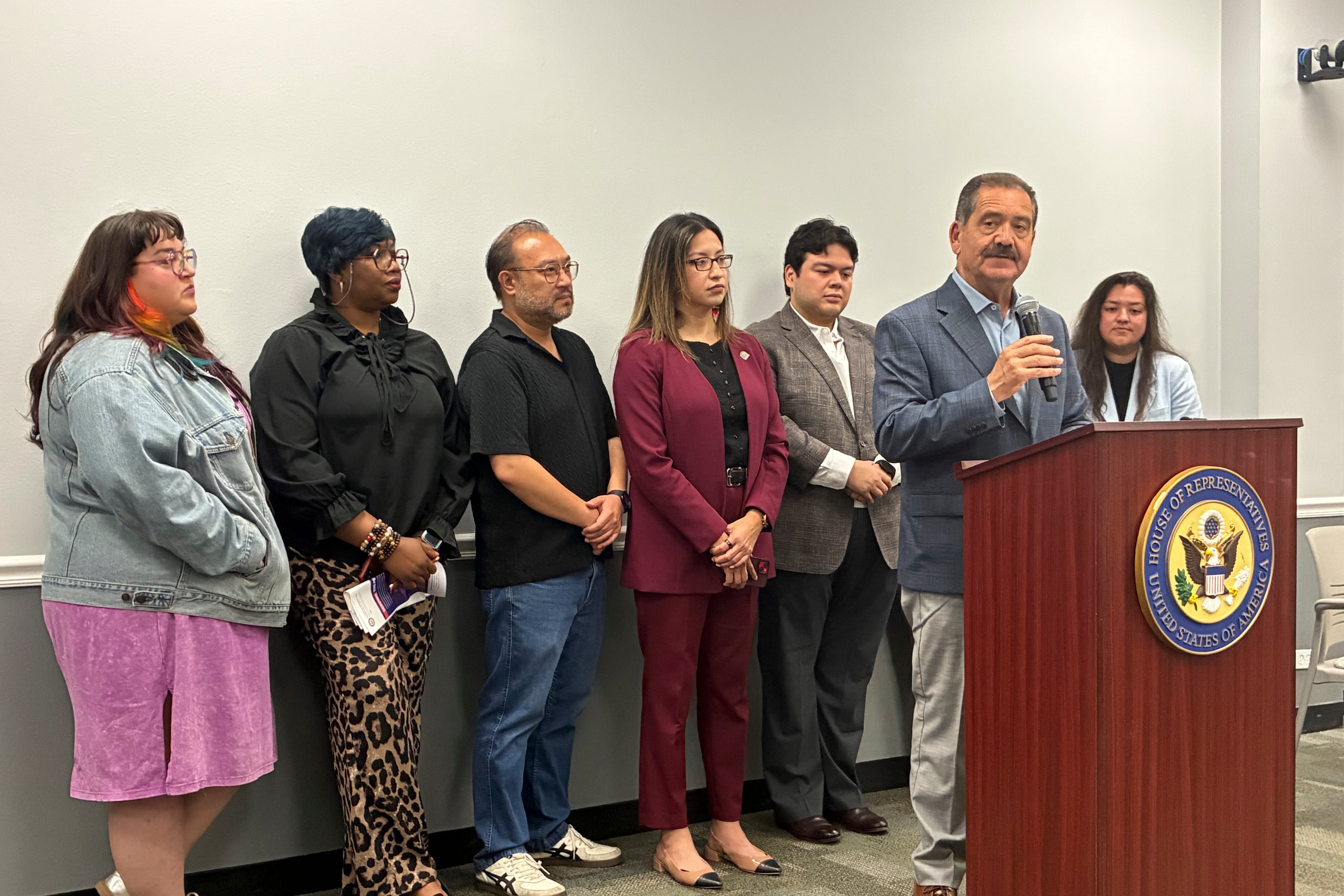
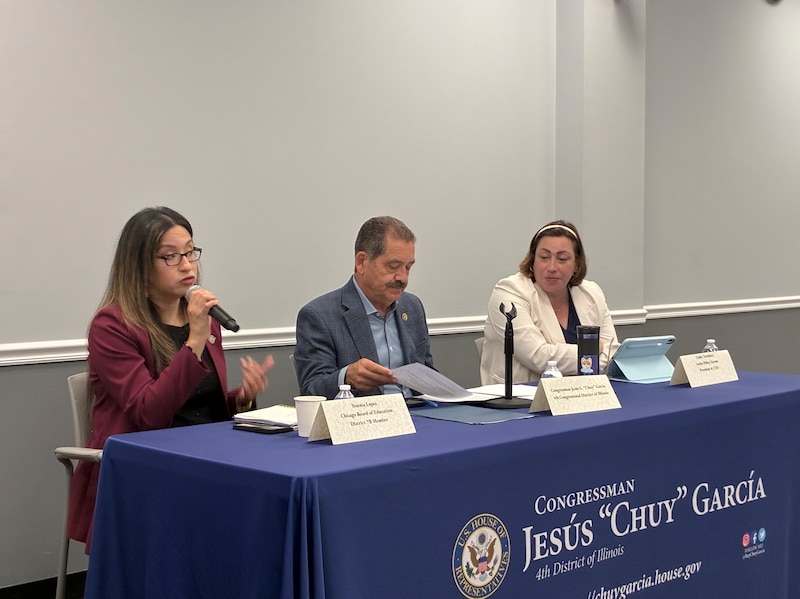
U.S. Rep. Jesús “Chuy” Garcia, who represents several Latino communities in Chicago, introduced legislation Tuesday that would provide federal support to schools serving students affected by immigration enforcement. Joined by Chicago Board of Education member Yesenia Lopez and Latino Policy Forum President Linda Xóchitl Tortolero, Garcia unveiled the proposal, dubbed The Right to Learn Act, Tuesday before more than 30 students and staff at Richard J. Daley College in south Chicago.
“For immigrant kids, school is often the first place that they have in this country. They feel welcome, they feel seen, and they feel heard,” Garcia said. “Too many students now walk through the same doors in fear.”
But passing the bill will be a tall order in the Republican-controlled House for Garcia and the cohort of largely progressive House Democrats who co-sponsored it, including Minnesota Rep. Ilhan Omar. That could change if Democrats flip the chamber in November’s midterms.
The bill would create a federal grant program for schools impacted by immigration enforcement. Schools could use the funding to hire bilingual counselors and social workers, promote trauma-informed and culturally sensitive mental health services, and provide emergency assistance to families in need. The U.S. Department of Education would administer the program.
The proposal comes as the Trump administration seeks to reduce educational funding for programs serving undocumented and immigrant students. Some of those efforts were carried out through President Donald Trump’s executive orders, including one targeting states that provide in-state tuition for undocumented college students.
Federal agencies have also played a role in cutting back services for immigrant children. Last year, the U.S. Department of Health and Human Services barred undocumented children from using Head Start, a federal preschool program aimed at supporting low-income families. That policy is held up in a legal battle, but its looming implementation has worried some parents.
As the Education Department continues to wind down its services and transfer programs to other agencies, the Office of English Language Acquisition has been dissolved. Its funding for English language learning and teacher training is being folded into other programs, according to Education Department officials in April.
Garcia says his legislation contains the “spirit of that office,” adding that federal services such as the Office of English Language Acquisition helped ensure mental health support for students is “culturally rooted and considered.”
Given federal rollbacks and Trump’s mass deportation campaign, Illinois state lawmakers took steps last year to enhance protections for immigrant children.
A new state law requires Illinois schools to follow policies on how to respond to immigration enforcement agents on campus and prohibits schools from requesting a student’s immigration status or Social Security number. Another law passed last year largely blocks university and childcare staff from revealing a family’s immigration status.
Garcia’s bill is a way to extend those protections at the federal level, said state Rep. Edgar Gonzalez, who represents Little Village and Brighton Park, during the press conference.
“You need to put your money where your mouth is, and a bill like this really allows for our schools to make sure they’re safe spaces,” he said.
Makiya Seminera is a reporter covering how the state and federal government affect education in Chicago and across Illinois. Contact Makiya at mseminera@chalkbeat.org.