Michigan educators would be part of the third wave of workers who would receive COVID-19 vaccines, state officials said during a press conference Tuesday.
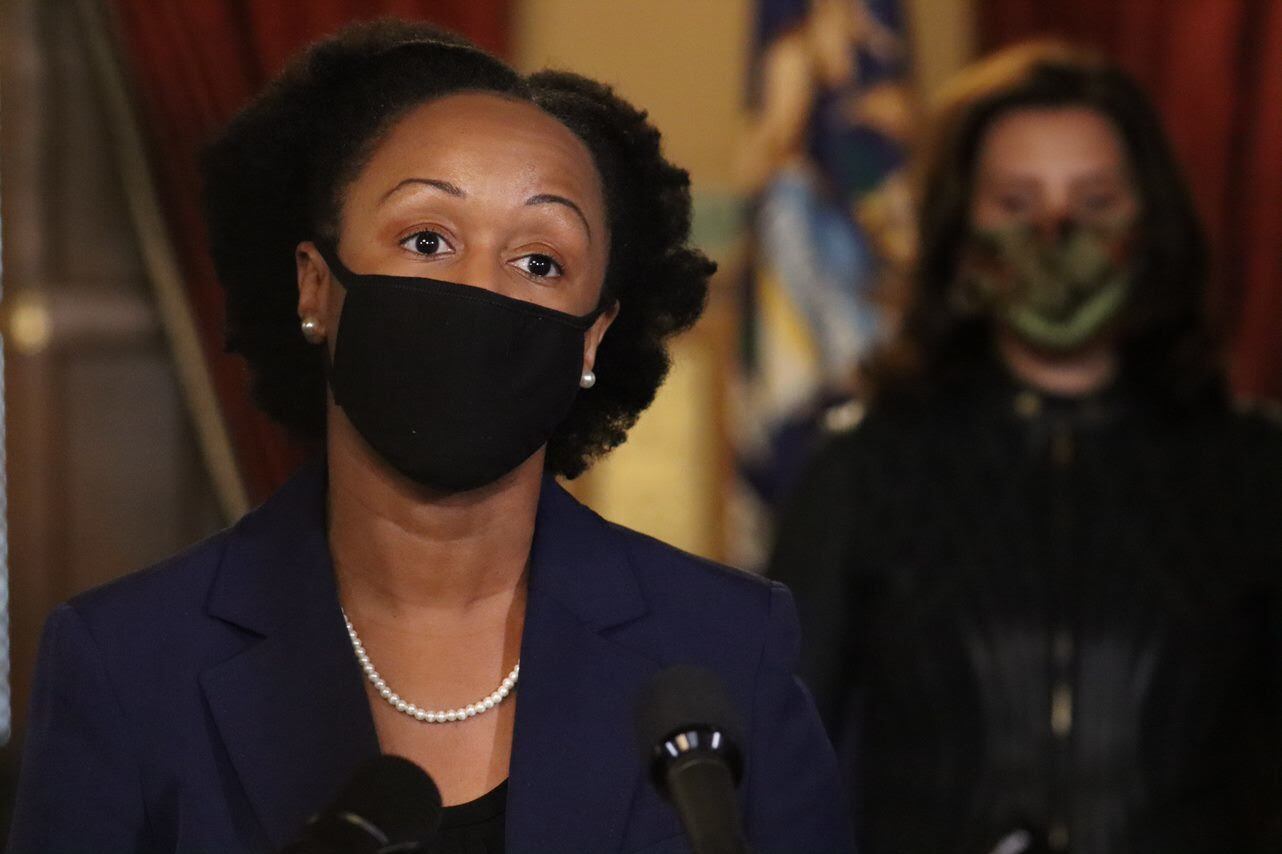
Health care workers would be first to be vaccinated, which could happen as soon as next month, said Dr. Joneigh Khaldun, the state’s medical director.
Gov. Gretchen Whitmer held the news conference to urge bipartisan support from state lawmakers to pass a $100 million COVID-19 relief plan she proposed to help families and workers.
Federal agencies are expected to decide by the middle of the month on whether to authorize the vaccines that are in development, Khaldun said. In the meantime, she said, state officials are “actively working on plans for distribution when they become available.”
There likely will be limited quantities of the vaccine for distribution in December. The state will make the vaccine available to front-line health care workers, emergency medical services workers, those who work on hospital medical floors, intensive care unit workers, and emergency department workers.
In January, as more of the vaccine becomes available, the priority will shift to workers in nursing homes and other care facilities.
Next up would be essential workers — including educators — and those at highest risk of serious illness. Khaldun didn’t say when that third wave of vaccines is expected to be available, but said it would be based on recommendations from the federal Centers for Disease Control. The general population would likely be able to get the vaccine in late spring, Khaldun said.
The press conference comes during a three-week “pause” that placed greater restrictions on indoor gatherings and other group activities. In-person learning at Michigan high schools was suspended as part of those restrictions. The pause ends Tuesday and Whitmer said during the press conference that she hasn’t decided whether the pause will be extended.
Some educators have argued that it won’t be safe for schools to open for face-to-face instruction unless there is a widely available vaccine. But a recent report from University of Michigan researchers found 61% of residents in Detroit who responded to a survey say they aren’t likely to get the vaccine. The researchers said the hesitancy has to do with mistrust around information on the pandemic.
“Those with greater levels of distrust of government, news, and doctors are less likely to say they will be vaccinated,” Jeffrey Morenoff, professor of public policy and sociology, and research professor at the Institute for Social Research, said in a statement. “Successful efforts to promote a vaccine when it’s available will need to take into account these attitudes.”