School closures in Detroit are creating headaches for families and disrupting student learning.
In the past two weeks, four Detroit Public Schools Community District schools have temporarily shut down due to student and staff COVID cases — the first full-school closures of the school year.
While most Detroit and Michigan schools have managed to remain continuously open, the closures, coupled with quarantines of individual students and classrooms, are the latest example of how the pandemic is disrupting a year envisioned as a chance for students to recover and reconnect.
Closing schools “is not a practice that we want to use, but a practice that we’ll use if we feel that there’s a lot of spread of COVID in an individual school or a grade level,” Superintendent Nikolai Vitti said during a recent parent listening session.
Bates Academy, Central High School, and Durfee Elementary-Middle School were all closed during the last week of October due to reported COVID outbreaks.
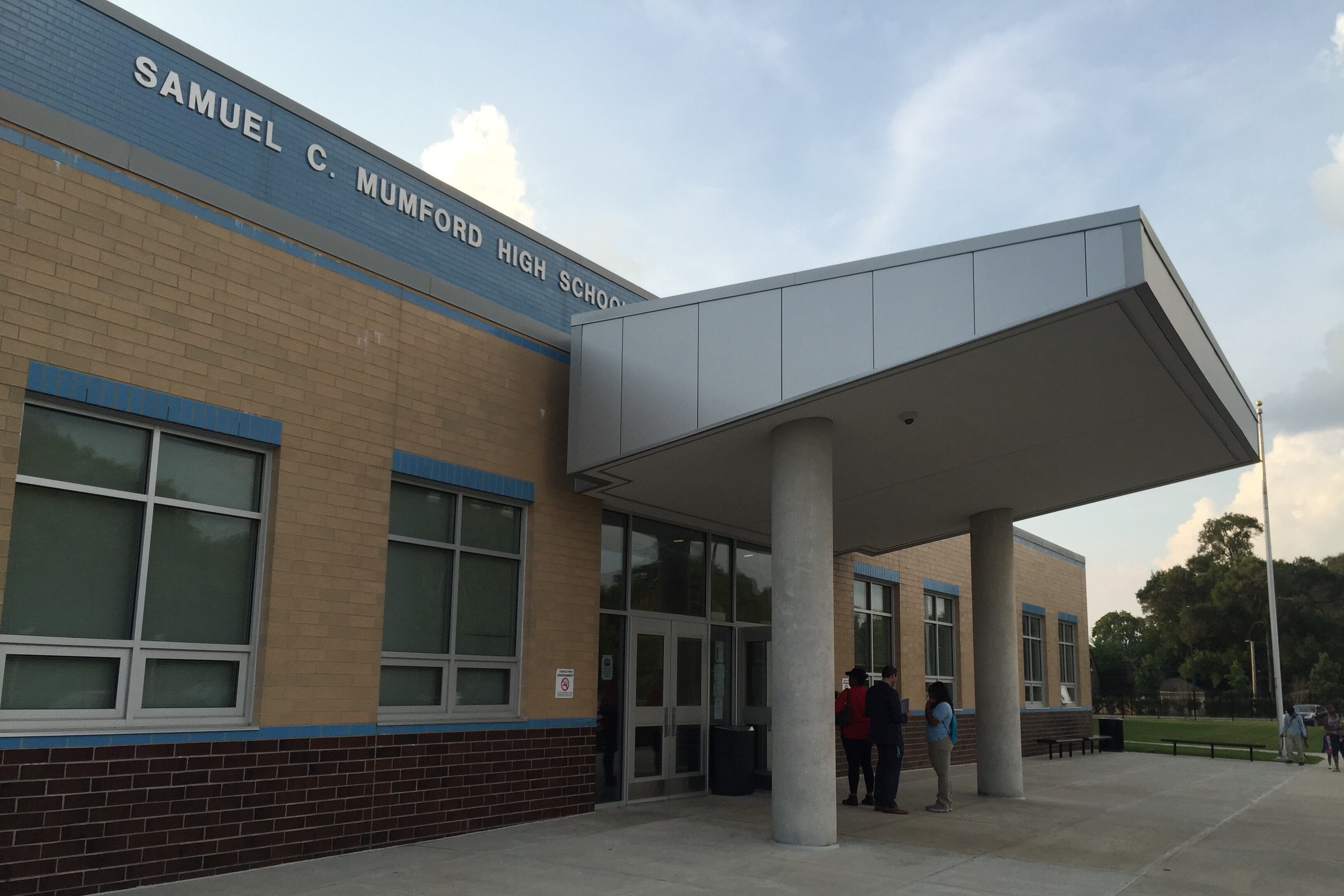
This week, Mumford High School became the latest addition: The school district announced on Oct. 30 that it would be conducting remote learning through Nov. 8 “due to its COVID outbreak status.”
Last week’s closure concerned Porsche Harlan, a Bates Academy parent, who said remote learning didn’t work for her sixth grade son. Home internet issues have been a problem for her family throughout the pandemic. Plus, her son speeds through online assignments and she worries he isn’t retaining the information he learns virtually.
“For his educational purposes, I’d rather him be in class,” she said.
Outbreak data reported by state health officials shows that COVID-related interruptions to in-person learning are increasing statewide. The 5,200 cases reported this week as part of outbreaks in schools were more than double the same figure one month ago.
The true number of cases in schools is likely higher. Outbreaks are only declared when districts report three or more linked COVID cases on school grounds. A single child who contracts the virus from a family member and then attends school wouldn’t necessarily trigger an outbreak.
What’s more, Detroit schools that saw full or partial closures over the last week weren’t included when the state updated its list of school outbreaks on Monday. Outbreak declarations often arrive a week or more after school districts become aware of the cases and close schools. That’s because official outbreak declarations rely on a contact tracing process.
A few other Michigan districts are shifting to remote learning for short periods to deal with COVID-related challenges.
Southfield Public Schools is closing school buildings one day per week in response to districtwide staffing shortages, while Ann Arbor Public Schools closed Monday for the same reason.
There is no available data on how much in-person learning time is being lost this year, said Katharine Strunk, a professor of education at Michigan State University who collected similar data last school year.
But there’s no doubt that COVID-related interruptions across the state are making it harder for students to recover from the academic and emotional effects of the pandemic, she said.
“It’s not like we had a pandemic year and it’s over,” she said. “This is the third year that is highly impacted by the pandemic.”
“One finding from (research) before the pandemic is that little interruptions make a difference in student learning, and these aren’t little interruptions.”
Vitti has said that the district will continue to encourage parents to permit their child to get weekly COVID tests, a measure he believes will catch cases early and limit school closures.