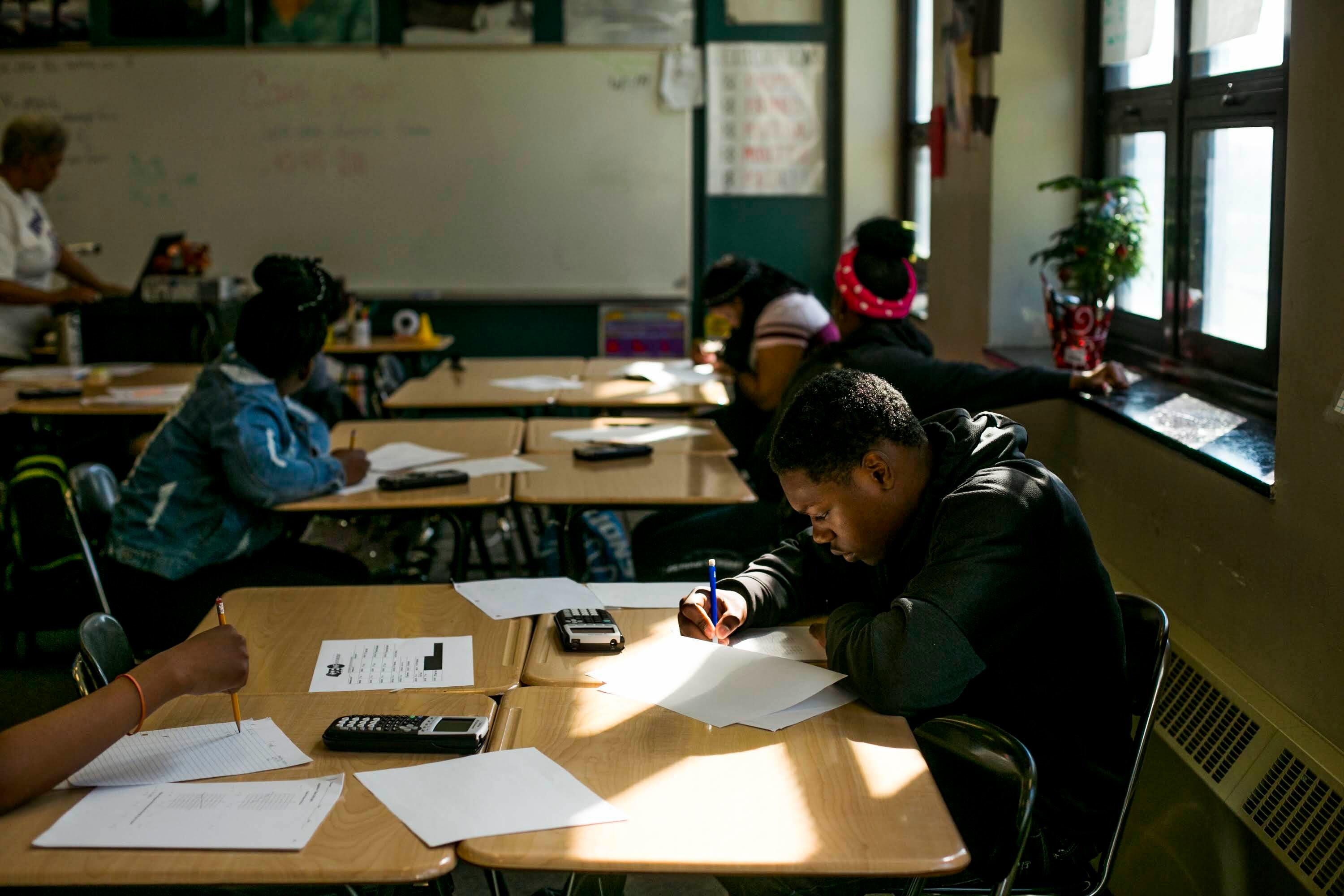
The Detroit school board has rescheduled its Tuesday meeting when members will decide whether to suspend in-person learning through the end of the school year.
You can attend the meeting virtually at 5:30 p.m. May 18 here: https://us02web.zoom.us/j/84691018515
In April, the board of the Detroit Public Schools Community District failed in its first attempt to suspend in-person learning for the rest of the school year. The 3-2 vote failed because the board needed at least four yes votes for it to succeed.
Two days later, board members voted to pause in-person learning, but keep virtual instruction in learning centers until they could vote again on the issue. The date to bring back in-person learning could be extended if the city’s COVID-19 infection rate hasn’t improved.
The rate of positive cases of COVID-19 in Detroit is 12.4%. Beginning April 26, the district began weekly COVID-19 testing — using saliva tests — of students and staff who have returned to the learning centers.
“The district would continue to monitor infection rates,” Superintendent Nikolai Vitti said in April. “If they are roughly where they are now, or even slightly lower, we would make a recommendation to suspend in-person learning from the May meeting until the end of the school year.”
The district could not immediately comment on why the meeting was rescheduled but did confirm that the Tuesday meeting date posed schedule conflicts for some board members.