Sign up for Chalkbeat Detroit’s free daily newsletter to keep up with the city’s public school system and Michigan education policy.
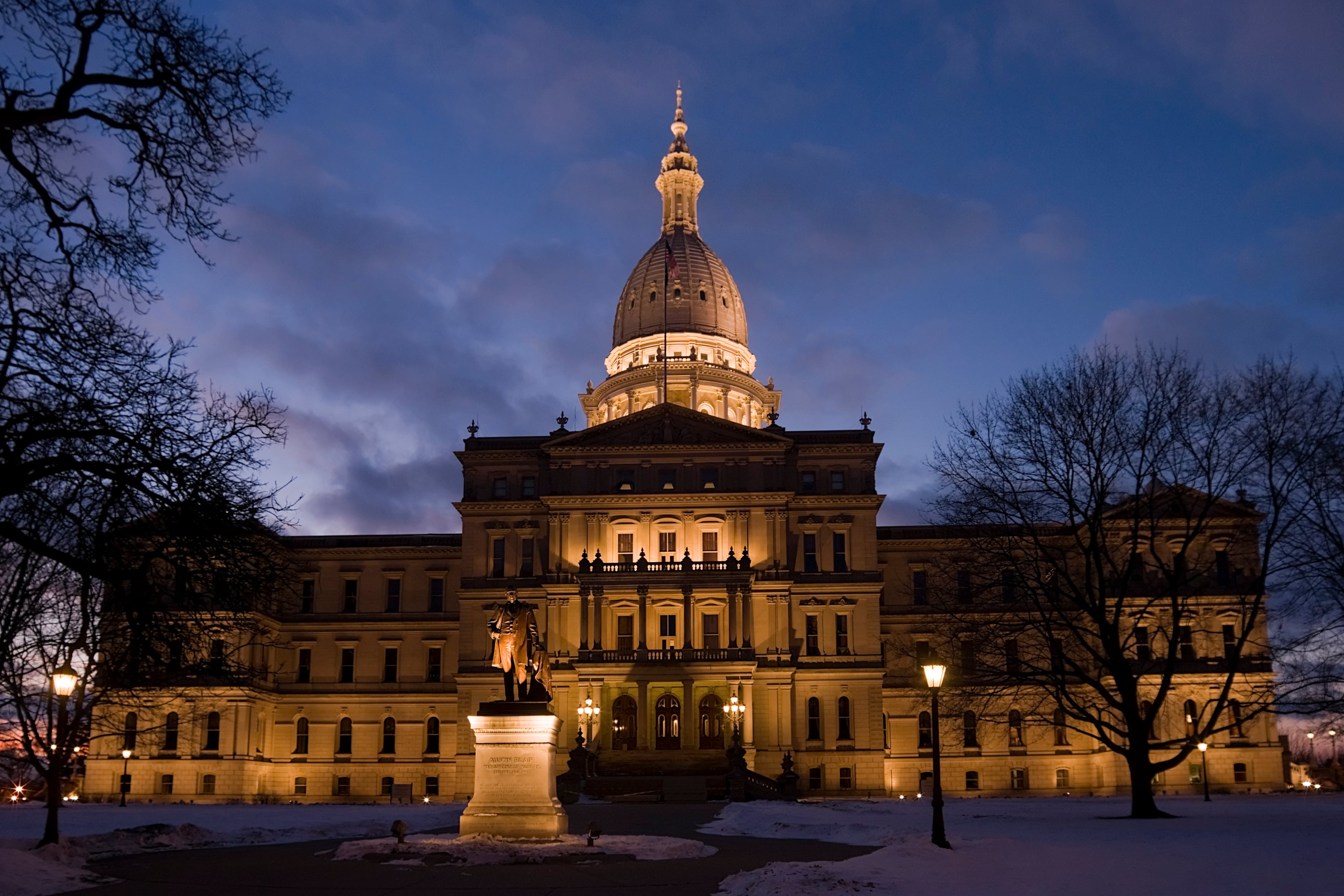
Bills that would require Michigan schools to allow Indigenous students to wear traditional tribal regalia to graduation ceremonies moved forward in the legislature Wednesday.
The House Higher Education Committee approved moving the bills, first introduced in June 2023, for a vote in the full legislative body. If they pass a vote in the House, they would also have to clear a vote in the Senate before they could be signed into law.
Nine members of the committee voted to move the bills forward, with two — Rep. William Bruck, a Republican from Erie, and Rep. James DeSana, a Republican from Downriver — abstaining.
The move comes as Democrats work to push forward their legislative priorities in a lame duck session before they lose their trifecta of control over the state government at the end of the year.
Mary Lee, a survivor of the Holy Childhood boarding school in Harbor Springs, said during a Sept. 13, 2023 committee hearing on the legislation that the introduction of the bills was a meaningful step for Native American students.
“It’s an honor for these kids to learn their culture and what was lost for us– what I didn’t get to have,” said Lee, a member of the Little River Band of Ottawa Indians in Manistee.
Michigan had eight federal boarding schools that preyed on Native American children for nearly 100 years, according to a 2022 U.S. Department of Interior report. During that time, hundreds of children were forcibly taken from their homes and reportedly suffered sexual and physical abuse and neglect at the schools. More than 50 burial sites associated with the schools have since been found in the U.S.
For years, Indigenous students across the U.S. have fought bans on traditional regalia at school ceremonies. At least 12 other states have passed laws to allow Indigenous people to honor their traditions at public events.
Tribal members say taking a step to acknowledge and celebrate their traditions in educational settings will help build trust with schools in their communities.
Rep. Helena Scott, a Democrat from Detroit who introduced one of the two bills, said during the 2023 hearing that the legislation does just that.
“The sacred markings of tradition, success, and personal connection with ancestors are important to the rites of passage for many Indigenous students, and tell the stories of survival, persistence, and generational success and growth, reflecting pride and their own identity, as well as the identity of their respective tribes,” she said.
The bills would amend the state’s Elliott-Larsen Civil Rights Act and school code to prohibit discrimination against Indigenous people who wear or bring traditional regalia to honorary school ceremonies.
The traditional regalia and objects that would be protected under the bills include any items that hold tribal, ancestral, or ceremonial significance for Native American people, such as headdresses, masks, feathers, or beadwork. Items that are legally prohibited from schools, such as weapons, are not protected by the bill.
The ceremonies include graduations as well as any event held to honor student achievements at all Michigan schools, including public and private educational institutions.
There are 12 federally recognized Native American tribes in Michigan. The state estimates there are around 8,400 Native American students, though advocates say that is likely a severe undercount due to the way Michigan collects demographic data.
Starting this school year, the state began collecting more accurate data on Native American students. Districts are now required to collect data on how many students are affiliated with tribes.
Before this year, the state only allowed tribal-affiliated students to mark “American Indian or Alaskan Native” or “two or more races” when identifying their ethnicity.
The limitation created skewed data on attendance, graduation rates, and more, advocates say.
Hannah Dellinger covers K-12 education and state education policy for Chalkbeat Detroit. You can reach her at hdellinger@chalkbeat.org.