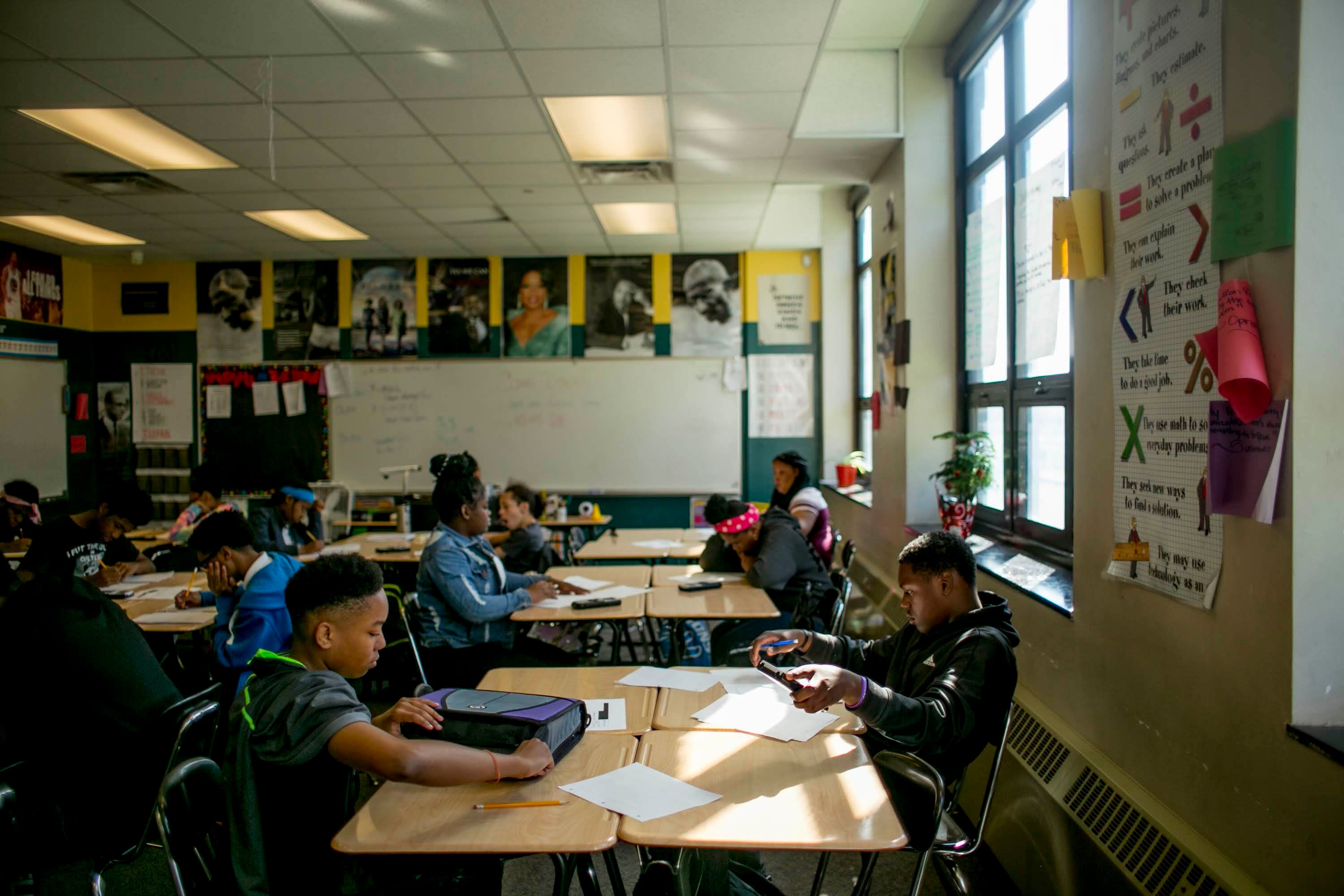
A new attendance initiative in the Detroit school district that is luring high school students to the classroom with promises of $200 gift cards for perfect attendance is off to a promising start.
At a school board meeting Tuesday, Superintendent Nikolai Vitti reported that 1,800 more students in the Detroit Public Schools Community District have had perfect attendance since they returned from the winter break than at this time last year.
Students can earn the $200 gift cards for every two-week period they have perfect attendance through March, with the potential to earn as much as $1,000.
It’s of course too early to fully evaluate the program. The first two-week cycle began Jan. 6 and runs through the end of this week.
“But right now, the incentive is working,” Vitti said. He said he believes the increase in perfect attendance is due to the incentive.
The incentive is one of two new efforts aimed at improving attendance in the district, where 66% of the students were chronically absent during the 2023-24 school year. In November, Vitti announced new guidelines that would mean students who miss a significant number of days of school could be held back in grades K-8 and required to repeat classes or take credit recovery classes at the high school level.
Students are considered chronically absent in Michigan if they miss 18 days in a typical 180-day school year. Research is mixed on whether incentives are effective, and some experts worry that they potentially ignore the often insurmountable at-home challenges, much of it related to poverty, that prevents students from coming to school regularly.
This is the second program launched this school year that offers financial incentives for students. The district is also paying students up to $2,000 to attend literacy tutoring sessions.
The board heard from a parent who shared how the attendance incentive is motivating her son.
“I have a senior this year,” said Melissa Redman, a frequent commenter at school board meetings. The program, she said, has given him “willpower to get up and go to school because he wants to earn the money for the attendance program.”
“The paid incentive is very popular and a long time coming,” Vitti said, responding to a board member’s question about the potential of trying a similar incentive to get students to attend summer school. He said he’s been talking about paid incentives for students for years.
“I’m excited personally that we’re finally doing it,” Vitti said.
It’s unclear how much money it will cost for the program. But Vitti said Tuesday that the district is using interest money earned from money set aside in the bank for future facility projects.
“As we wait to complete projects, that money is in the bank. It creates interest. It gives us a lot of flexibility.”
Lori Higgins is the bureau chief for Chalkbeat Detroit. You can reach her at lhiggins@chalkbeat.org.