This story was originally published by Votebeat. Votebeat is a nonprofit news organization reporting on voting access and election administration across the U.S. Sign up for Votebeat Michigan’s free newsletter here.
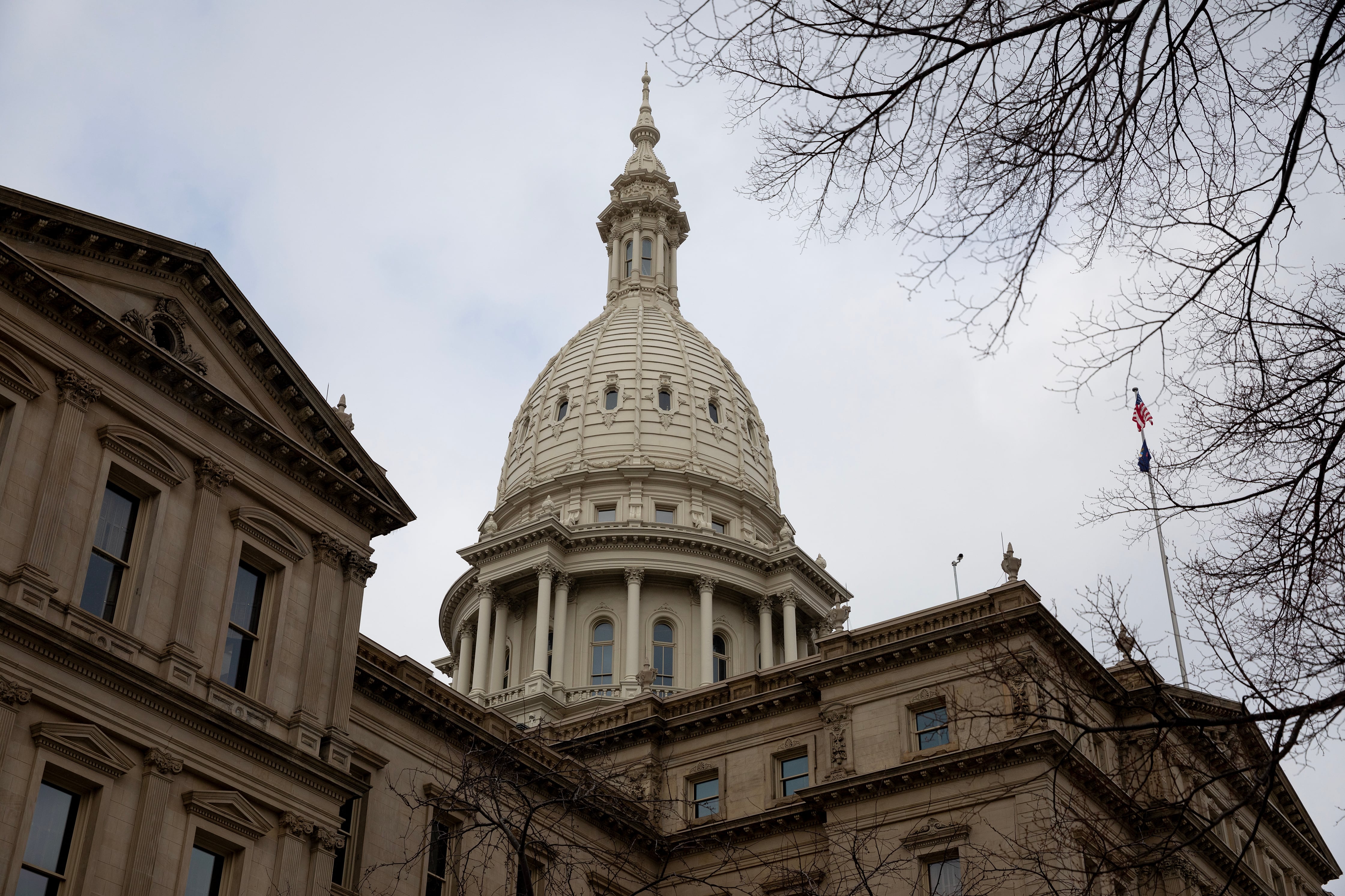
A proposed bill from House Republicans would make Michigan’s school board candidates declare a party affiliation, a change that’s drawing criticism from local election officials and school board members.
Under state law, school board positions are explicitly nonpartisan. House Bill 4588, introduced by Rep. Jason Woolford, would tweak the law to require candidates for local school boards to declare a party affiliation.
That requirement could force the races to have primary elections in August, in addition to the November general election when school board seats are typically voted on, officials said.
Michigan clerks warn that the bill could create a range of problems for local election offices, including longer ballots, voter confusion, and thousands of extra dollars in expenses.
For one thing, it would require changing the layout of primary ballots to include school board candidates in the partisan section, which could be confusing for voters and expensive to implement, Hillsdale County Clerk Abe Dane told Votebeat.
Woolford, a Republican from Howell, said Tuesday before the House Election Integrity Committee that his proposal would improve transparency around a candidate’s values and improve voter turnout.
“Party labels create policy consistency,” Woolford said. “Boards with clear ideological balances, whether conservative, progressive or mixed, can avoid gridlock and deliver on promises from better budgets to safer schools. Without labels, we risk surprises or recalls when candidates’ true colors show up too late.”
Education policy is largely determined by the state, but school boards have increasingly become a battleground for groups trying to influence policy at the most local level. In some communities, conservative groups have focused on school boards as a place to assert “parental rights” on everything from COVID vaccine requirements to LGBTQ inclusion.
A small number of states already use party labels on ballots for school board candidates, while others allow for it but don’t require it. In Michigan, candidates for the three public-university boards that are elected statewide are listed on ballots with their party affiliation. But these candidates are selected during party conventions, not through primaries.
It’s the prospect of partisan primaries for local school boards that has some election officials worried. Dane, in Hillsdale County, said that in counties like his where a single party dominates most offices, adding another race to the partisan section of the primary ballot could make ballots longer and costlier.
“If you throw in a second piece of paper for every single voter? God, help us,” Dane said. “You’re going to create nightmares for balancing, tabulator issues. Voters are going to drop off and give up after a while of filling out the ballot.”
He said the cost could easily run a clerk’s office thousands of dollars.
He dismissed the idea that a switch to partisan elections would improve voter turnout. “Anyone that is interested in a school board election is probably going to be voting in an August primary regardless,” he said.
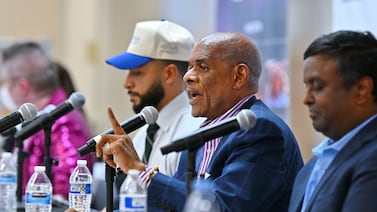
School board members at the hearing overwhelmingly testified against the bill as well, arguing that requiring candidates to declare a party affiliation goes against the mandate for school board members to support students and schools.
Jennifer Smith, director of government relations for the Michigan Association of School Boards, said “the vast majority” of MASB members opposed the bill, because they don’t see themselves as political people. Such a change could discourage people from running for school board — at a time when many school board seats are already going unfilled — because candidates would have to be prepared to campaign in both a primary and a general election, she said.
In emailed testimony, Tom Buffett, president of the Okemos Public Schools board, wrote: “Frankly, in an increasingly polarized and politicized society, I view the prospect of having party-affiliated Trustees as a divisive distraction of what Boards of Education need.”
Democrats on the committee appeared opposed to the bill. Rep. Stephen Wooden, D-Grand Rapids, discussed the risk that partisan elections could lead to significant policy changes from one election to the next, to the detriment of students.
Even Republicans didn’t seem convinced. Rep. Pat Outman, a Republican from Six Lakes, said he wished “we could get the politics out of school,” citing President George Washington’s farewell address in which he warned against partisan factions. Outman said he hadn’t solidified his opinion yet but had concerns about the bill.
The committee did not vote on the bill Tuesday. Even if the bill were to make it to the House floor and through the chamber, it is unlikely to win favor in the Democratic-controlled Michigan Senate.
Hayley Harding is a reporter for Votebeat based in Michigan. Contact Hayley at hharding@votebeat.org.