Sign up for Chalkbeat Detroit’s free newsletter to keep up with the city’s public school system and Michigan education policy.
Nearly half of all high schoolers in the Detroit district were paid for their attendance last year as part of an effort to reduce high rates of chronic absenteeism.
The Detroit Public Schools Community District has continued the initiative this year after seeing an improvement in both daily attendance and chronic absenteeism.
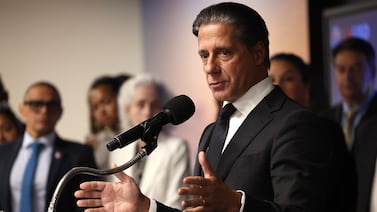
“I believe the incentive did make a positive impact on high school student attendance,” Superintendent Nikolai Vitti told Chalkbeat in an email this week.
Average daily attendance for high schoolers increased by 2.6 percentage points last year, Vitti said, while chronic absenteeism declined by 7.4 percentage points.
More than 7,300 students got a $200 Visa gift card at least once last year from the district for showing up to each class every school day in a 10-day cycle from January to March in 2025. Some students received the incentive more than once. More than 14,300 students enrolled in high school in DPSCD in the 2024-25 school year, state records show.
Around $4 million in gift cards were given to students.
Here is a break down of how many students received incentives each cycle last year:
- 3,657 students had perfect attendance during the first cycle.
- 3,873 students had perfect attendance during the second cycle.
- 4,928 students had perfect attendance during the third cycle.
- 4,683 students had perfect attendance during the fourth cycle.
- 4,035 students had perfect attendance during the fifth cycle.
The initiative began as part of the district’s efforts to curb chronic absenteeism, defined as a student missing 10% or more of the school days in a year.
The winter and early spring months were chosen for the incentive, Vitti said, because attendance tends to drop in inclement weather and after winter break.
In 2024-25, more than 60% of DPSCD students were considered chronically absent – a nearly 5 percentage point decrease compared to the year before. It was also the first year since the pandemic that the rate was lower compared to pre-COVID years.
State data shows DPSCD and other districts with the most to overcome are outpacing the rest of Michigan when it comes to reducing chronic absenteeism.
DPSCD, where 84% of students come from low-income families, and other districts like it in the state have long experienced high rates of chronic absenteeism due to systemic barriers, such as housing instability, a lack of accessible transportation, and health concerns.
The district’s multilayered approach to improving attendance over the years has included boosting wraparound services, concentrating attendance agents in schools with the most absenteeism, and hiring more academic interventionists, among other efforts.
When the financial incentive was initially introduced to the district’s school board, some members questioned whether the investment would pay off.
Studies on attendance incentives suggest the practice may have small effects, if any, because researchers said the programs did not address demotivating factors like unsafe routes to school.

Mariah Cohens, a 17-year-old Pershing High School student, said she didn’t get the incentive last year. Mental health issues sometimes keep her from coming to school, the teen said.
“Sometimes you just need a break,” said Cohens.
This year, $100 gift cards will be given for perfect attendance in five-day cycles. The district changed the length of the payment cycles this year based on student feedback, Vitti said at a recent board meeting.
The incentive began last week and will continue through the week of March 16, giving students the opportunity to earn up to $1,000.
The first payments will go out to students on Jan. 23.
Hannah Dellinger covers Detroit schools for Chalkbeat Detroit. You can reach her at hdellinger@chalkbeat.org.