
Sign up for Chalkbeat’s free monthly newsletter How I Teach to get inspiration, news, and advice for — and from — educators.
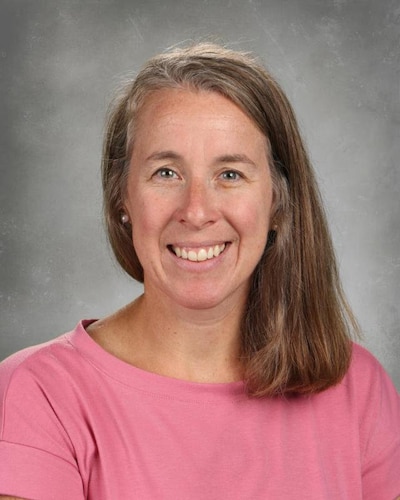
Scheduling conflicts, disinterest, and fear of failure can keep students from taking college prep classes, says Tara Becker-Utess, assistant principal at Mason High School south of Lansing.
The veteran educator is part of a statewide cohort coming up with fixes to help college-bound students gain confidence.
“One of the misconceptions is that they are not smart enough – and that’s not the truth,” she said.
Honors, advanced placement, and dual enrollment courses can help prepare students for college.
Students who don’t receive scores of 4 or 5 on AP exams can still benefit, she said. “Even if they are getting a 2, that means they are prepared for a college-level course.”
Becker-Utess is close to completing an 18-month Michigan Leadership for Equity and Transformation fellowship. The program, a collaboration between the Michigan Association of Secondary School Principals and the Michigan College Access Network, helps educators advance as school leaders.
The fellows complete projects aimed at helping students be successful in higher education. They consider data that shows how many students in their schools go on to finish college in four years and how many have to take a remedial course in their first year of college.
Michigan has historically had a low rate of residents with college degrees. In 2023, the state’s post-secondary attainment rate was 51.8%, below the national average of 54.9%.
However, over the last decade, state data shows Michigan has significantly increased the percentage of students who successfully complete college or university. The most recently available data shows 60.6% of students who matriculated in 2020-21 graduated within four years from the state’s public universities – up by 16 percentage points compared to 10 years ago.
Chalkbeat talked with Becker-Utess about how she connects with students, handles difficult conversations, and more.
This interview has been lightly edited for length and clarity.
Was there a moment when you decided to become an educational leader?
There was not a specific moment, but I enjoyed the work that I was doing as a teacher leader in Charlotte, Michigan. I began giving presentations on topics including standards-based grading and the flipped classroom. My first job out of the classroom was as a mathematics and social studies consultant, where I was able to support teachers across Ingham county. I learned so much in this role, but felt a calling to get back to a building in an administrative role.
How do you get to know your faculty members and/or students?
I find that the best way to get to know faculty members is simply to listen. When I first started at Mason, I made it a priority to meet with all of the faculty that I would be evaluating to see what support I could provide them.
I recognize that it is just as important to get to know the faculty as humans and not just teachers. It is fun to hear about how their kids are doing at college or plans for upcoming breaks. However, it’s equally important to know the hard things they are going through so that I can provide support in the moment to help them focus on the hard things at home.
I find that being present during the school day in classrooms, hallways, and the cafeteria is the best way to get to know students. I enjoy greeting students at the front door each morning as well. Students will often come up to me to ask questions or just even ask about my day. It’s a good way to get to know students in a positive way before they are in my office for disciplinary issues. I try to do daily classroom pop-ins where I can talk to kids about what they are learning.
Tell us about a favorite piece of advice. Where did the idea come from?
A former colleague of mine shared that she always started her class with “good things.” She simply asked students each day what was going good in their lives. I started this with my own students at Charlotte and it was fascinating how much I would learn about each student and how much they would learn about each other.
I still use that technique as an assistant principal. We start all staff meetings with good things.
What object would you be helpless without during the school day?
Without sounding like the teenagers that attend Mason, I would say my phone. I really enjoy being out and about in the building during the day. Having my phone with me allows me to answer emails or handle other building business while I am still visible in the school.
Tell us about a memorable time — good or bad — when contact with a student’s family changed your perspective or approach.
At our Student Support Team meetings, we try to determine the root cause of student struggles with attendance, behavior, or discipline in order to assign the most effective intervention. In some cases, we determine the best course of action is to meet with the student and family.
My initial approach was to get down to business and try to identify the problems and look for solutions. However, I now start the meetings getting to know the student and parent better. I let the student and family know that everyone sitting in the room is on their team). I also involve the students in these meetings to get their perspective on what is going on and how we can help. I believe it helps the student and parent leave feeling supported by the school rather than simply getting a list of things to do.
What part of your job is most difficult?
The unknown on a daily basis is what causes the most stress in my position. I often enter the day with a plan of what work I want to accomplish, which classrooms I want to visit, and who I want to check in with. However, a student incident can change that entire plan before the first bell even rings.
What was your biggest misconception that you initially brought to education leadership?
My biggest misconception was that I had to know all of the answers. I was concerned that if I didn’t know the answers, people would lose faith in me as a leader. When COVID hit and I was consulting with districts on how to use the various technology tools, I did not have all of the answers. It forced me to say “I don’t know” at times and then look for the answer. I often tell people that I am not sure, but that I will find out for them or I look for others (including the people who asked the question) who can help with problem-solving!
Tell us about a book that helped you become a better leader.
I read and took a training on “Crucial Conversations: Tools for Talking When Stakes are High” by Kerry Patterson, Joseph Grenny, Ron McMillan, and Al Switzler earlier in my career. It really breaks down how to have difficult conversations. When I know I am facing a difficult conversation, I can go back to the Situation-Behavior-Impact template from the book.
I have used this approach many times while at Mason. In fact, for particularly difficult conversations, I will write down what I want to say for each component of the model before I have the conversation. It helps to keep the emotion out of the conversation and focus it on facts and moving forward.
What’s the best advice you’ve received about educational leadership?
All of the textbooks will tell you how important it is to get to know your staff and students. I saw this in action when I started at Mason High School. Principal Lance Delbridge and Assistant Principal Nick Toodzio served long tenures here and I noticed how much they knew about our staff and students. The strong knowledge came from setting aside a great deal of time to simply talk with these stakeholders and get to know them and their families. As a result, they really understood how to motivate people and who they needed to get on the bus to get something done at the school.
Hannah Dellinger covers Detroit schools for Chalkbeat Detroit. You can reach her at hdellinger@chalkbeat.org.