An Indiana lawmaker is raising concerns that Indianapolis Public Schools’ proposal to share tax referendum funds with charter schools violates state law.
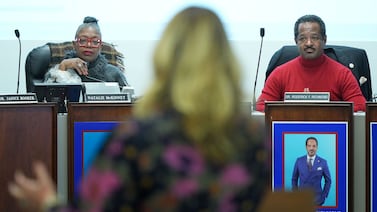
The IPS board is scheduled to vote Thursday on a plan to give $5 million per year to charter partners from the district’s 2018 operating referendum. The proposal follows calls from families and advocates to share the local funding boost, expected to raise $220 million over eight years, with independently run innovation schools under IPS’ umbrella.
Rep. Ed DeLaney said Tuesday that if districts want to share referendum funds, they must say how much they plan to give charter schools when asking voters to approve a tax increase.
“Not one single taxpayer was told the truth about where that money was going,” said DeLaney, a Democrat whose northwest Indianapolis district covers part of IPS. “So now we’ve been misled, and our property taxes are being given to schools that we don’t control.”
IPS released a statement Tuesday saying, “All actions taken by the district since the passage of the 2018 operating referendum align with the question as presented to voters. We stand by those previous and current actions to serve all IPS students.”
One prominent local charter advocate refuted DeLaney’s claim Tuesday and maintained that IPS was working within the law.
“In my view, on multiple levels, they’re on very clear footing here,” said Brandon Brown, CEO of The Mind Trust, a nonprofit that supports IPS’ innovation school strategy.
When IPS initially sought voters’ approval in 2018, it did not outline a plan to share the money because state law didn’t speak to whether charter schools — which don’t receive local property tax funding — could benefit from the tax increase.
But in 2020, the legislature tweaked state law to allow districts to share referendum funds. That change, DeLaney said, requires districts to describe their plans when board members first agree to seek a referendum. The step intended to regulate the requests for tax increases and keep the public informed, he added.
How districts would share funds wouldn’t appear on voters’ ballots, but it would be part of public school board discussions.
Charter schools are independently run and publicly funded schools. They are overseen by authorizers such as the mayor’s office or universities, and their school board members are not elected. IPS partners with more than two dozen charter schools, counting their enrollment and performance toward district numbers and providing services like buildings or transportation. The district has sometimes brought in charter operators to run struggling schools.
Brown contended that districts weren’t prohibited from sharing referendums before the change in law, and the 2020 law doesn’t address referendums that had already been passed.
Emily Crisler, general counsel of the Indiana Department of Local Government Finance, said the 2020 law considers future referendum requests and doesn’t deal retroactively with prior ones.
“I think that’s an unanswered legal question,” she said.