In-person? Virtual? Look up how your Indiana school taught in 2020-21

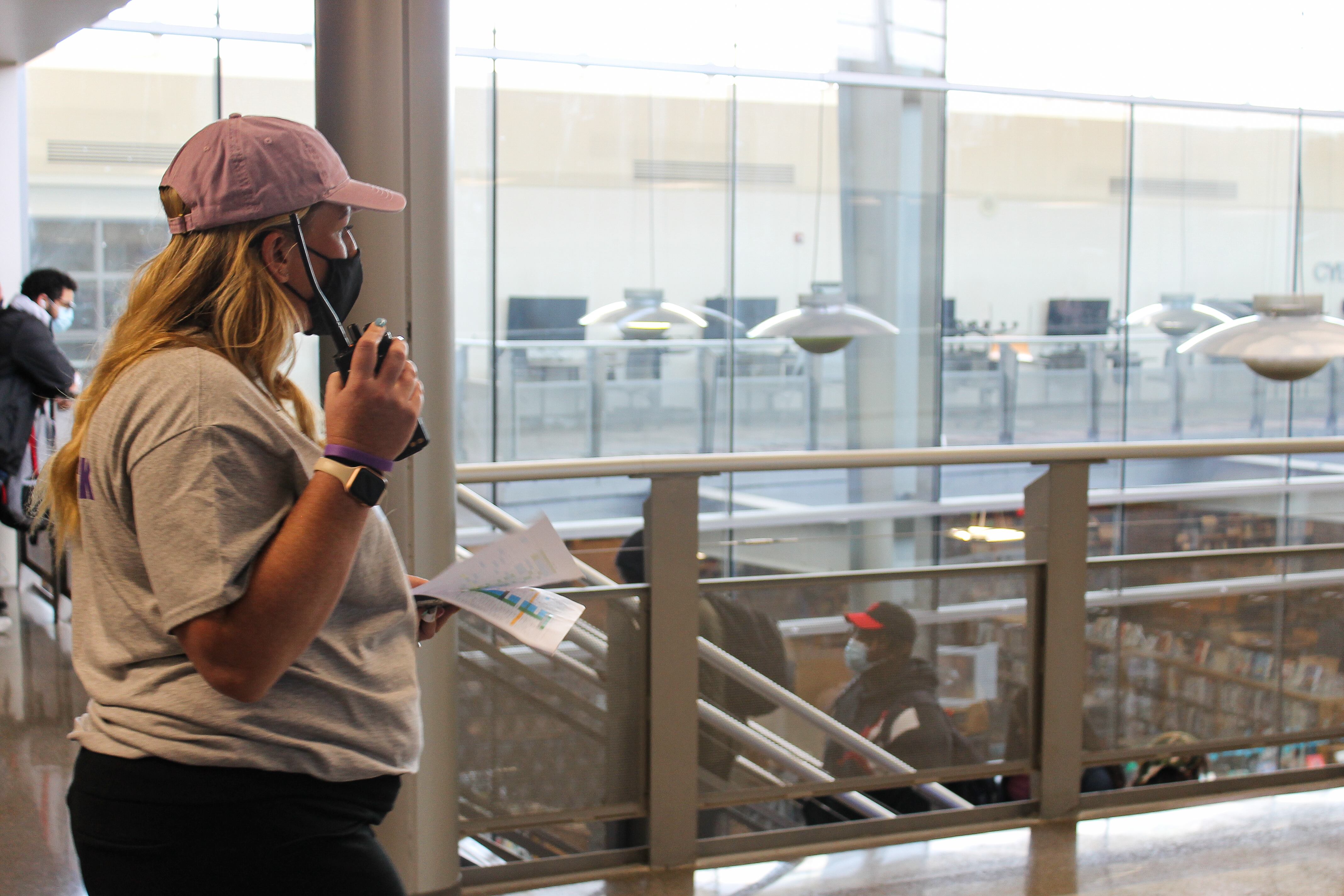
A woman wearing a mauve baseball cap and carrying a walkie-talkie stands near the top of the stairs at Ben Davis High School in Indianapolis, Ind., last spring when schools in Wayne Township returned to full-time in-person learning.
Surveys show that Indiana students performed better attending school in person during 2020-21 than they did by participating virtually or in a hybrid format. Here students return to Ben Davis High School in Warren Township, Indianapolis, Ind., last spring for the first time since the beginning of the pandemic (Aaricka Washington / Chalkbeat)

As many Indiana students walk into school buildings this month, the state is now looking at how students learned and how many students showed up in the 2020-21 school year, the first full year in the pandemic. 

The data Indiana collected last school year offers some surprising insights into how schools taught — in-person, virtual, or a combination of the two. The data also reveals differences in In learning opportunities, a state education report has shown.

Last school year was the first time that the state collected daily attendance data for each student. That allowing for a comparison of how students attended classes during the pandemic and how the delivery of instruction affected test scores.

The chart below lists all public schools in Indiana, and what percentage of the school year they offered instruction virtually, in person, and in a hybrid form. It also lists self-reported attendance rates for each school.
Show entries
Search:
Showing 0 to 0 of 0 entries
The Latest

Nine of the 20 schools the district wants to close are in areas it has identified as vulnerable, based on neighborhood social factors and prior school closures.

Charters within Indianapolis Public Schools borders could choose not to give control of their school buildings over to the proposed Indianapolis Public Education Corporation under an amendment lawmakers are considering. The proposal also clarifies who can close schools.

Research suggests that a few snow days probably won’t set students back academically.

Critics of aggressive immigration enforcement tactics say they’re profoundly damaging students’ ability to learn and feel safe, and they're calling on Congress to act.

So far, 23 states have opted into the new tax credit included in the One Big Beautiful Bill, but there’s still uncertainty about how exactly it will work.

Dinowitz’s first oversight hearing will focus on mayoral control of NYC schools, which Zohran Mamdani criticized during the campaign but recently embraced.