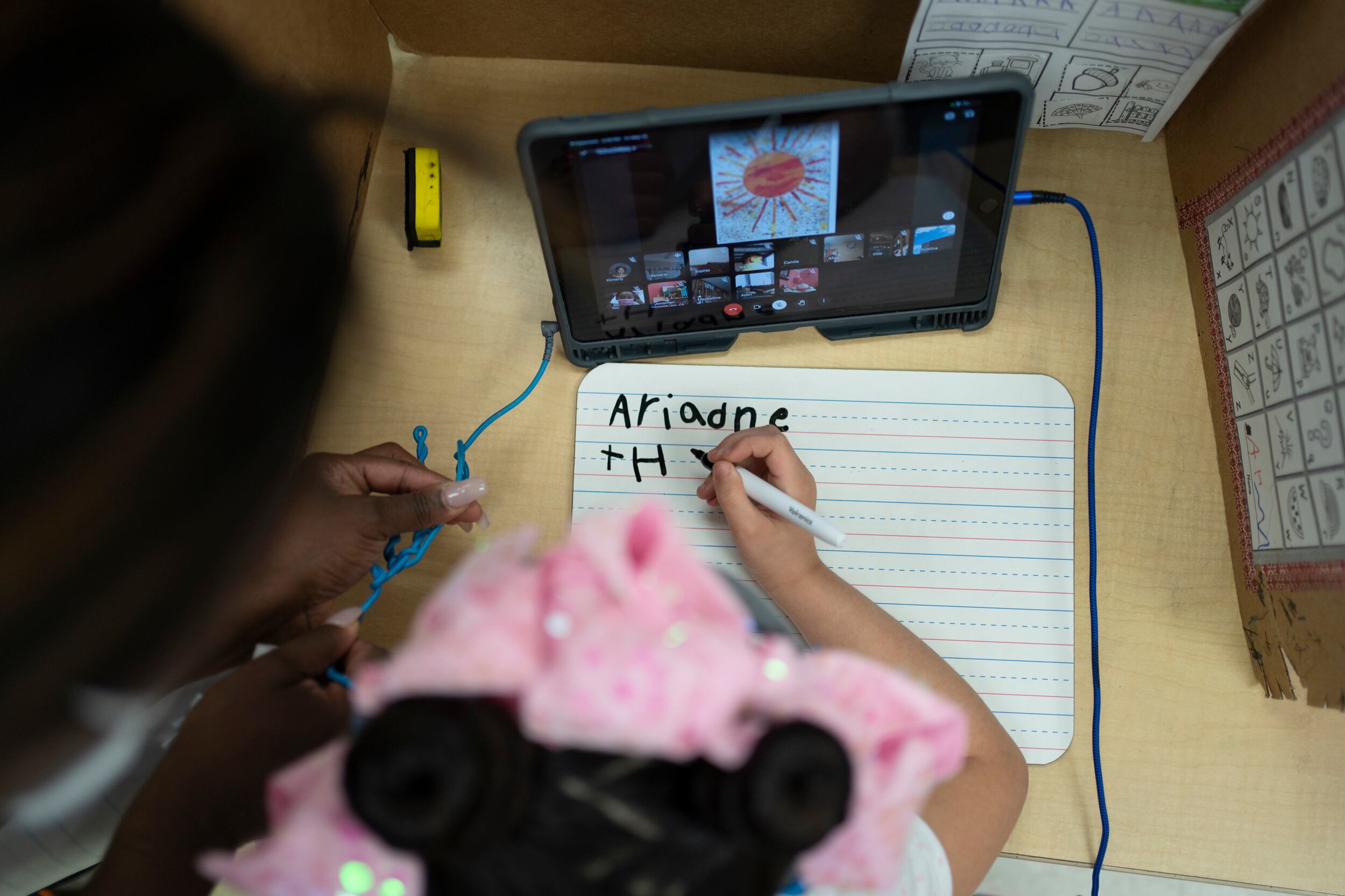
Indianapolis Public Schools students improved their performance in reading and math after participating in a tutoring pilot program that the district hopes to expand this fall.
The virtual program, offered through Tutored by Teachers at 12 IPS schools this spring, saw K-11 students improve their math scores by 12%-26% and English/language arts scores by 4%-9%, according to a district presentation released Tuesday.
IPS plans to offer all families access to virtual tutoring this fall, as it emerges as a popular option nationally for helping students catch up in reading and math. Tutoring held during school hours, as well as optional after-school tutoring, had the highest rates of student attendance, district data shows.
To gauge their progress, IPS students took a Tutored by Teachers assessment on the first and last days of the pilot, and answered a survey about their social-emotional learning (SEL).
“Across all pilots, students demonstrated growth in self-reported SEL outcomes, with the greatest gains seen in students’ comfort asking for help,” the district said in its presentation.
One caveat to the gains, which varied by grade level: There was relatively low attendance, especially on the final day of the pilot. This meant that fewer students could be compared to their initial performance.
Students who made the greatest gains in literacy attended at least 70% of tutoring sessions.
The district rolled out several different models of the pilot, which relied on federal COVID relief money. These differing versions included after–school tutoring at home and on campus, as well as tutoring during dedicated blocks of time during school. The latter had the highest attendance rate at 76%.
After-school, at-home tutoring where families could opt-in to the program had the second-highest attendance rate at 51%, while after-school tutoring where schools assigned students to the program had the lowest attendance rates, with 21% for on-campus models and 8% for at-home models.
Driver shortages limited access to after-school on-campus tutoring, according to a previous district presentation about the pilot.
IPS plans to expand both after-school and block tutoring this fall, alongside several other district and statewide initiatives to increase access to tutoring. Among them are $500 state scholarships that districts can match to provide up to $1,000 in tutoring funds to families. Other IPS schools are providing tutoring by paying their own staff or by partnering with local universities.
The district plans to expand optional after-school tutoring in math and reading to all K-12 families. Three time blocks will be available after school at 3:30 p.m., 5 p.m., and 7 p.m.
It will also expand intervention block tutoring to more schools designated as emerging, with a focus on early literacy.
Students will take the NWEA test to assess their progress through the programs.
District officials will present and discuss the tutoring data at Thursday’s meeting of the IPS Board of Commissioners.
Aleksandra Appleton covers Indiana education policy and writes about K-12 schools across the state. Contact her at aappleton@chalkbeat.org.