Sign up for Chalkbeat Indiana’s free daily newsletter to keep up with Indianapolis Public Schools, Marion County’s township districts, and statewide education news.
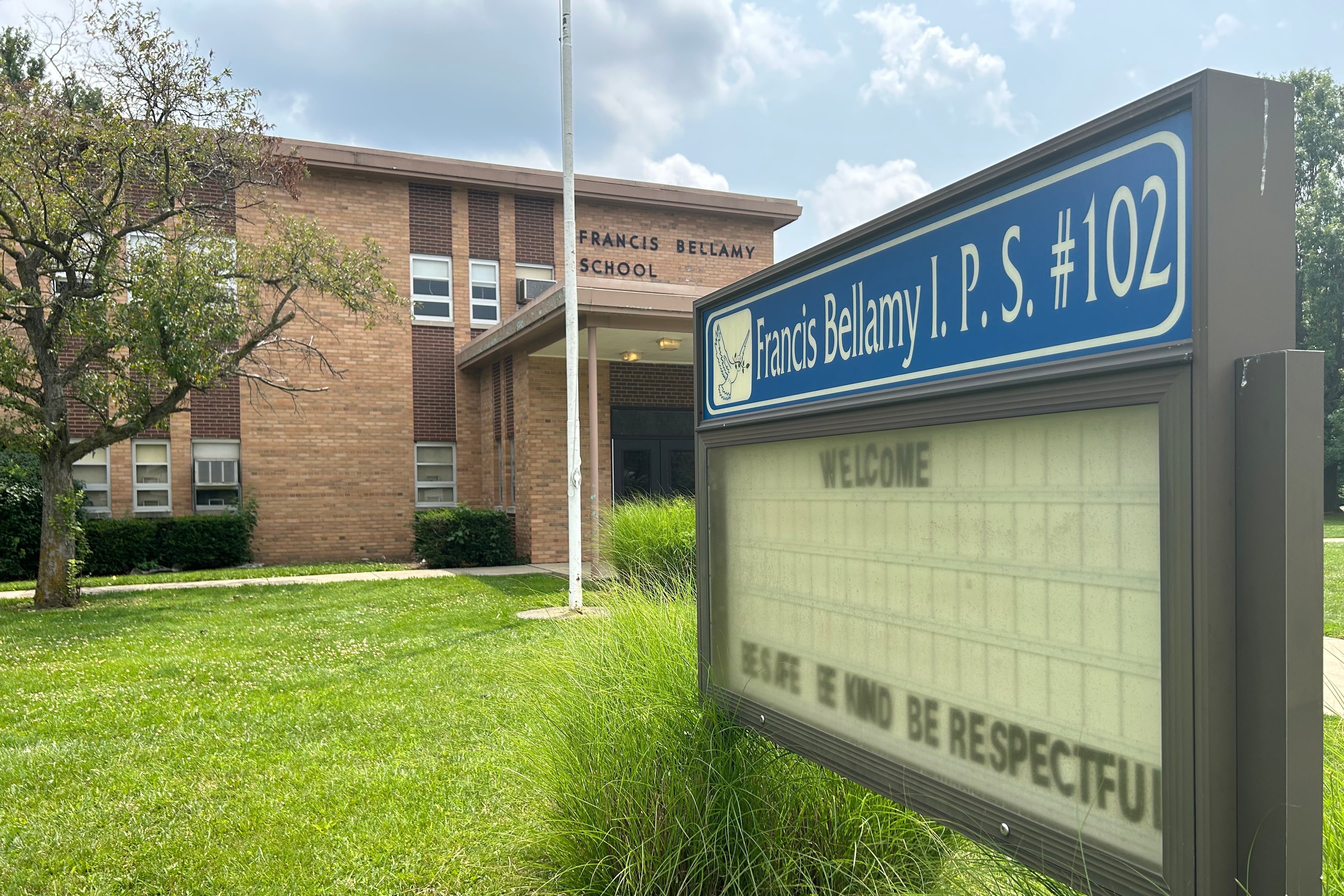
The state attorney general wants to block the sale of two buildings that Indianapolis Public Schools closed this year and hopes to sell.
It is the latest development in the argument over how to interpret the newest version of the state’s so-called “$1 law” that requires school districts to give closed school buildings to charters for the sale or lease price of $1. The controversial law is especially pertinent as IPS has closed six schools this year, two of which it currently seeks to sell.
The district’s complaint against Attorney General Todd Rokita and the Indiana Department of Education’s secretary of state and its board members argues that it is exempt from the newly revised state law. IPS asked the court last month for legal affirmation of its position, while also requesting an injunction to prevent the state from enforcing the law with respect to IPS.
The law, revised this past legislative session, exempts districts from having to sell or lease closed buildings to charters if they split funding from certain voter-approved property tax increases with an “applicable charter school.” IPS argues that it is exempt because it previously shared funds from a 2018 property tax increase with charters in its Innovation Network of autonomous schools.
But in its counterclaim filed in Marion County Superior Court on Wednesday, the attorney general’s office cited a new section added to state law this year that requires school districts in Marion County and three other counties to share certain voter-approved tax increases with charter schools. The law requires those districts to share referendum funds for any ballot question approved by a school board after May 10, 2023.
It’s the first time the attorney general has weighed in on the interpretation of the new version of the $1 law. The counterclaim offers the same interpretation as Sen. Linda Rogers, the Republican who authored the changes.
School districts must share referendum funds with charters for any ballot question passed after May 10 in order to be exempt from the $1 law, the counterclaim argues. In all other cases, they are subject to the law, the attorney general’s office noted.
IPS did not immediately respond to a request for comment.
The legal battle has sparked a complaint with the state’s public access counselor from the Indiana Charter School Network, which argued that the school board violated the state’s public meetings law because it had failed to approve the legal complaint in a public meeting.
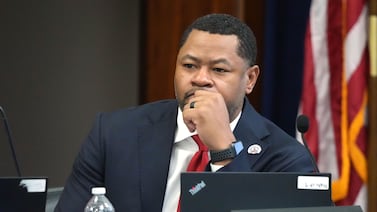
The school board voted to authorize its complaint against the state three days after the public access complaint in a public meeting, with board President Venita Moore stressing that the board was seeking clarity over the law’s interpretation.
“We’re not trying to start a fight with anybody,” Moore said. “But rather we’re trying to remove any uncertainty with respect to our legal rights and obligations.”
The vote passed 4-1, with board member Angelia Moore abstaining and board member Will Pritchard voting against. Board member Hope Hampton was absent.
Amelia Pak-Harvey covers Indianapolis and Lawrence Township schools for Chalkbeat Indiana. Contact Amelia at apak-harvey@chalkbeat.org.