Sign up for Chalkbeat Indiana’s free daily newsletter to keep up with Indianapolis Public Schools, Marion County’s township districts, and statewide education news.
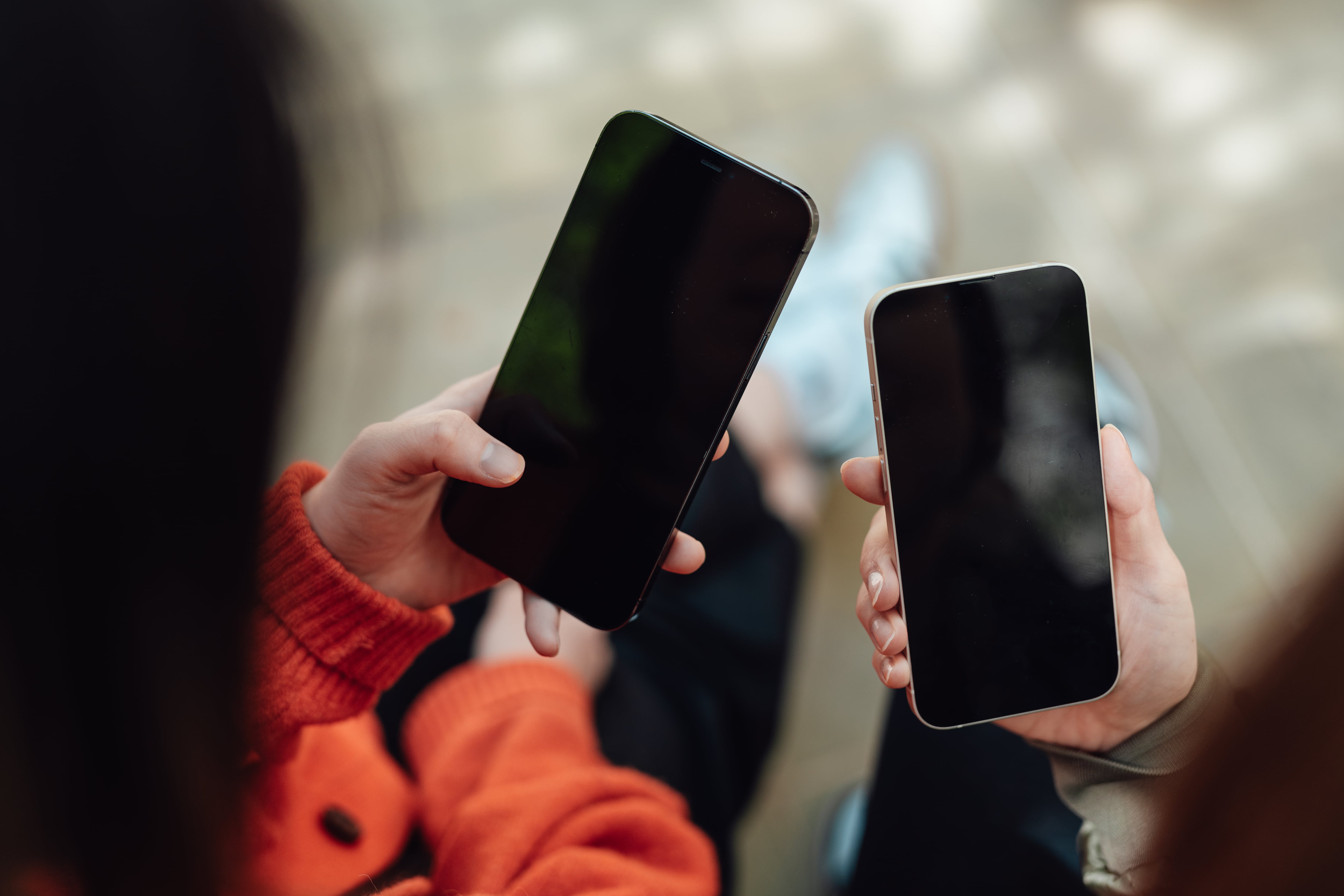
Since Indiana’s school cellphone ban went into effect in 2024, classroom distractions haven’t disappeared. But they have become a little more old school.
Students now pass notes and notebooks, doodle, write poetry, and talk to their neighbors, teachers say. But all of these diversions are less diverting than a phone.
“None of those things come with the FOMO of seeing another kid scrolling on their phone. There’s not a compulsion to write poetry because your neighbor is writing poetry,” said Jon Bernardi, a math teacher in Shortridge High School in Indianapolis. “Kids are talking to each other more, there are fewer distractions in the class, and my morale is better because I don’t have to gripe about the phones.”
As things stand now, the cell phone ban applies only to instructional time, and teachers are allowed to let students use their phones in class for learning.
But more restrictions could be on the way. GOP lawmakers have introduced new bills that would mandate that phones be securely stored at school or left at home during the whole school day. The ban also would extend to all personal devices including laptops and smartwatches, meaning that any learning would need to happen on school-issued devices.
The bell-to-bell ban would further align Indiana with a growing push to limit screen use for learning in order to improve focus and academics. It may also win praise from educators who have seen positive effects from the existing ban. But more restrictions could face pushback from students as well as parents worried about not being able to reach their children in emergencies.
“That was the biggest drawback for families,” said Cindy Baker, executive director of TROY School, a private alternative school in northeast Indiana that’s not subject to the 2024 law but chose to implement a policy when it went into effect. “But honestly, not allowing students to have access to their phone, they’re not getting those random questions from their parents or someone else that upset them. We have some better behaviors because they don’t have access to that.”
Cellphone ban shows promise for academics but implementation varies
Implementation of the cellphone ban has varied across Indiana schools. That’s one reason that Rep. Jake Teshka, a North Liberty Republican, authored the new House proposal for tighter restrictions on phones. Republican Sens. Jeff Raatz and Greg Goode filed a similar bill in the Senate.
“When we have an instructional time ban only, the teacher becomes the enforcer, and that’s one more thing on their plate,” Teshka said. Stopping class to take a phone away, and possibly arguing with a student, is a distraction in itself, he said.
Like the current law, the proposals would grant some exceptions for medical needs, translation purposes, or other reasons outlined in an Individualized Education Program, a service plan for students with disabilities.
At Shortridge, students can keep their phones, but they must be stored in backpacks during class time. Bernardi said most students follow the rules — but when he sees phones out in class, he contacts a dean to come and confiscate them, preempting any possible conflicts with students.
As a small school, TROY asks its 50 students to leave their phones at the front desk and then pick them up at the end of the day, Baker said.
At Northview Middle School in Washington Township schools, students must keep phones in their lockers from bell to bell, said teacher Marissa Tanner. Teachers will confiscate phones and send them to the office for families to pick up. A second offense is an automatic out-of-school suspension.
Tanner said it’s taken some time for families to and students to adapt to the policy and for it to feel comfortable.
“When I do have to confiscate a phone, there really is no longer a fight to turn them over because the kids understand the expectation,” she said.
But locking phones away in secure pouches has had some unintended consequences, like complaints of theft and forgotten phones, said Austin Wilson, a student at Northridge High School in Middlebury Community Schools.
“Getting into class is painfully slow with everyone finding their pockets, and there’s also always a line at the end of class to get your phone back,” Wilson said. “This has caused less teaching time as a side effect, too.”
More than a year in, Wilson said the phone ban is not consistently enforced by teachers. Still, phones aren’t usually a distraction in class for the simple reason that the Wi-Fi signal is not usually strong enough in classrooms.
When students were allowed to keep their phones in their backpacks, they would mostly pull them out to listen to music during independent work time, he said. This school policy worked better, Wilson said.
“I think schools can handle it at their own discretion,” he said. “I don’t know why there needs to be a law for it.”
While implementation has varied, teachers commonly said the cellphone ban has led to fewer fights as a result of social media posts, smoother classroom management, and more in-person engagement.
There are also promising signs about the impact of cellphone bans on academics. One of the first studies looking at the link between cellphone bans and academics found a modest improvement in test scores for Florida students.
Tanner said Northview’s state testing scores have risen since the phone ban went into effect, from 18% proficiency on the math portion of the ILEARN in 2022-23 to 40% proficiency in 2024-25, and 31% to 42% proficiency in English language arts during the same period.
“While this can’t all be attributed to the cellphone policy, the limits on distractions have been a major help in my opinion,” Tanner said.
Lawmakers want to rethink the role of laptops in learning
The bills’ requirements to restrict the use of wireless devices to school-issued ones shows that ongoing concerns about screens could also resonate with some educators. Some Indiana districts have already moved to this model.
For the past two years, Northview has turned to classroom sets of Chromebooks rather than sending devices home with students. Washington Township schools had also limited the use of the devices, Tanner said.
“This policy also holds teachers to higher standards by making sure planning is intentional and technology is used as a tool,” Tanner said.
Indiana is not alone in reconsidering the role of laptops for classroom learning. That represents a reversal of COVID-era policies that sought to give all students a device in order to access online learning.
Some schools have already turned back to physical textbooks and note-taking by hand, said Henry Seton, a New Jersey teacher who has written about this topic. He said that trend is driven by research showing that those are linked to better comprehension and deeper learning. Laptop use in classrooms can be helpful for specific assignments, but requires constant monitoring by teachers, he said.
“Even on school issued Chromebooks, students access addictive games, social media, even their own phones,” he said. “It’s so easy to hit alt-tab.”
TROY offers a bank of Chromebooks for some assignments. But most learning happens through reading together, reading independently, and then transferring the knowledge in a project — like an old-school posterboard.
“It’s hard for our students who might have anxiety or feel overwhelmed seeing all their classes in one place,” she said. “They learn best in a way that is not on a Chromebook.”
Aleksandra Appleton covers Indiana education policy and writes about K-12 schools across the state. Contact her at aappleton@chalkbeat.org.