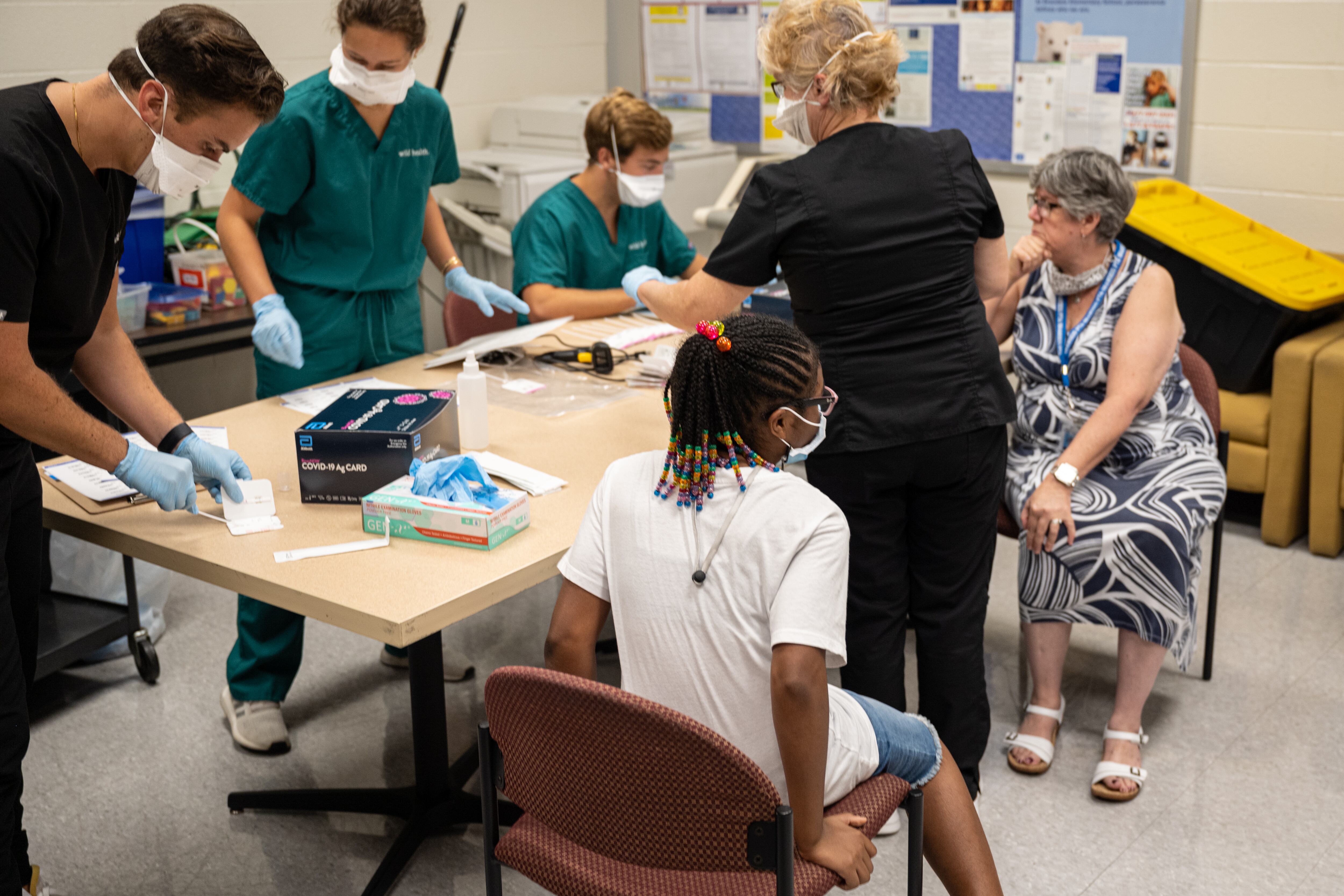
Unvaccinated teachers and child care workers are among those no longer required to undergo regular COVID testing, according to an executive order signed by New Jersey Gov. Phil Murphy on Monday.
The new mandate, effective immediately, applies to school districts, child care centers, and state contractors that have requirements for employees to be vaccinated or face routine testing. The news – regarding one of the few remaining pandemic restrictions intended to limit the spread of the virus – comes three weeks before Newark Public School students are set to begin classes.
Currently, masks are required at all Newark Public Schools facilities. Students are expected to wear masks this school year.
The district did not immediately respond to whether or not it would apply the new mandate.
As of June 17, children 6 months or older are eligible for the COVID-19 vaccine. According to the state, more than 18.4 million doses of the COVID-19 vaccine have been administered in New Jersey, with more than 1.9 million doses administered to children under the age of 18.
“Today’s executive order follows guidance from public health officials at the CDC regarding responsible steps states can take as we continue to adjust to the endemic reality of COVID-19,” Murphy said. “With children as young as 6 months old now eligible for vaccines and millions of New Jerseyans vaccinated and boosted, more of our residents are safe from severe illness due to COVID-19.”
Some charter schools in Newark won’t be affected by the new mandate as they require teachers and staff to be vaccinated upon employment.
Barbara Martinez, the spokesperson for North Star Academy, said the school’s teachers must be vaccinated to work at the academy but was unsure if COVID protocols would change in the future.
KIPP New Jersey also has a vaccine mandate in place for all staff members, unless they qualify for a medical or religious exemption.
“As a result, we have very few unvaccinated staff members,” said Jessica Shearer, KIPP New Jersey spokesperson.
Per the new policy outlined by the state, they will not be requiring staff to participate in COVID testing this school year as well.
Last year, the Newark Teachers Union said 90% of its approximately 4,000 members are vaccinated. But only 2,556 teachers, or 64%, had uploaded vaccination proof into the employee portal as of Oct. 2021, the district said at the time.
Last week, the Centers for Disease Control and Prevention released new guidelines for schools that end quarantines and regular screening tests for the virus but recommended students and staff should keep masks on in areas with high levels of COVID spread. Schools aren’t required to follow these recommendations and states and cities can still set their own rule.
The change also applies to state contractors as of Sept. 1. The New Jersey state employee testing program will also come to an end on Sept. 1.
Jessie Gomez is a reporter for Chalkbeat Newark, covering public education in the city. Contact Jessie at jgomez@chalkbeat.org