Sign up for Chalkbeat Newark’s free newsletter to get the latest news about the city’s public school system delivered to your inbox.
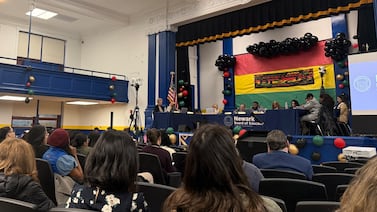
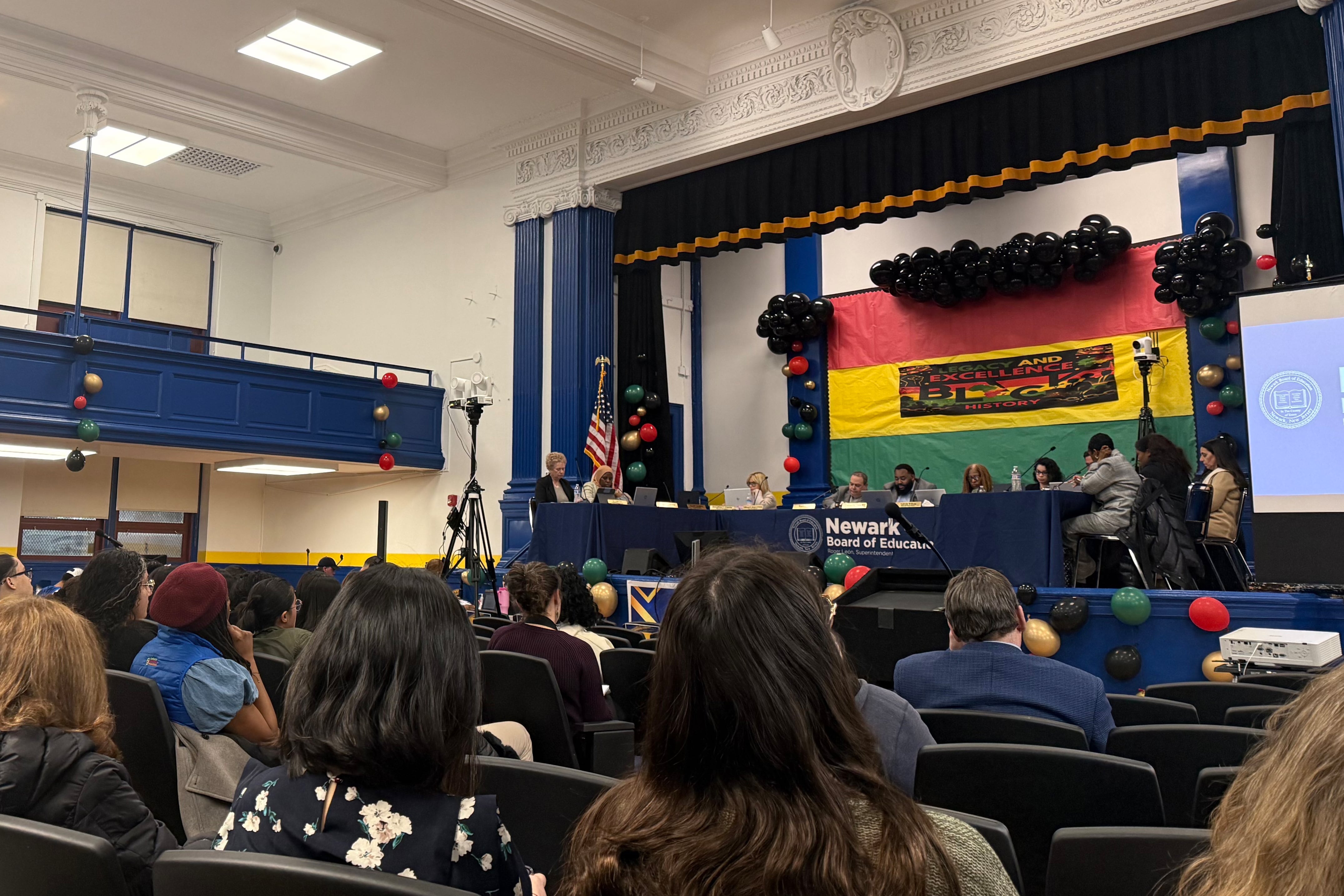
A group of Newark teens took turns scolding Superintendent Roger León and school board members on Thursday for rejecting policy proposals that would have given students more say in how the district addresses mental health needs and building concerns.
“We all are your students, and we’re telling you about what is going on in our schools, in our lives,” Science Park High School junior Cidell Torto told León and board members as she questioned why they wouldn’t want student input.
Another Science Park student, senior Fatoumata Bah, told members that for students, their proposals are “about whether the systems that are supposed to protect and support us are actually visible, accessible, and accountable in our daily lives.”
“This is what it looks like when young people take the reality of their daily lives and turn it into solutions,” Bah added.
The teens are part of the Youth Power Action Coalition, which pushed the proposals that would have allowed for more student participation in policymaking and provided measures to hold the district accountable if systems fall short.
But the response from the Newark Board of Education’s governance committee? We’re good with the status quo.
The committee reviewed the recommended proposals this month and said the district already has mechanisms in place that address the issues. Member Melissa Reed tried to move the proposals to the March agenda, but failed because policies must be approved in committee before reaching a full board vote, said board attorney Brenda Liss during the meeting.
“I heard calls for transparency, accountability, and most importantly, a seat at the table. These concerns matter,” said Reed on Thursday.
Jairo Loaiza Lima, a senior at Bard High School, said he and his peers weren’t there “to replace anything the district already does.”
“It was about a gap we see every day as students, a gap between what exists on paper and what students actually experience,” Lima told the board. “A lot of systems assume students know where to go for help. In reality, many don’t.”
The teens were accompanied by roughly 13 other students who form part of the larger coalition. Two charter school students also spoke about the need to bolster mental health resources in all city schools.
The students’ criticism comes months after they surveyed students on building concerns and current mental health resources in schools. In November, the coalition asked the school board to collaborate with them to strengthen existing policies using data they collected from teen experiences. The group also met in January with board president Hasani Council and member Josephine Garcia to discuss their proposals.
The students’ proposals would have added more frequent mental health surveys and a student mental health support tracker, according to the proposal.
The coalition’s mental health policy would have expanded on the district’s crisis intervention policy, which says “the superintendent and appropriate staff will develop and implement a comprehensive and continuing adolescent suicide awareness, prevention, and intervention program for the entire school community.”
The students’ facilities proposals would have developed a tool for students to report building concerns and a public dashboard tracking reported issues. It would have expanded on the district’s current long-range facilities planning, which describes current facilities needs, projected enrollment challenges, and plans to build, alter, or remodel schools.
The group, convened by the Gem Project, a nonprofit organization focused on strengthening youth civic engagement, is also working to boost youth turnout among Newark’s 16- and 17-year-old voters in this year’s school board election. Only 73 teens voted last year, the first time youth could vote in the Newark school board race.
The school board’s governance committee, in response to the youth proposals, highlighted resources listed online, such as the New Jersey Department of Children and Families Resource Guide, Character Education Initiative, and its teen mental health conference as resources already available for students. The committee also pointed to the district’s automated work order system, School Dude, as a way for district staff, students, and parents to report building issues.
During the meeting, Amanda Ebokosia, founder of the Gem Project and youth advocate, said the policy proposals “did not duplicate current student mental health initiatives or services,” but rather met “the growing need and answered the calls, pleas, and concerns of all students, not just a specific school.”
Jessie Gómez is a reporter for Chalkbeat Newark, covering public education in the city. Contact Jessie at jgomez@chalkbeat.org.